News · France
French government invokes Article 49.3 for budgetary legislation
An examination of the executive's struggle to secure legislative consensus in the Fifth Republic
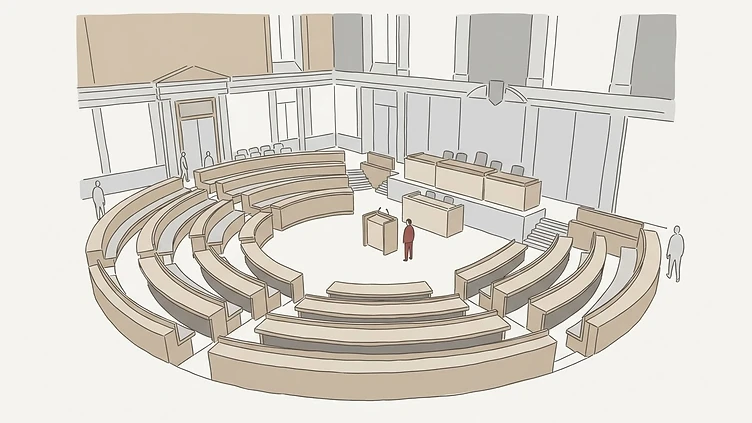
Illustration: Apex Africa picture desk
The French government is using Article 49.3 to pass budgetary legislation without a parliamentary vote. This action has initiated a debate regarding the institutional stability of the Fifth Republic.
Key judgement
The evidence points to a terminal breakdown in the French executive's ability to manage the national budget, suggesting that the government will likely fall before the 2027 presidential election due to its inability to secure a parliamentary majority.
High withdrawn: 6 relevant sources from 6 publishers, no primary record.
What to watch
- November 2026: Triggering of a no-confidence motion in the National Assembly following the use of Article 49.3.
- December 2026: Further contraction in GDP figures as reported by the Ministry of Economy.
- January 2027: Formal announcement of presidential candidates and their fiscal platforms.
Implications for decision-makers
- Policymakers must prepare for a period of fiscal austerity that will likely reduce the availability of state-funded social programs.
- Institutional investors should anticipate increased volatility in French bond markets as the political impasse continues.
- NGOs and development organizations should monitor potential shifts in French foreign aid policy as the government prioritizes domestic deficit reduction.
Why it matters
The French government is invoking Article 49.3 to pass budgetary and policy measures due to a lack of legislative consensus. According to the government, these tools are necessary to prevent institutional paralysis during periods of economic uncertainty. This procedural tool is permitted under the framework of the Fifth Republic. Article 49.3 allows the government to pass legislation without a vote unless a motion of no-confidence is passed by the National Assembly. Critics and political analysts state that the narrowing of the government's support base reflects a trend of legislative gridlock not observed in recent decades. The executive branch's agenda is complicated by the divergent priorities held by opposition factions, which have shown little willingness to compromise on major fiscal legislation. As the executive implements its agenda, the constitutional legitimacy of using Article 49.3 is being debated in the public square and in parliamentary chambers. The reliance on executive intervention is a point of constitutional debate, testing the endurance of the Fifth Republic’s institutional design and the government's mandate to lead in a climate of skepticism from the opposition and former political allies.
What we don't know yet
The administration faces the challenge of re-establishing a reliable majority to ensure stability. Observers suggest that upcoming legislative sessions will be critical in determining whether the current governing coalition can survive the pressure of public opposition and internal dissent among its remaining partners. The persistence of this political impasse creates a precarious environment for policy continuity, which may stall reforms that were central to the current administration’s platform. Current records do not yet show how the government's decision is being carried out, specifically regarding the precise implementation of the measures being forced through the assembly. Whether the current administration can maintain its executive mandate remains to be determined by the parliamentary reaction in the coming months.
What to watch
November 2026 is the date for the potential triggering of a no-confidence motion in the National Assembly following the use of Article 49.3. December 2026 marks the expected further contraction in GDP figures as reported by the Ministry of Economy. In January 2027, the formal announcement of presidential candidates and the details of their respective fiscal platforms will take place, marking the start of the next cycle of national political deliberation.
Report an error in this briefing