Risk Assessment · Central African Republic
Zamboye Mine Collapse and the Failure of National Oversight in Central African Republic
The tragedy in Zamboye exposes the lethal gap between national mining regulations and local enforcement realities.
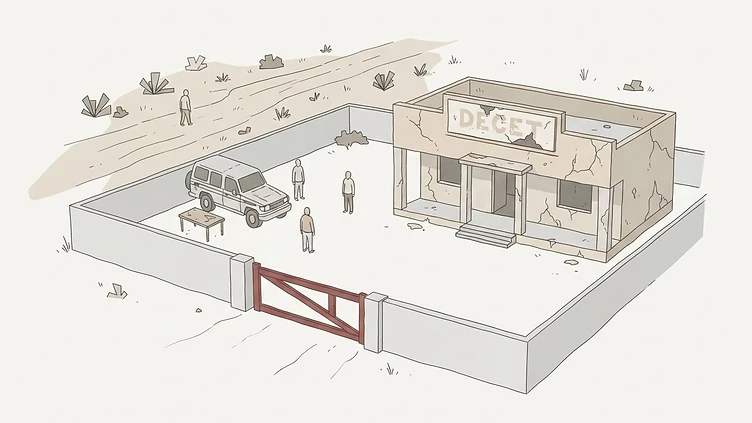
Illustration: Apex Africa picture desk
The recent collapse of an artisanal gold mine in Zamboye, which claimed over 100 lives, highlights the systemic failure of national regulatory oversight in the Central African Republic. While the government prioritizes electoral cycles and security consolidation, the lack of enforcement in the mining sector leaves local communities vulnerable to preventable disasters. This incident underscores the urgent need for integrating local safety governance into national political agendas.
Key judgement
The Zamboye mine collapse demonstrates that the government's focus on national electoral consolidation has created a dangerous governance vacuum at the local level, where the lack of regulatory enforcement is now a direct threat to public safety.
The report of the mine collapse is confirmed by multiple independent sources, and the institutional gap in local governance is documented in UN and official reports.
What to watch
- Release of an official government inquiry report into the Zamboye mine collapse (Expected by December 2026).
- Inclusion of specific mining safety enforcement funding in the 2027 national budget (Expected by January 2027).
Implications for decision-makers
- Policymakers must shift focus from purely electoral outcomes to the implementation of local safety regulations to maintain public legitimacy.
- Development organizations should pivot their support toward strengthening local-level regulatory oversight rather than just national-level institutional capacity.
The Zamboye Tragedy and Regulatory Neglect
The collapse of an artisanal gold mine in Zamboye, western Central African Republic, which resulted in the deaths of at least 107 labourers, serves as a stark indicator of the disconnect between national policy and local safety enforcement. While the central government in Bangui has focused heavily on the completion of the 2026 electoral cycle and the consolidation of the ruling Mouvement des cœurs unis (MCU) majority, the oversight of hazardous industries remains largely absent at the grassroots level. This disaster is not merely an industrial accident but a consequence of a governance model that prioritizes political stability over the regulation of local economic activities.
Governance and the Oversight Gap
Although the government has successfully operationalized courts across all 20 prefectures with the support of MINUSCA, the reach of these institutions does not extend to the regulation of artisanal mining sites. The Ministry of Finance and Budget and the Ministry of Environment and Sustainable Development have established frameworks for national development, yet these policies fail to translate into on-the-ground safety inspections or the enforcement of labour standards. The absence of a functional regulatory mechanism in regions like Zamboye allows for the proliferation of unregulated mining, where the pursuit of economic survival by local populations is met with zero state protection.
The Political Calculus of Stability
Critics of the current administration argue that the focus on electoral consolidation has diverted resources and political attention away from essential public service delivery and safety oversight. The ruling party’s success in securing a dominant position in the National Assembly has created a political environment where accountability for local governance failures is rarely demanded. By concentrating power within the MCU, the government has effectively insulated itself from the pressures of local community advocacy, leaving the residents of areas like Zamboye to manage the risks of their environment without state intervention.
Counter-Argument: The Security Priority
Proponents of the government’s current trajectory contend that the primary challenge facing the Central African Republic is the persistent security vacuum and the spillover of the conflict in Sudan. They argue that without first securing the state and completing the electoral cycle, the government lacks the capacity to enforce complex regulations in remote areas. However, this perspective fails to account for the fact that the state’s legitimacy is fundamentally tied to its ability to protect its citizens from preventable harm, regardless of the broader security context.
Future Scenarios and Indicators
Looking ahead, the government’s response to the Zamboye disaster will likely follow one of two paths. In the first scenario, the administration may initiate a symbolic review of mining safety, which would likely result in minimal changes to enforcement protocols. In the second, more unlikely scenario, the government could leverage the tragedy to decentralize safety oversight, empowering local authorities to monitor artisanal sites. Observers should watch for the release of any official inquiry into the Zamboye collapse and the subsequent allocation of funds for mining safety in the 2027 budget as key indicators of the government’s intent.
Strategic Implications
For policymakers and development organizations, the Zamboye incident highlights the necessity of integrating local safety governance into national political and electoral readiness strategies. The failure to address these gaps risks further alienating local communities and undermining the stability that the government seeks to maintain. Stakeholders should prioritize the establishment of local monitoring committees that can report directly to national oversight bodies, ensuring that the safety of artisanal workers is no longer treated as a secondary concern to national political objectives.
Why it matters
The recent collapse of an artisanal gold mine in Zamboye, which claimed over 100 lives, highlights the systemic failure of national regulatory oversight in the Central African Republic.
What we don't know yet
The record does not yet show how the decision is carried out.
What to watch
Release of an official government inquiry report into the Zamboye mine collapse (Expected by December 2026).; Inclusion of specific mining safety enforcement funding in the 2027 national budget (Expected by January 2027).
Report an error in this briefing