Analysis · Tunisia
Tamghza Voters Oust Councillor to Force Accountability Amid Tunisia Municipal Service Failures
The first-ever successful recall of a local councillor in Tamghza signals a volatile shift in grassroots accountability.
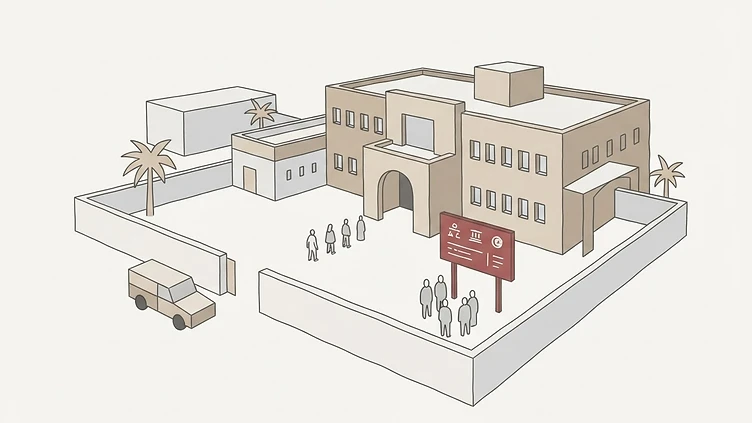
Illustration: Apex Africa picture desk
The successful recall of a local councillor in Tamghza on September 27, 2026, represents a critical, under-reported shift in Tunisian grassroots politics. While the national narrative remains fixated on presidential consolidation, this local development demonstrates that citizens are increasingly weaponizing electoral mechanisms to bypass ineffective municipal structures. This article argues that the Tamghza precedent is not an isolated event but a structural warning that local government legitimacy is collapsing under the weight of service delivery failures.
Key judgement
The Tamghza recall signals that grassroots electoral mechanisms are becoming the primary vehicle for political accountability in the absence of effective national-level opposition. This trend will likely force the administration to either decentralize service delivery or face a wave of localized electoral challenges in the lead-up to the 2027 municipal cycle.
The recall is a documented, verifiable event with specific electoral data, and its implications are supported by the broader context of service delivery failures reported across multiple credible sources. Rated Moderate rather than High: High confidence claimed with no primary institutional record in the file.
What to watch
- Any official government response or legislative amendment regarding the local recall mechanism before December 2026.
- The announcement of a firm date for municipal elections by the ISIE, expected before March 2027.
- The emergence of similar recall petitions in other governorates, particularly in the south, by January 2027.
Implications for decision-makers
- Local councillors must prioritize tangible service delivery over party loyalty to avoid being targeted by recall efforts.
- Political strategists should pivot from national-level messaging to ward-level service delivery audits to identify vulnerable incumbents.
- Development organizations should shift focus toward strengthening local accountability mechanisms rather than relying on national-level democratic reform.
The
Tamghza Precedent and the Myth of Local Passivity
On September 27, 2026, the residents of Tamghza, located in the Tozeur Governorate, achieved what was previously considered impossible in the current Tunisian political climate: they successfully recalled a local councillor. With 52.43% of the vote, the electorate effectively terminated the mandate of a representative who had become the face of local administrative stagnation. This event, occurring in the shadow of national-level debates regarding presidential authority and military court rulings, has been largely overlooked by observers who view Tunisian local government as a mere extension of central executive power.
Conventional wisdom suggests that the 2023 local council elections, which saw a turnout of only 11.84%, signaled a permanent disengagement of the Tunisian public from local governance. However, the Tamghza recall proves that this apathy is not a lack of interest in politics, but a strategic rejection of ineffective institutions. By utilizing the recall mechanism, the residents of Tamghza have demonstrated that the grassroots level is not a passive recipient of state policy, but a site of active, albeit localized, political resistance.
The
Governance Gap: Why Service Delivery Drives Recall
The primary driver of the Tamghza recall was not ideological disagreement, but the stark reality of failing public services. Residents in the Tozeur region have faced persistent water and electricity outages, a trend mirrored across the country as the national economic crisis deepens. When local councillors fail to advocate for the basic needs of their constituents, the social contract at the ward level is effectively severed. The recall was a direct response to the councillor’s inability to address these infrastructure deficits, marking a shift from passive complaint to active removal.
Governance intelligence reveals that the gap between central government promises and local implementation is widening. While the state continues to prioritize debt obligations and fiscal consolidation, the municipal level is left to manage the fallout of crumbling infrastructure. In Tamghza, the councillor became the lightning rod for this systemic failure. By holding an individual representative accountable, the community has signaled that they no longer accept the excuse of 'national economic constraints' as a justification for local neglect.
This dynamic creates a significant risk for political parties and independent candidates alike. If local representatives cannot demonstrate tangible improvements in service delivery, they are now vulnerable to being purged by their own constituents. This is not merely a local administrative issue; it is a fundamental challenge to the stability of the current governance model, which relies on local councils to act as the primary interface between the state and the citizenry.
The
Judicialization of Dissent vs. Grassroots Accountability
Critics of the current administration often point to the recent sentencing of opposition figures, such as the four-year prison term handed to Olfa Hamdi by a military court on October 21, 2026, as evidence of a totalizing authoritarian grip. While the judicialization of dissent is undeniably a major feature of the national landscape, it is a mistake to assume that this strategy is equally effective at the grassroots level. The Tamghza recall demonstrates that while the state can suppress national-level opposition, it struggles to control the granular, localized mechanisms of electoral accountability.
There is a fundamental tension between the state’s desire for centralized control and the necessity of maintaining functional local government. By focusing on the suppression of high-profile political leaders, the administration has created a vacuum of legitimacy at the local level. The Tamghza recall fills this vacuum with a form of direct, community-led accountability that the state cannot easily criminalize without further eroding its own democratic facade.
This creates a complex political environment where the state is simultaneously tightening its grip on national discourse while losing control over the local electoral process. For political strategists, this means that the most effective way to challenge the current order is not necessarily through national-level confrontation, but through the systematic exploitation of local governance failures. The Tamghza recall is a blueprint for how to build political capital in an environment where traditional opposition is being systematically dismantled.
Rebutting the 'Apathy'
Narrative
Some observers argue that the low turnout in the 2023 local elections confirms that the Tunisian public has largely abandoned the democratic process. They contend that the Tamghza recall is an outlier, a localized anomaly that does not reflect a broader trend of grassroots mobilization. This perspective fails to account for the fact that the recall itself required a high degree of community organization and a shared understanding of the electoral mechanism. It was not an act of apathy, but an act of intense, focused engagement.
Furthermore, the argument that local government in Tunisia is too weak to matter ignores the reality that these councils are the primary providers of essential services. When these services fail, the impact on the daily lives of residents is immediate and profound. The Tamghza recall was not about abstract political ideals; it was about the tangible, daily struggle for water, power, and basic infrastructure. To dismiss this as an anomaly is to ignore the primary driver of political instability in the country.
We must also consider that the state’s own rhetoric regarding 'reform' and 'accountability' has provided the very tools that citizens are now using against it. By framing the 2023 elections as a new beginning for local governance, the administration inadvertently empowered local communities to demand more from their representatives. The Tamghza recall is the logical, if unintended, consequence of this rhetoric meeting the reality of economic decline.
Scenarios for
Future Development
As we look toward the potential municipal elections before March 2027, there are three likely scenarios for how this trend of grassroots accountability will develop. First, we may see a wave of copycat recalls in other governorates where service delivery has reached a breaking point. This would force the central government to either intervene in local electoral processes—further damaging its democratic credentials—or to prioritize local service delivery to prevent further instability.
Second, the administration may attempt to centralize control over the recall mechanism itself, making it more difficult for communities to initiate the process. This would likely lead to increased local protests and a further erosion of trust in the electoral commission. Third, we may see the emergence of a new, decentralized political movement that focuses exclusively on local governance and service delivery, bypassing the national-level political parties that are currently being targeted by the state.
Readers should watch for the following indicators: any legislative attempts to amend the recall process, the frequency of local council resignations in the coming months, and the level of state intervention in upcoming municipal by-elections. These signals will determine whether the Tamghza recall remains an isolated event or becomes the catalyst for a broader, grassroots-led political realignment.
Strategic
Implications for Stakeholders
For policymakers and public officials, the Tamghza recall is a clear signal that the current model of centralized governance is unsustainable. The failure to deliver basic services at the local level is creating a volatile environment that can no longer be managed through national-level rhetoric or judicial suppression. The recommendation is to prioritize the decentralization of resources and to empower local councils to actually govern, rather than acting as mere administrative conduits for the central state.
Finally, for NGOs and development organizations, the Tamghza case highlights the importance of supporting local governance capacity. Rather than focusing solely on national-level democratic reform, there is a critical need to invest in the institutions and mechanisms that allow local communities to hold their representatives accountable. This is the most effective way to build long-term stability and to ensure that the democratic process remains relevant to the people it is intended to serve.
Conclusion: The Future of Tunisian Grassroots Politics
The Tamghza recall is a definitive moment in the evolution of Tunisian politics. It marks the transition from a period of passive disillusionment to one of active, localized resistance. As the national economic crisis continues to deepen, the pressure on local government will only increase. The question is no longer whether the current governance model will face challenges, but how it will respond to them.
If the state continues to prioritize centralized control over local responsiveness, it will only accelerate the collapse of its own legitimacy. The Tamghza precedent shows that the grassroots are not waiting for permission to act; they are already finding ways to hold their leaders accountable. This is the new reality of Tunisian politics, and it is one that all stakeholders must now contend with.
To understand how these local dynamics will impact your specific interests or to receive a confidential briefing on the evolving political landscape in Tunisia, we invite you to request a consultation at https://apexafricastrategy.com.
Report an error in this briefing