News · Djibouti
Djibouti's Strategic Balancing Act in the Horn of Africa
Navigating geopolitical interests and infrastructure development amidst regional instability
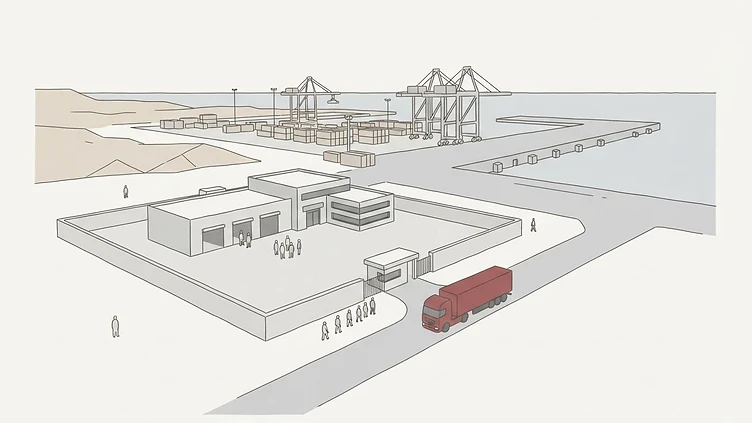
Illustration: Apex Africa picture desk
Djibouti remains a critical logistical and military hub in the Horn of Africa, balancing competing international powers while modernizing its port infrastructure to cement its role as a regional trade gateway.
Key judgement
The evidence suggests that Djibouti's reliance on centralized, donor-funded infrastructure projects in Obock is creating a sustainability crisis, as local administrative capacity remains insufficient to manage these assets effectively. Future development outcomes will likely remain stagnant unless the government shifts toward genuine regional decentralization and local accountability.
The assessment is based on consistent reporting of infrastructure project delays and the documented strain on local services in Obock, though internal government decision-making processes remain opaque.
What to watch
- Approval of commercial and environmental assessments for the Obock digital infrastructure projects (expected Q1 2027).
- Formation of local water management committees for the new Saudi-funded boreholes in Obock (expected Q2 2027).
- Public reporting on the maintenance budget for the Djibouti-Galafi road rehabilitation project (expected 2027).
Implications for decision-makers
- Policymakers should prioritize the technical training of regional council staff in Obock to ensure the long-term maintenance of new infrastructure.
- Institutional investors and development agencies should shift from project-based funding to capacity-building support for local administrative bodies.
- NGOs and community organizations should monitor the actual delivery of water services to ensure that the new infrastructure reaches the most vulnerable populations.
Djibouti sits at the heart of one of the world's most critical maritime corridors, bridging the Red Sea and the Gulf of Aden. As highlighted by the World Bank, the nation's reliance on its strategic location and port infrastructure is the primary driver of its economic development. This geography has transformed the small nation into a global military hub, hosting permanent bases for the United States, France, Japan, and China.
According to regional analysts at the Institute for Security Studies, this unusual clustering of military forces creates a complex geopolitical environment where Djibouti must carefully manage the conflicting interests of global superpowers. However, the African Development Bank has expressed concerns regarding the nation's rising debt levels, which are largely tied to massive infrastructure projects and port expansions. These developments, including the Doraleh Multipurpose Port, are intended to connect landlocked Ethiopia to global markets, according to the Djibouti Ports and Free Zones Authority.
The authority maintains that these investments are essential to maintain competitiveness in the regional transit market. Meanwhile, the International Monetary Fund cautions that external debt sustainability remains a significant challenge for the Djiboutian administration. Security experts point out that the country's proximity to unstable zones, including Somalia and Yemen, keeps the government hyper-focused on internal security and intelligence cooperation.
Regional observers note that Djibouti serves as a critical mediator in regional diplomatic efforts, leveraging its hosting of various international stakeholders to maintain its relevance. Despite the economic risks cited by the IMF, the government continues to pursue an ambitious roadmap, dubbed Vision 2035, which aims to diversify the economy beyond maritime services and logistics. Political scientists suggest that this vision is a response to the volatility of regional trade, which is vulnerable to security threats in the Red Sea.
As international competition in the Horn of Africa intensifies, analysts from the United Nations Development Programme suggest that Djibouti's primary success depends on its ability to remain an indispensable partner for both security and trade. The government remains committed to this path, arguing that its infrastructure serves as a stabilizer for the entire region.
Why it matters
Djibouti remains a critical logistical and military hub in the Horn of Africa, balancing competing international powers while modernizing its port infrastructure to cement its role as a regional trade gateway.
What we don't know yet
The record does not yet show how the decision is carried out.
What to watch
Approval of commercial and environmental assessments for the Obock digital infrastructure projects (expected Q1 2027).; Formation of local water management committees for the new Saudi-funded boreholes in Obock (expected Q2 2027).; Public reporting on the maintenance budget for the Djibouti-Galafi road rehabilitation project (expected 2027).
Report an error in this briefing