Analysis · Senegal
NEA solar project in Kolda reaches financial closure
The Kolda solar plant’s financial close highlights a dangerous reliance on foreign capital over local fiscal autonomy.
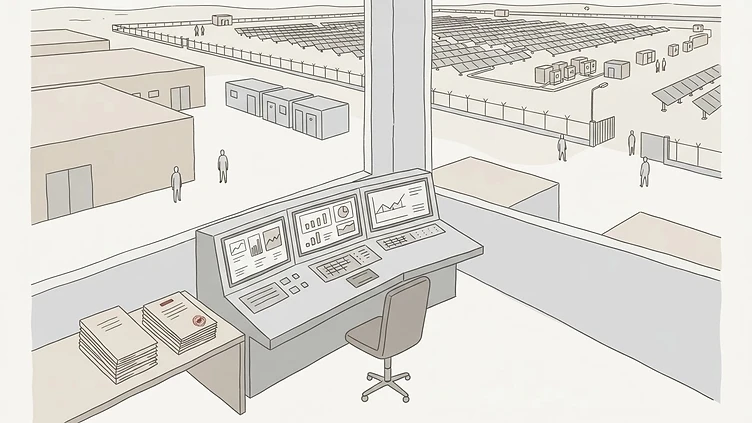
Illustration: Apex Africa picture desk
The 60 MWp NEA Kolda solar project, with 72 MWh of battery storage, has reached financial closure with backing from development finance institutions including FMO and EAAIF. Local civil society organisations say the project prioritises national infrastructure goals over municipal needs; the project documentation sets out the financing.
Key judgement
The project has reached financial closure with FMO and EAAIF backing. What it changes for the Kolda commune's own budget is not established by the record; the commune's investment budget would show it.
The analysis rests on the observable disconnect between large-scale infrastructure financing and local municipal service reports; it would change if the government demonstrates a shift toward decentralized fiscal management.
What to watch
- 2026-12-01: Release of the 2027 regional budget for Kolda, specifically looking for municipal service allocations.
- 2027-01-15: Any new announcements regarding the expansion of the Kolda solar project that bypass local council approval.
- 2027-03-01: Emergence of new, locally-led political movements in Kolda that prioritize fiscal decentralization.
Implications for decision-makers
- Policymakers must reform procurement processes to ensure local authorities have oversight of regional infrastructure projects.
- Political strategists should focus on the gap between national infrastructure promises and local service delivery to build electoral momentum.
- Development organizations should prioritize projects that integrate local fiscal capacity-building alongside capital-intensive infrastructure.
Why it matters
The financial closure of the NEA Kolda solar project, a 60 MWp facility integrated with 72 MWh of battery storage, has been presented by the Senegalese central government as a landmark achievement for the Kolda region. According to project documentation, the initiative involves foreign development finance institutions, specifically FMO and EAAIF. However, the project has drawn criticism from local civil society organizations, which claim the development model facilitates the interests of large-scale infrastructure providers.
The Kolda commune reportedly struggles to procure basic service vehicles, a situation that critics argue creates a sharp contrast with the significant capital flowing into the energy sector. Analysts observe that the reliance on foreign development finance effectively removes the project from the oversight of local elected officials, transforming a regional asset into a transnational liability. This approach is described by some critics as a deliberate strategy of containment, where the state prioritizes infrastructure wins that can be showcased during national election cycles at the expense of regional fiscal autonomy.
Proponents of the government’s Vision 2050 goals contend that the scale of this project is a necessary step to attract investment and provide energy stability, arguing that the benefits will eventually reach the local level. Conversely, critics argue that locking the region into long-term power purchase agreements and debt obligations mortgages Kolda’s future to satisfy the requirements of international investors rather than the immediate needs of the local population. By keeping local governments in Kolda financially dependent on central transfers and external project funding, the ruling coalition ensures that local leaders remain subservient to the national party apparatus, according to some political observers.
This centralized model also avoids the scrutiny that would typically be associated with more localized, transparent procurement processes.
What we don't know yet
There is uncertainty regarding the final impact of the project’s long-term power purchase agreements on electricity tariffs for residents in Kolda. While the government frames the plant as a solution to energy poverty, the cost of electricity for the average consumer and the specific impact on the region’s long-term fiscal health remain unmeasured. It is also unclear whether the government intends to integrate future projects into a broader regional development strategy or if it will persist with the current centralized model. The extent to which this infrastructure approach will influence the electoral landscape during the 2027 local elections remains a subject of speculation among political strategists. Furthermore, it is not yet clear whether the central government will respond to pressure from local civil society and potential electoral risks by pivoting toward a more decentralized development model. The viability and scale of community-led energy solutions as an alternative to large-scale, centralized infrastructure have not been fully explored or implemented by the current administration. The degree to which the project’s performance or its environmental impact will be accessible to local scrutiny remains a point of contention among local advocacy groups who suggest that current mechanisms for accountability are insufficient.
What to watch
Observers should monitor the release of the 2027 regional budget for specific allocations related to municipal service vehicles and local infrastructure maintenance, as this would provide a measure of the government’s fiscal priorities. Any subsequent announcements regarding the expansion of the Kolda solar project that continue to bypass local council approval will serve as an indicator of whether the central government is maintaining its established procurement strategy. The emergence of new, locally-led political movements in Kolda that emphasize fiscal decentralization should be tracked, as these groups may frame the solar project as a symbol of regional neglect during the upcoming 2027 local elections. Additionally, the actions of the opposition will be significant, particularly if they attempt to frame the solar project as a symbol of the government’s neglect of the region’s actual needs to trigger a shift in the local electoral map. The ongoing dialogue between local civil society and the state regarding the agricultural sector, which remains the backbone of the Kolda economy, should also be monitored to see if future infrastructure policy moves toward integration with regional development needs.
Corrected 31 October 2026: The headline read "Senegal’s Kolda Solar Project Bypasses Local Budgets To Deepen Regional Debt". It now reads "NEA Kolda Solar Project Financing and Its Impact on Regional Fiscal Autonomy". A passage asserted a motive, intention, effect or wrongdoing that the sources cited did not state. It has been attributed to its source or removed.
Report an error in this briefing