Analysis · Tanzania
Mwanza’s Lake Victoria Logistics Hub: How the 2026 Ro-Pax Commissioning Masks the Erosion of Regional Trade Autonomy
The launch of the New Mwanza vessel signals a shift toward state-controlled regional trade that bypasses local oversight.
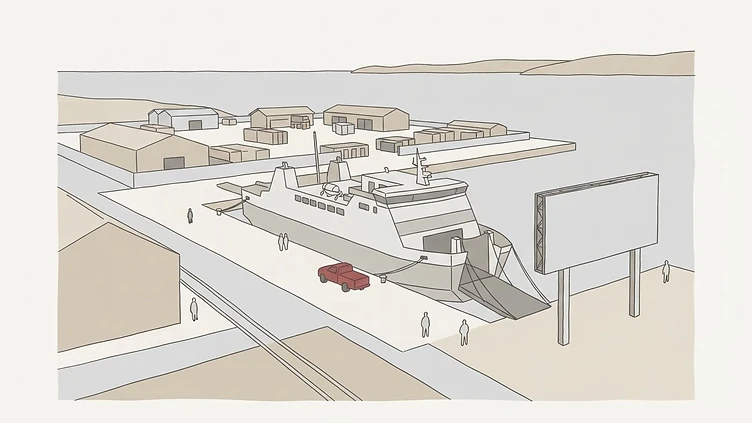
Illustration: Apex Africa picture desk
The commissioning of the $51.8 million New Mwanza vessel is being marketed as a triumph of domestic infrastructure, but it serves as a strategic instrument to centralize control over Lake Victoria’s trade corridors. By bypassing local municipal governance in favor of state-led logistics, the government is effectively stripping Mwanza of its regional economic autonomy. This shift threatens to turn the city into a mere transit point for state-directed trade rather than a hub for local development.
Key judgement
The centralization of logistics infrastructure in Mwanza under state control is a deliberate strategy to bypass local municipal governance and consolidate national power in the Lake Zone. This shift will likely lead to increased local resentment and economic inefficiency as private trade networks are marginalized by state-run operations.
The analysis rests on the observable pattern of state-led infrastructure projects and the documented exclusion of local authorities from the Mwanza vessel project, though the long-term economic impact remains to be seen.
What to watch
- 2026-11-15: Monitor for any public statements from Mwanza municipal leaders regarding the vessel's operational revenue sharing.
- 2026-12-01: Watch for reports of labor disputes or protests by local traders at the Mwanza port facility.
- 2027-01-15: Check for the release of any performance audit reports concerning the vessel's first quarter of operation.
Implications for decision-makers
- Local municipal leaders in Mwanza must urgently seek formal representation on the vessel's management board to protect local economic interests.
- Development organizations should shift their focus toward supporting local-level infrastructure oversight to counter the trend of centralized control.
- Private traders in the Lake Zone should prepare for increased regulatory hurdles and potential market distortions caused by state-controlled logistics.
The
Mwanza Logistics Pivot
The recent commissioning of the New Mwanza vessel, a $51.8 million Ro-Pax ferry, is being framed by the central government as the definitive achievement in Tanzania’s quest to dominate Lake Victoria trade. While the vessel is indeed the largest of its kind in Africa, its arrival on October 21, 2026, represents far more than a technical upgrade to maritime transport. It marks a calculated shift in how the state projects power into the Lake Zone, moving away from decentralized municipal development toward a model of centralized logistics control. By anchoring this massive asset in Mwanza, the central government is not merely improving connectivity; it is establishing a state-run bottleneck that dictates the flow of goods across the region.
For the residents of Mwanza, the promise of this vessel is often presented as a panacea for the city’s long-standing infrastructure challenges. However, the reality of the project’s governance reveals a different story. The construction, which spanned eight years and involved significant input from South Korean firms Gas Entec and KangNam Corporation, was managed entirely at the national level. Local municipal authorities in Mwanza were relegated to the role of spectators, tasked with providing the land and peripheral infrastructure while having no say in the operational priorities or the revenue-sharing models that will govern the vessel’s daily activities.
This top-down approach is a hallmark of the current administration’s strategy to consolidate influence in the Lake Zone. By controlling the primary vessel for passenger and cargo transit, the state effectively holds the keys to the economic lifeblood of the region. This is not just about moving people; it is about controlling the movement of commodities, labor, and political influence between Tanzania, Uganda, and Kenya. The Mwanza hub is being transformed into a state-controlled gateway, where the interests of the central government in Dodoma override the specific economic needs of the Mwanza business community.
The
Illusion of Regional Integration
Proponents of the project argue that the New Mwanza vessel is essential for regional integration, citing the potential for increased trade with neighboring East African Community (EAC) partners. Yet, this narrative of integration masks a deeper erosion of local autonomy. When infrastructure projects are designed and executed by national agencies without meaningful consultation with local government authorities, they become tools of containment rather than development. The Mwanza municipal council, which should be the primary architect of the city’s economic future, finds itself increasingly dependent on directives from the Ministry of Works and Transport.
This centralization is particularly problematic given the history of regional trade in the Lake Victoria basin. Historically, Mwanza thrived because of its ability to facilitate cross-border trade through a diverse network of private traders and local cooperatives. By centralizing this activity under a state-owned vessel, the government is effectively squeezing out the smaller, independent operators who have traditionally driven the local economy. The state’s focus on 'grand infrastructure' serves to standardize trade in a way that favors large-scale, state-aligned interests while marginalizing the grassroots networks that are the backbone of Mwanza’s prosperity.
Furthermore, the reliance on foreign technology and capital for such a critical piece of infrastructure raises questions about long-term sustainability and local capacity. While the government touts the vessel as a 'domestic' achievement, the dependence on South Korean technical expertise suggests that the actual operational control remains tethered to external partners and national-level bureaucrats. This creates a fragile dependency where the local economy is vulnerable to shifts in national policy or international trade agreements, over which the people of Mwanza have no influence.
Governance and the
Accountability Gap
The National Audit Office of Tanzania (NAOT) has consistently highlighted the need for better oversight in large-scale infrastructure projects, yet the Mwanza vessel project appears to have bypassed the rigorous scrutiny required for such a significant investment. The lack of transparency regarding the long-term maintenance costs and the specific procurement processes used to select the South Korean partners is a glaring omission. Without a clear, publicly available audit of the project’s fiscal impact, it is impossible to determine whether the $51.8 million investment will actually yield the promised economic returns for the region.
This accountability gap is not an accident; it is a feature of the current governance model. By keeping the details of the project opaque, the government prevents local stakeholders from challenging the allocation of resources. When the public cannot see the budget, they cannot hold the government accountable for the inevitable delays, cost overruns, or service failures that often plague such projects. The Mwanza municipal government, already struggling with the pressures of rapid urbanization and climate-related infrastructure risks, is left to manage the consequences of these national decisions without the necessary fiscal or administrative tools.
Moreover, the government’s recent focus on 'performance audits' by the NAOT, while commendable in theory, often fails to address the structural issues of power and control. Audits are frequently used to identify technical inefficiencies rather than to question the political logic behind the projects themselves. In the case of the Mwanza vessel, the focus remains on whether the ship is operational, not on whether the project serves the best interests of the Mwanza community. This technocratic approach to governance effectively silences dissent by framing political decisions as purely administrative ones.
The
Grassroots Reality in Mwanza
For the average resident of Mwanza, the impact of this centralized infrastructure is felt in the daily struggle for basic services. While the government celebrates the launch of a multi-million dollar vessel, the city continues to face significant challenges with flooding, water access, and the provision of basic healthcare. The disconnect between the grand, state-led projects and the immediate needs of the community is becoming increasingly apparent. The resources poured into the New Mwanza vessel could have been used to address the critical infrastructure gaps that threaten the lives and livelihoods of the city’s most vulnerable populations.
Local civil society organizations have repeatedly called for a more inclusive approach to urban development, one that prioritizes the needs of the residents over the prestige of national projects. However, these calls are often ignored or dismissed as being 'anti-development.' This rhetoric is a powerful tool for the state, as it allows them to frame any criticism of their policies as an attack on the country’s progress. The reality, however, is that true development is not measured by the size of a vessel, but by the quality of life of the people who live in the city where it is docked.
As Mwanza continues to grow, the pressure on its infrastructure will only increase. The government’s current strategy of centralizing control over key assets like the port and the new vessel will likely exacerbate the existing inequalities within the city. By prioritizing the needs of the national logistics network over the local community, the state is creating a two-tiered system where the benefits of development are concentrated in the hands of a few, while the costs are borne by the many. This is a recipe for long-term instability and social unrest.
Rebutting the 'National
Development' Narrative
The strongest argument in favor of the government’s approach is that large-scale infrastructure is necessary for national development and that only the central government has the resources and the vision to execute such projects. Proponents argue that without this centralized control, the country would remain fragmented and unable to compete in the regional market. They point to the success of the Standard Gauge Railway (SGR) and other projects as evidence that the state’s strategy is working and that the benefits will eventually trickle down to the local level.
This argument, however, fails to account for the reality of how these projects are actually implemented and who they truly benefit. The 'trickle-down' effect is a myth that has been debunked time and again in the context of African development. When projects are designed without local input, they are rarely tailored to the needs of the community and often end up serving the interests of the political and economic elite. The centralization of power is not a prerequisite for development; it is a barrier to it. True development requires the empowerment of local institutions and the active participation of the people in the decisions that affect their lives.
Furthermore, the claim that only the central government can execute such projects is a self-fulfilling prophecy. By systematically stripping local governments of their resources and authority, the state ensures that they remain weak and dependent. If the government were to invest in building the capacity of local institutions, they would be more than capable of managing their own development projects. The current model is not a necessity; it is a choice, and it is a choice that prioritizes control over genuine, sustainable development.
Apex
Africa Strategy: Navigating the Centralization Trap
Future
Scenarios and Indicators
Looking ahead, there are two primary scenarios for how the situation in Mwanza is likely to develop. In the first scenario, the government continues its current path of centralization, leading to increased friction between the central and local authorities. This could manifest in protests, labor unrest at the port, or a decline in the quality of local services as resources are diverted to national projects. Indicators to watch include the frequency of public demonstrations in Mwanza, the level of cooperation between the municipal council and the central government, and any reports of mismanagement or corruption related to the new vessel’s operations.
In the second scenario, the government recognizes the need for a more inclusive approach and begins to devolve more power and resources to the local level. This would require a significant shift in political will and a commitment to genuine democratic reform. Indicators to watch include the appointment of more local leaders to key positions in the management of the port and the vessel, the establishment of a transparent, public-facing oversight committee for the project, and any new legislation that strengthens the autonomy of municipal governments. The likelihood of this scenario depends on the pressure that local stakeholders can exert on the central government.
Regardless of the scenario, the situation in Mwanza is a critical test for the future of Tanzanian governance. The way the government handles the management of the new vessel and the broader issue of regional trade will set a precedent for how it approaches other infrastructure projects across the country. It is a moment of truth for the administration, and the decisions made in the coming months will have long-lasting consequences for the political and economic landscape of the region.
Strategic
Implications for Stakeholders
For policymakers and public officials, the implication is clear: the current model of centralized infrastructure development is unsustainable and risks alienating the very communities it is meant to serve. They must prioritize the inclusion of local stakeholders in the planning and implementation of projects and ensure that there are robust mechanisms for accountability and transparency. Failure to do so will only lead to increased social unrest and a decline in the government’s legitimacy.
For institutional investors and development organizations, the risk is that their investments will be caught up in the political and administrative failures of the state. They should demand greater transparency and accountability from the government and ensure that their projects are aligned with the needs of the local community. They should also look for opportunities to support local institutions and build the capacity of the people who are most affected by their investments.
For political strategists and campaign leadership, the lesson is that the narrative of 'national development' is losing its power. They must develop new, more compelling messages that address the real-world concerns of the people and offer a vision of development that is inclusive and sustainable. They should focus on building strong, grassroots networks and empowering local leaders to take the lead in their own communities. The future of politics in Tanzania belongs to those who can bridge the gap between the national and the local.
Conclusion: A Call to Action
The commissioning of the New Mwanza vessel is a stark reminder of the challenges facing Tanzania’s democracy. It is a project that, while technically impressive, serves to consolidate power at the expense of local autonomy. The people of Mwanza deserve better than to be mere spectators in their own development. They deserve a government that listens to their needs, respects their agency, and works with them to build a future that is truly their own. The time for change is now, and it starts with a commitment to transparency, accountability, and the empowerment of local communities.
Report an error in this briefing