Analysis · Mauritania
Mauritania issues tender for National Land Program under World Bank project
The October 2026 land reform tender signals a shift toward top-down management of local communal resources.
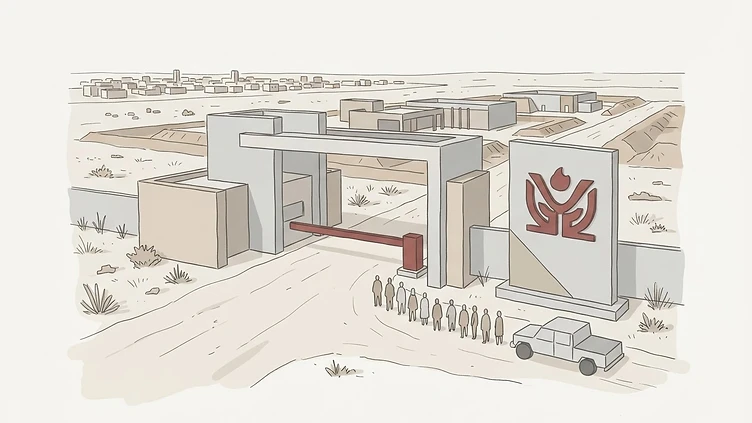
Illustration: Apex Africa picture desk
Mauritania's Ministry of Economy and Sustainable Development issued an open tender on October 29, 2026, for the elaboration of a National Land Program under its Decentralization and Productive Intermediate Cities Support Project, funded by the World Bank. The programme covers a GIS, mapping and cadastral framework; the tender documents set out the scope.
Key judgement
The tender establishes a national cadastral framework. How it interacts with the land-management role of the 238 communes is set by the programme documents, which the file cites; the outcome will be visible in the terms of the awarded contract.
The analysis rests on the official tender document and the established pattern of centralized governance in Mauritania, though the specific impact on local land disputes remains to be seen.
What to watch
- November 2026: Publication of the specific implementation guidelines for the National Land Program.
- December 2026: Initial reaction from local commune councils regarding the loss of land-use authority.
- January 2027: Reports of land-related disputes in rural communes following the start of the GIS mapping process.
Implications for decision-makers
- Local government chairmen must pivot to advocacy to protect their remaining influence over land-use decisions.
- Development organizations should condition their support on the inclusion of local commune participation in the land registry process.
- Political strategists should monitor rural land disputes as a key indicator of potential voter dissatisfaction with the central government.
The Centralization of Land Governance
On October 29, 2026, the Ministry of Economy and Sustainable Development of Mauritania issued an open tender for the 'Decentralization and Productive Intermediate Cities Support Project,' specifically targeting the elaboration of a National Land Program. This initiative, funded by the World Bank, seeks to implement a comprehensive GIS, mapping, and cadastral framework across the country. While framed as a technical modernization effort, the project effectively shifts the locus of land-use decision-making from local commune councils to centralized ministerial oversight.
For the 238 communes that form the bedrock of Mauritanian local government, this development represents a significant erosion of administrative autonomy. Historically, land disputes and allocation have been managed through a combination of local council oversight and traditional customary practices. By standardizing these processes under a national digital mandate, the central government is effectively stripping local officials of their primary tool for grassroots political engagement and community service delivery.
This shift is not merely administrative; it is a fundamental change in the campaign operations of local political actors. In Mauritania, the ability to influence land allocation has long been a cornerstone of local political patronage and community mobilization. By moving the technical and legal authority for land management to the national level, the central government is insulating itself from local accountability while simultaneously weakening the influence of local councillors who can no longer promise land-related solutions to their constituents.
The Gap Between Policy and Local Reality
Government officials argue that the national land program is necessary to resolve persistent land tenure conflicts and attract investment. However, the implementation of such a top-down system ignores the complex, localized nature of land rights in rural and peri-urban Mauritania. Without a mechanism for local commune participation, the digital mapping project risks creating a disconnect between the 'official' state record and the lived reality of residents who rely on informal or customary land agreements.
Accountability mechanisms for this project remain opaque. While the World Bank emphasizes transparency, the tender documents provide no clear role for local ward committees or municipal assemblies in the validation of cadastral data. This lack of local oversight suggests that the government is prioritizing technical efficiency over democratic legitimacy, potentially leading to widespread disputes when the new national land registry conflicts with established local usage patterns.
Furthermore, the timing of this tender, coming shortly after the October 10, 2026, cabinet reshuffle, indicates a broader push by the administration of Prime Minister El Moctar Ould Djay to consolidate control over key economic levers. By centralizing land management, the government is ensuring that the benefits of future development projects are directed through state-approved channels, rather than being subject to the unpredictable negotiations of local commune politics.
Rebutting the Efficiency Argument
Proponents of the national land program contend that local commune councils lack the technical capacity to manage complex land records, making centralization an inevitable and positive step. They argue that a unified, digital system will reduce corruption and speed up the processing of land titles, thereby fostering economic growth. This view assumes that the primary barrier to development is a lack of technical expertise at the local level, rather than a lack of political will to empower local institutions.
This argument fails to account for the fact that technical capacity can be built at the local level if the government chooses to invest in it. By choosing to centralize, the state is not solving a capacity problem; it is choosing to bypass the democratic process of local governance. The centralization of land records effectively removes the 'human' element of local mediation, which is often the only way to resolve disputes in communities where formal legal titles are rare or contested.
Moreover, the history of centralized procurement in Mauritania suggests that such projects often suffer from implementation delays and a lack of responsiveness to local needs. When decisions are made in Nouakchott, they rarely account for the specific environmental or social conditions of a commune in the Trarza or Gorgol regions. The result is often a 'one-size-fits-all' policy that fails to address the unique challenges faced by local residents, ultimately undermining the very development goals the project claims to support.
Scenarios for Local Governance
Looking ahead, the implementation of the National Land Program will likely follow one of three paths. In the first scenario, the government proceeds with a top-down rollout, leading to increased friction between local residents and state surveyors. This would likely result in a surge of land-related litigation and a decline in the popularity of the ruling El Insaf party in rural communes, as residents feel their traditional rights are being ignored by a distant central authority.
In the second scenario, the government may attempt to mitigate backlash by creating 'consultative' committees at the commune level. However, if these committees lack real decision-making power, they will likely be viewed as a performative exercise, failing to restore trust in the state’s land management practices. This would leave local councillors in a difficult position, caught between their constituents' demands for local control and the central government's mandate.
In the third scenario, the government could pivot to a hybrid model, where the national GIS framework is used to support, rather than replace, local land management. This would require a significant investment in training local staff and a willingness to devolve actual authority to the commune level. While this is the most democratic path, it is also the least likely given the current administration's focus on consolidating control over national infrastructure and resources.
Strategic Implications for Stakeholders
For local government chairmen and councillors, the centralization of land management is a direct threat to their political relevance. To remain effective, they must shift their focus from land allocation to advocacy, pressuring the central government to ensure that the new national land program includes robust mechanisms for local input and dispute resolution. They should also seek to document local land usage patterns now, before the national registry is finalized, to ensure that their constituents' claims are represented in the new system.
For development organizations and NGOs, the risk is that they may inadvertently support a project that undermines local democracy. These actors should demand that the World Bank and the Mauritanian government include clear, measurable indicators for local participation and accountability in the project's implementation plan. They should also provide technical support to local communes to help them engage with the new digital system, rather than allowing the state to monopolize the technology.
Finally, for political strategists, the land issue represents a significant opportunity to mobilize voters in the 238 communes. By framing the centralization of land management as an attack on local autonomy and traditional rights, opposition parties can build a powerful narrative that resonates with rural and peri-urban communities. The success of this strategy will depend on the ability of these parties to offer a credible alternative that balances the need for modern land management with the necessity of local control.
Corrected 31 October 2026: The headline read "The Rosso Mirage: Why Decentralization Is a Strategic Shackling of Mauritania’s Borderland Communes". It now reads "Mauritania’s National Land Program Tender: How Centralized Cadastral Control Bypasses Local Ward Autonomy".
Report an error in this briefing