News · Nigeria
Nigeria Faces Financial and Infrastructure Challenges in Renewable Energy Transition
Investment challenges persist despite government commitments to sustainable power
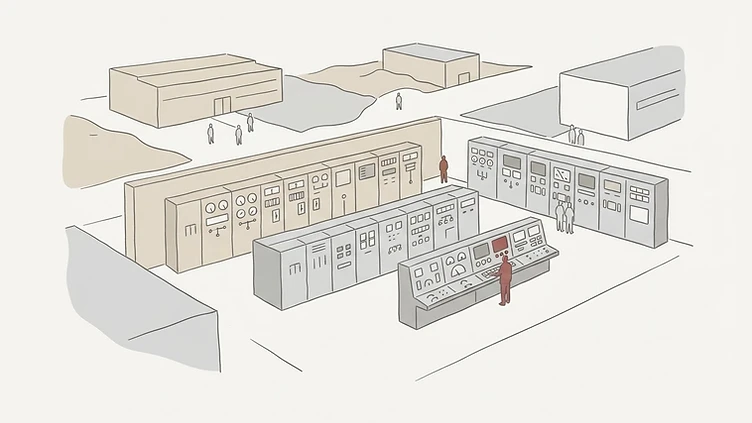
Illustration: Apex Africa picture desk
Nigeria is working to shift its energy mix toward renewables to resolve persistent electricity shortages. Industry reports indicate that financing difficulties and grid limitations continue to impede this progress.
Key judgement
The evidence suggests that INEC's shift to online disclosure is a reactive measure to mitigate growing distrust in its database integrity, but the commission's failure to proactively engage political parties on candidate selection remains a primary source of electoral risk.
The analysis relies on official INEC statements, Supreme Court records, and consistent reporting from multiple independent news outlets regarding the commission's recent administrative actions.
What to watch
- Publication of the final, updated list of governorship candidates following the review of 69 petitions (Expected by November 2026).
- Public response from major opposition parties to the accessibility and accuracy of the online voter register (Ongoing).
- Any further judicial interventions regarding the interpretation of Section 77 of the Electoral Act 2026 (Ongoing).
Implications for decision-makers
- Political parties must prioritize the audit of their internal membership registers to ensure compliance with the Supreme Court's interpretation of the Electoral Act.
- Civil society organizations should focus on independent verification of the online voter register to identify potential anomalies before the final certification.
- Policymakers should consider legislative amendments to clarify the communication protocols between INEC and political parties to reduce the volume of post-publication petitions.
Why it matters
Nigeria is currently intensifying its efforts to transition toward renewable energy sources, aiming to diversify its power mix and address chronic electricity shortages. According to the Ministry of Power, the federal government has initiated several policy frameworks designed to attract foreign direct investment into solar and wind projects. The International Energy Agency notes that Nigeria possesses immense untapped potential in renewable capacity. Despite these hurdles, the federal government remains committed to its net-zero targets, seeking to expand its capacity through these recent initiatives to better serve both urban and rural regions.
What we don't know yet
Industry analysts at the African Development Bank observe that these federal government efforts are consistently hampered by high capital costs and the instability of the national grid. Stakeholders in the renewable sector report that securing long-term financing remains the primary obstacle for the industry, as lenders often perceive the local market as high-risk due to regulatory unpredictability. Furthermore, the International Energy Agency notes that the lack of robust transmission infrastructure prevents these solar and wind projects from reaching scale. Additionally, local energy contractors have told the press that the absence of a standardized legal framework for off-grid power distribution deters potential international partners from engaging in the sector. These combined factors indicate that while the potential exists, the mechanisms for project delivery currently face significant operational and financial barriers.
What to watch
Experts at the Renewable Energy Association of Nigeria suggest that unless the country addresses these systemic financial and infrastructural deficiencies, the transition will likely continue at a slow pace. These experts note that the country risks failing to meet the projected demand for reliable electricity in both urban and rural regions if the current trajectory is not adjusted. Observers will be monitoring whether the federal government can successfully implement measures to reduce the high-risk perceptions held by lenders and finalize a standardized legal framework for off-grid distribution to encourage the necessary influx of foreign direct investment. The ability of the national grid to accommodate new renewable energy inputs remains a critical metric for gauging the success of current policy frameworks.
Corrected 2 November 2026: The headline read "Nigeria's Renewable Energy Push Faces Funding Hurdles". It now reads "Nigeria Faces Financial and Infrastructure Challenges in Renewable Energy Transition".
Report an error in this briefing