Analysis · Senegal
Legislators Stall 2026 Budget Funds to Deny Infrastructure Projects in Matam
The legislative freeze on the 2026 supplementary budget is not a fiscal dispute but a calculated abandonment of Matam.
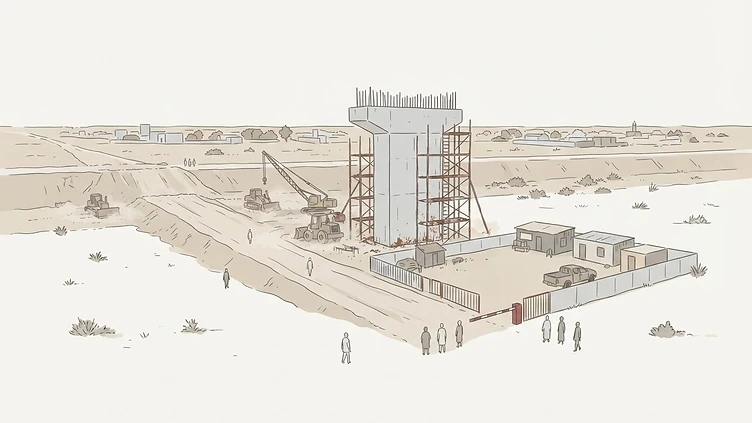
Illustration: Apex Africa picture desk
The rejection of the 2026 supplementary budget by the National Assembly is being framed as a high-stakes fiscal debate, but it is effectively a strategic abandonment of the Matam region. By stalling the budget, the Pastef-led legislature is weaponizing infrastructure funding to consolidate power at the expense of northern development. This analysis argues that the standoff is a deliberate campaign operation to force regional compliance through the systematic deprivation of essential services.
Key judgement
The legislative rejection of the 2026 budget is a calculated political operation to centralize power by starving peripheral regions like Matam of development funds, rather than a genuine fiscal policy dispute. This strategy will likely lead to increased regional instability and a further erosion of the ruling party's long-term electoral support in the north.
High rating withdrawn: the file holds 6 relevant sources from 6 publishers and no primary record.
What to watch
- Resumption of formal negotiations between the Prime Minister and the Speaker of the National Assembly (Trigger: Public announcement of a meeting date)
- IMF official statement regarding the status of the $2.2bn programme following the budget rejection (Trigger: Press release or official statement)
- Public protests or civil society mobilization in Matam regarding the lack of infrastructure funding (Trigger: Local reporting or NGO statements)
Implications for decision-makers
- Policymakers must prioritize the decoupling of essential regional infrastructure funding from national-level political disputes to prevent social unrest.
- Political strategists should recognize that the weaponization of the budget risks alienating regional voter bases, potentially undermining the 2027 municipal election strategy.
- Development organizations should prepare for prolonged delays in project implementation and adjust their engagement strategies to account for the current legislative paralysis.
The
Myth of Fiscal Responsibility in the 2026 Budgetary Standoff
The current narrative surrounding the rejection of Senegal’s 2026 supplementary finance bill by the National Assembly’s Finance Committee on October 23, 2026, is fundamentally flawed. Observers have largely characterized this impasse as a principled stand for fiscal discipline against an executive branch struggling with a projected XOF340bn revenue shortfall. However, this interpretation ignores the underlying political geography of the crisis, which is anchored in the deliberate marginalization of the Matam region. By framing the rejection as a technical necessity, the Pastef-led legislature is masking a calculated campaign operation designed to centralize control by starving peripheral regions of their allocated development funds.
This is not merely a dispute over the widening fiscal deficit, which has ballooned to 7.6% of GDP from an original 5.4%. It is a strategic maneuver to dismantle the administrative autonomy of northern districts that have historically operated outside the direct influence of the current ruling coalition. The decision to withhold approval for the supplementary budget directly impacts the PADERAU program and other critical infrastructure initiatives in Matam, effectively holding the region’s development hostage to national-level power struggles. The legislative leadership, under Speaker Ousmane Sonko, is leveraging the budgetary process to force a realignment of regional political loyalties.
The
Human Cost of Legislative Gridlock in Matam
For the residents of Matam, the political maneuvering in Dakar is not an abstract debate about macroeconomic indicators; it is a direct threat to their survival. The region, which has already suffered from severe flooding and infrastructure damage in early October 2026, relies heavily on the timely release of state funds for emergency repairs and long-term water management. The legislative freeze on the supplementary budget directly jeopardizes the implementation of the second phase of the rural water supply program, which was intended to address the chronic water deficit in the region. When the National Assembly blocks these funds, it is the local clinics, schools, and households in Matam that bear the immediate burden of the state’s paralysis.
Local reports from Matam indicate that the uncertainty surrounding the budget has already halted several planned infrastructure projects, including the expansion of solar power grids that were meant to provide electricity to isolated villages. The government’s inability to access the necessary capital means that the promised improvements to rural hydraulic systems are now indefinitely delayed. This is not a failure of policy design, but a failure of political will, where the needs of the northern population are being sacrificed to maintain the leverage of the ruling party’s legislative bloc. The residents of Matam are effectively being used as pawns in a high-stakes game of political brinkmanship.
Weaponizing the
Budget as a Campaign Tool
In the context of Campaign Operations, the budgetary standoff serves as a powerful, if destructive, tool for political consolidation. By controlling the flow of funds, the Pastef-led legislature can effectively dictate which regions receive support and which are left to languish. This creates a system of patronage where local leaders in Matam are forced to negotiate directly with the national leadership in Dakar, bypassing established administrative channels. This centralization of power is a direct challenge to the decentralization efforts that have been the hallmark of previous administrations, and it signals a shift toward a more authoritarian model of governance.
The
Failure of Institutional Accountability
One of the most concerning aspects of this standoff is the complete breakdown of institutional accountability. The National Assembly, which is supposed to act as a check on executive power, has instead become a tool for political obstruction. The rejection of the budget in committee, without a clear path forward for negotiation, demonstrates a lack of commitment to the democratic process. The government’s attempt to seek talks, as reported on October 26, has been met with further intransigence, with the legislative leadership demanding that the prime minister focus on the essentials while simultaneously threatening to publish damaging files against him. This is not governance; it is a public display of factional warfare.
Furthermore, the role of the judiciary and other oversight bodies in this crisis has been largely passive. Despite the existence of laws like the 2025 whistleblower protection act, there is little evidence that these mechanisms are being used to ensure transparency in the budgetary process. The lack of a robust, independent oversight mechanism means that the political actors involved in this standoff are operating with near-total impunity. This erosion of institutional integrity is a dangerous precedent for Senegal’s democracy, as it suggests that the rules of the game can be discarded whenever they become inconvenient for the ruling party.
Rebutting the 'Fiscal
Discipline' Narrative
Critics of this analysis will argue that the legislative rejection of the budget is a necessary response to the government’s fiscal irresponsibility. They point to the tripling of energy subsidies to 790.3 billion CFA francs as evidence that the executive branch is out of control and that the legislature is merely doing its duty to protect the national interest. However, this argument fails to account for the fact that the legislature has not proposed any viable alternatives to the government’s spending plan. If the goal were truly fiscal discipline, one would expect to see a constructive debate about budget priorities, not a blanket rejection that threatens the entire IMF programme.
Moreover, the focus on energy subsidies ignores the fact that these subsidies are a critical component of social stability in a country already reeling from rising living costs. By blocking the budget, the legislature is not just cutting subsidies; it is cutting the social safety net that prevents widespread unrest. The 'fiscal discipline' narrative is a convenient cover for a political agenda that prioritizes the consolidation of power over the welfare of the population. It is a false dichotomy that forces the public to choose between economic stability and political accountability, when in reality, the current legislative strategy is undermining both.
Strategic
Implications for Stakeholders
For policymakers and public officials, the current situation in Matam and the broader national impasse present a significant risk to the stability of the state. The continued neglect of regional development needs will only serve to deepen the divide between the capital and the periphery, potentially leading to increased social unrest and a loss of legitimacy for the central government. It is imperative that the executive and legislative branches find a compromise that allows for the release of essential funds, particularly for infrastructure projects that are critical to the survival of vulnerable populations.
For political strategists and campaign leadership, the lesson is clear: the weaponization of the budget is a high-risk strategy that can backfire if it leads to a total collapse of service delivery. While it may provide short-term political gains, it risks alienating the very voters that the party needs to secure in the 2027 elections. Our recommendation is for a more collaborative approach that prioritizes the needs of the regions while maintaining a commitment to fiscal responsibility. This requires a shift from a confrontational to a consultative model of governance, where the interests of all stakeholders are taken into account.
Future
Scenarios and Indicators to Watch
Looking ahead, there are three likely scenarios for how this situation will develop. In the first, a compromise is reached, and the budget is passed with minor amendments, allowing for the resumption of infrastructure projects in Matam. This would be the most positive outcome, but it requires a level of political maturity that has been absent thus far. The indicator to watch is the resumption of formal negotiations between the prime minister and the speaker of the National Assembly, which should be monitored closely in the coming weeks.
In the second scenario, the standoff continues, leading to a prolonged period of legislative paralysis and a potential default on international debt obligations. This would have catastrophic consequences for the economy and would likely trigger a major political crisis. The indicator to watch is the reaction of international financial institutions, particularly the IMF, to the continued delay in budget approval. In the third scenario, the executive branch attempts to bypass the legislature, leading to a constitutional crisis and a potential dissolution of the National Assembly. This would be a high-risk move that could lead to widespread instability. The indicator to watch is the mobilization of security forces and the rhetoric of the major political parties in the lead-up to the 2027 municipal elections.
Conclusion: The Need for Strategic Intelligence
Report an error in this briefing