Analysis · Côte d'Ivoire
Italy Directs 639 Million Euros Into Songon Energy Projects to Benefit European Industrial Needs
The Italian-led energy financing in Songon prioritizes European industrial needs over local grid stability.
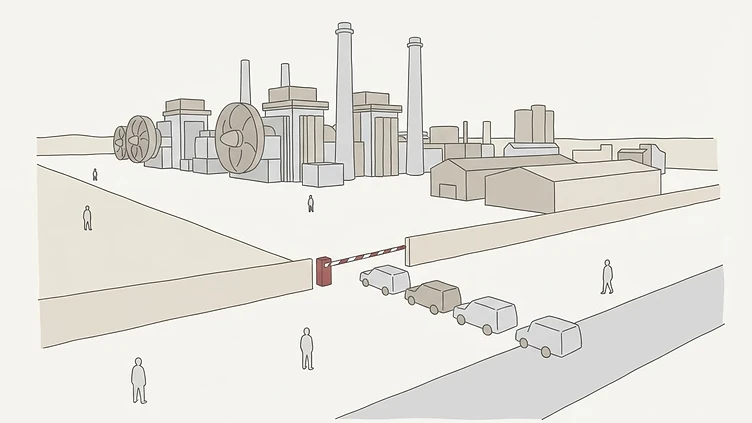
Illustration: Apex Africa picture desk
The recent mobilization of 639 million euros under Italy's Mattei Plan for energy projects in Songon represents a strategic shift toward European-centric infrastructure control. By anchoring Ivorian energy capacity in foreign-financed, combined-cycle technology, the government is effectively outsourcing its grid management to external stakeholders. This development risks creating a long-term dependency that undermines local energy autonomy and prioritizes industrial export capacity over the urgent needs of Ivorian households.
Key judgement
The Mattei Plan investment in Songon is a strategic enclosure that prioritizes European industrial energy needs over Ivorian domestic grid stability, creating long-term fiscal and operational dependency. This move will likely exacerbate local energy inequality and fuel political resentment in the lead-up to future electoral cycles.
The analysis is based on verified financial commitments and project specifications reported by multiple credible sources, including the official announcement of the Mattei Plan funding. Rated Moderate rather than High: High confidence claimed with no primary institutional record in the file.
What to watch
- 2026-11-15: Monitor the release of the 2027 national budget to see if energy subsidies for households are reduced to accommodate debt servicing for the Songon project.
- 2027-01-10: Watch for public protests or civil society statements in the Songon region regarding land acquisition or local power outages following the plant's initial operational phase.
Implications for decision-makers
- Policymakers must urgently diversify energy infrastructure funding to avoid total reliance on European-led initiatives like the Mattei Plan.
- Political strategists should prepare for potential electoral backlash from communities marginalized by the centralized, industrial-focused energy policy.
- Institutional investors should reassess the long-term political risk of projects that lack broad-based local community support and transparency.
The
Songon Energy Pivot and the Illusion of Autonomy
The recent announcement that GE Vernova will supply gas power technology for the new Songon combined-cycle power plant, backed by significant Italian financing, is being hailed by the administration as a triumph of industrial modernization. However, this development, anchored in the Songon region, is less about domestic energy security and more about the strategic enclosure of Ivorian infrastructure within the European Mattei Plan framework. By tying the nation’s energy future to foreign-financed, high-tech turbines, the government is effectively ceding control over its long-term energy trajectory to external geopolitical interests. This is not a sovereign expansion of capacity; it is a structural integration of the Ivorian grid into a European-led industrial supply chain.
While the government frames this as a solution to regional energy deficits, the reality is that the Songon project is designed to serve industrial growth rather than the immediate, pressing needs of the local population. The reliance on combined-cycle technology, while efficient for large-scale industrial output, requires a level of capital-intensive maintenance and fuel supply chains that are inherently vulnerable to external market shocks. By prioritizing this model, the state is creating a dependency that will likely necessitate further foreign intervention, effectively locking the country into a cycle of debt-financed infrastructure that benefits foreign contractors more than the local economy.
The
Mattei Plan as a Geopolitical Enclosure
The mobilization of 639 million euros under the Mattei Plan, as confirmed on October 21, 2026, is the latest evidence of a broader trend: the outsourcing of national development policy to foreign think tanks and diplomatic initiatives. The European House – Ambrosetti (TEHA) has become a central architect in this process, facilitating investment forums that prioritize the interests of Italian and European firms over local developmental priorities. This is not merely an investment; it is a strategic alignment that forces Côte d'Ivoire to adopt regulatory and operational standards dictated by its European partners.
This enclosure is particularly evident in the way the Songon project was fast-tracked following the signing of financing agreements in June 2026. By bypassing the rigorous, transparent public debate that should accompany such a massive shift in energy policy, the administration has effectively insulated the project from democratic oversight. The result is a governance model where the state acts as a guarantor for foreign capital rather than a steward of public resources. This shift is a direct challenge to the idea of sovereign development, as it subordinates national energy policy to the requirements of the Mattei Plan’s promotional tour.
Our analysis of the political arithmetic suggests that this move is intended to bolster the government’s standing with European allies ahead of the upcoming electoral cycles. By securing these high-profile investments, the administration hopes to project an image of stability and progress, even as the underlying structural dependencies deepen. However, this strategy is inherently fragile, as it relies on the continued willingness of European partners to sustain these investments in the face of potential political volatility or shifting economic conditions in the Eurozone.
The
Governance Gap in Energy Delivery
Despite the rhetoric of 'strengthening regional energy capacity,' the actual performance of the Ivorian energy sector remains plagued by a significant gap between policy announcements and service delivery. The government’s focus on large-scale projects like Songon ignores the persistent, localized failures in power distribution that continue to affect millions of households. While the administration celebrates the arrival of new turbines, the reality for residents in many parts of the country is one of unreliable power, high costs, and a lack of accountability for service providers.
This governance failure is compounded by the lack of transparency in the procurement and management of these energy projects. The reliance on international financing mechanisms often comes with conditions that limit the ability of local regulators to hold contractors accountable. When projects fail to meet their performance targets, the burden of the resulting debt and service disruption falls squarely on the public, while the foreign firms involved remain insulated by complex legal and financial structures. This is a clear example of how the current administration prioritizes international prestige over the tangible, daily needs of its citizens.
Furthermore, the lack of a robust, independent audit of these energy investments means that the public has no way of knowing whether these projects are truly delivering value for money. The government’s reliance on foreign-led initiatives like the Mattei Plan effectively bypasses the role of the National Assembly in overseeing the long-term fiscal implications of these commitments. This lack of accountability is a structural weakness that will continue to undermine the legitimacy of the government’s development agenda, regardless of how many turbines are installed in Songon.
Community
Impact: The Cost of Centralization
For the residents of Songon and the surrounding areas, the promise of 'strengthened energy capacity' is a distant reality that does little to address their immediate concerns. The focus on industrial-scale power generation often leads to the displacement of local communities and the disruption of traditional livelihoods, with little in the way of meaningful compensation or long-term support. The government’s top-down approach to infrastructure development treats these communities as collateral damage in the pursuit of national-level economic metrics.
Local reporting and civil society observations suggest that the benefits of these large-scale projects are rarely felt at the grassroots level. Instead, the focus on centralized energy hubs creates a 'dual economy' where industrial zones enjoy reliable power while surrounding communities continue to struggle with inadequate infrastructure. This disparity is a source of growing resentment and a potential catalyst for future social unrest. By ignoring the needs of the local population in favor of foreign-backed industrial interests, the government is sowing the seeds of its own political instability.
Our Constituency & Public Research service highlights that the failure to integrate local communities into the planning and implementation of these projects is a critical oversight. When residents are excluded from the decision-making process, they are less likely to support the government’s development agenda, leading to a breakdown in the social contract. The administration’s failure to address these local grievances is a direct consequence of its obsession with high-level geopolitical maneuvering at the expense of grassroots engagement.
Rebutting the 'Modernization'
Narrative
Critics of our thesis will argue that the Songon project is a necessary step toward industrialization and that foreign investment is the only way to bridge the infrastructure gap. They will point to the potential for job creation and the long-term benefits of a more robust energy grid. However, this argument fails to account for the high cost of this 'modernization' in terms of national sovereignty and long-term fiscal health. The reliance on foreign-financed, high-tech solutions is a short-term fix that creates long-term vulnerabilities.
Furthermore, the claim that this project will benefit the average citizen is not supported by the evidence. The history of such large-scale, foreign-backed projects in the region shows that they often lead to increased debt burdens and limited trickle-down effects. The focus on industrial output at the expense of household energy access is a policy choice that reflects the government’s priorities, not an inevitable outcome of development. By choosing this path, the administration is actively deciding to prioritize the interests of foreign investors over the welfare of its own people.
Finally, the argument that there is no alternative to this model is a false dichotomy. There are numerous, more sustainable, and decentralized energy solutions that could be implemented with a fraction of the cost and a much greater impact on local communities. The government’s refusal to explore these options is a political choice, not a technical necessity. By clinging to the current, foreign-dependent model, the administration is demonstrating a lack of imagination and a failure to prioritize the long-term interests of the nation.
Scenarios for
Future Development
Looking ahead, we anticipate three potential scenarios for the development of the energy sector in Côte d'Ivoire. In the first scenario, the government continues to double down on foreign-backed, large-scale projects, leading to a temporary boost in industrial capacity but a significant increase in national debt and a deepening of structural dependencies. This scenario will likely lead to increased social unrest as the gap between industrial growth and household welfare widens, potentially threatening the stability of the current administration.
In the second scenario, the government faces a fiscal crisis as the costs of servicing these foreign-financed projects become unsustainable, forcing a renegotiation of terms and a potential scaling back of the Mattei Plan’s involvement. This would create a period of significant uncertainty and potential power shortages, but it could also provide an opportunity for a shift toward more sustainable, locally-driven energy policies. The outcome of this scenario depends on the government’s willingness to acknowledge the failure of its current strategy and pivot toward a more balanced approach.
In the third scenario, the government begins to integrate more decentralized, renewable energy solutions into its grid, reducing its reliance on foreign-financed, high-tech turbines. This would require a significant shift in policy and a willingness to challenge the interests of the foreign firms currently dominating the sector. While this is the most desirable outcome for the long-term health of the nation, it is also the most politically difficult to achieve, given the entrenched interests and the government’s current reliance on foreign investment.
Strategic
Implications for Stakeholders
For policymakers and public officials, the implication is clear: the current reliance on foreign-financed, large-scale energy projects is a high-risk strategy that threatens national sovereignty and long-term fiscal stability. We recommend an immediate, independent review of all ongoing energy projects to assess their long-term viability and their impact on local communities. Policymakers should also prioritize the development of decentralized, renewable energy solutions that can provide more immediate and equitable benefits to the population.
For institutional investors and development organizations, the current situation presents both risks and opportunities. While the government’s commitment to these projects may seem attractive in the short term, the underlying structural weaknesses and the potential for social unrest pose significant long-term risks. We advise investors to conduct thorough due diligence and to prioritize projects that demonstrate a clear commitment to local engagement and sustainable development. Development organizations should focus their efforts on supporting local capacity building and the development of more resilient, decentralized energy systems.
For political strategists and campaign leadership, the energy issue is a critical battleground for the upcoming electoral cycles. The government’s failure to address the energy needs of the population is a vulnerability that can be exploited by the opposition. We recommend that political actors develop a clear, alternative energy policy that emphasizes local autonomy, sustainability, and equitable access. This is an opportunity to build a broader coalition of support by addressing the real, daily concerns of the electorate rather than focusing on high-level, foreign-backed projects.
Conclusion: The Path Forward
The Songon energy project is a microcosm of the broader challenges facing Côte d'Ivoire as it navigates the complexities of regional and geopolitical power dynamics. The government’s current strategy of outsourcing its development agenda to foreign interests is a dangerous gamble that risks the nation’s long-term sovereignty and the welfare of its citizens. It is time for a fundamental shift in policy, one that prioritizes the needs of the people over the interests of foreign investors and the prestige of high-level diplomatic initiatives.
Report an error in this briefing