Analysis · Kenya
Homa Bay Arrests Highlight Tensions in Nyanza Ahead of 2027 General Election
The recent crackdown on political goonism in Homa Bay reveals a desperate attempt to enforce order without reform.
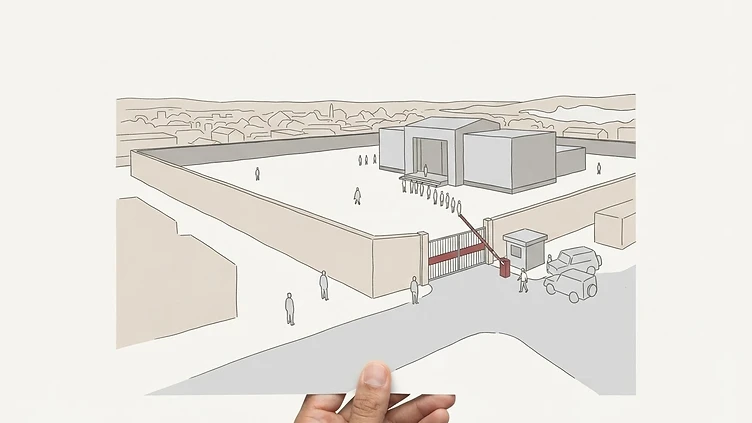
Illustration: Apex Africa picture desk
The recent arrest of 56 individuals in Homa Bay by the DCI reflects a state-led strategy of political containment rather than neutral law enforcement, signaling deeper structural instability in Nyanza ahead of the 2027 polls.
Key judgement
The state's reliance on coercive security operations in Homa Bay will fail to suppress political patronage networks and will instead increase grassroots alienation, likely leading to more volatile and unpredictable campaign dynamics as the 2027 election approaches.
The assessment is based on consistent reporting from multiple independent sources regarding the state's security-led approach and the documented failure of similar tactics to address the underlying patronage-driven political economy in Nyanza. Rated Moderate rather than High: High confidence claimed with no primary institutional record in the file.
What to watch
- Frequency of DCI-led arrests in Homa Bay targeting political actors (Trigger: 3+ additional operations before Dec 2026)
- Public response and protest levels in Homa Bay following the October 27 arrests (Trigger: Any organized demonstration or civil society statement)
- Official government statements on the 'goonism' crackdown (Trigger: Any shift from security-led rhetoric to dialogue-based policy)
Implications for decision-makers
- Political strategists must pivot from transactional mobilization to resilient, community-based organizing to avoid state-led legal and security risks.
- Policymakers should recognize that security-led interventions in Nyanza are counterproductive and risk further destabilizing the region ahead of 2027.
- Institutional investors and NGOs should anticipate increased political volatility in Homa Bay and adjust their risk assessments for regional development projects.
Why it matters The recent arrest of 56 individuals in Homa Bay County on October 27, 2026, by the Directorate of Criminal Investigations (DCI) is being presented by the state as a decisive blow against political goonism. Regional Criminal Investigations Officer George Mutonya has framed this crackdown as a neutral enforcement of the law, intended to sanitize the political environment ahead of the 2027 General Election. However, this narrative ignores that these arrests are a blunt instrument of political containment. By targeting the foot soldiers of local political movements, the state attempts to suppress the symptoms of a deeper, structural crisis in Nyanza’s political economy. This crackdown is a strategic intervention designed to weaken the influence of local political factions that operate outside the orbit of the ruling Kenya Kwanza administration. The state’s reliance on the DCI to manage political competition suggests a failure of traditional political intelligence. Instead of engaging with the underlying grievances that drive youth toward political violence, the government is opting for a coercive model that risks radicalizing the very grassroots networks it seeks to pacify. The focus on 'goonism' serves as a label to delegitimize any form of organized political dissent in a region that has historically been a bastion of opposition politics. Governance in Homa Bay is currently defined by a widening gap between the rhetoric of service delivery and the reality of political instability. While officials like Interior PS Raymond Omollo urge residents to support the government unconditionally, the reality on the ground is one of deep-seated suspicion. The state’s attempt to force a shift in political allegiance through infrastructure projects is failing to gain traction because it ignores the historical context of Nyanza politics. This governance failure is exacerbated by the lack of accountability in the use of public funds, as evidenced by the recent High Court order for former Homa Bay officials to refund Sh12.57 million in misappropriated public funds. When the state fails to demonstrate integrity in its own administrative processes, its calls for political civility fail to gain traction. The residents of Homa Bay are observing a state that is struggling to maintain its legitimacy in a region fundamentally unconvinced by its development agenda. The reliance on security agencies is a clear indicator of a government that has lost the ability to govern through consensus. ## What we don't know yet In Homa Bay, the political campaign is a high-stakes mobilization economy. As reported on October 24, 2026, crowds have become a commodity to be assembled, transported, and paid for. When political actors treat supporters as a transactional resource, the line between a legitimate rally and a managed display of force becomes blurred. The state’s current crackdown fails to recognize that these 'goons' are often the essential logistics providers for a political class that has abandoned grassroots organizing in favor of spectacle. By criminalizing the participants in this economy without addressing the financiers, the state is engaging in a performative exercise that does little to change underlying incentives. The political class in Homa Bay continues to rely on these networks to project power, knowing the state’s intervention is selective. This creates a perverse incentive structure where violence is encouraged to demonstrate political relevance. The state’s failure to hold the architects of this violence accountable, while focusing on street-level actors, reinforces the perception that the law is being used as a weapon. Furthermore, the focus on 'goonism' is a distraction from the need for a more robust electoral framework addressing root causes like the lack of internal party democracy and the absence of transparent campaign financing. The state’s preference for coercion over engagement is a strategic choice prioritizing short-term control over long-term stability. This approach is not a solution; it is a catalyst for future conflict. ## What to watch Looking ahead, the situation in Homa Bay is likely to follow one of three paths. In the first, the state continues its coercive approach, leading to an increase in localized, sporadic violence as political actors find new, clandestine ways to mobilize. In the second, the state pivots toward a more inclusive approach, engaging with local leaders to de-escalate tensions. In the third, the political landscape becomes fragmented, with local actors forming new, issue-based coalitions that bypass traditional party structures. The frequency of security operations, the level of public cooperation with law enforcement, and the emergence of independent political voices are key metrics. Critics of this analysis might argue that the state’s intervention is a necessary evil to prevent the breakdown of order. They would point to the violence reported on August 16, 2026, as evidence that the situation required a firm hand. However, this view fails to account for the fact that the state’s intervention is itself a source of instability. By choosing to act against specific political movements while ignoring the provocations of others, the state is actively participating in the very polarization it claims to be fighting. Political organizations must invest in data-driven strategies that allow them to anticipate and respond to the state’s tactics. By leveraging AI and Data Intelligence, campaigns can better map voter sentiment and identify areas where the state’s narrative is failing to resonate. For policymakers, the strategy of using security agencies to manage political competition is unsustainable. Think tanks and NGOs should focus their efforts on monitoring the state’s actions and providing independent analysis. The resilience of local political networks and the ability of the state to manage these outcomes remain the primary variables determining regional stability before the 2027 election.
Report an error in this briefing