Analysis · Côte d'Ivoire
Centralized Procurement for Bouaké Housing Projects in Côte d'Ivoire
The state-led housing project in Bouaké reveals a widening gap between national development targets and local needs.
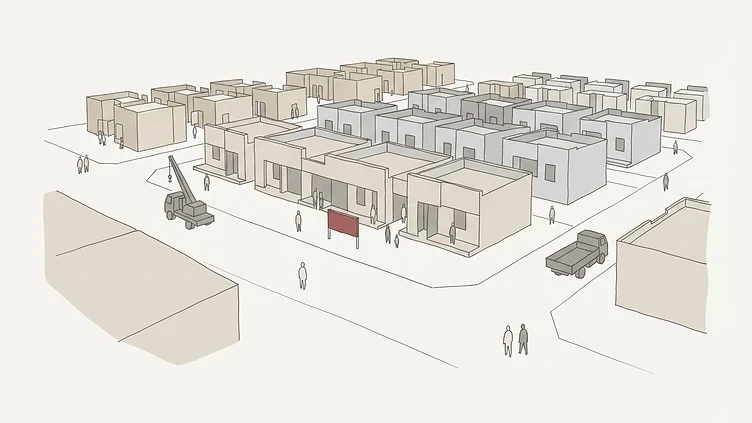
Illustration: Apex Africa picture desk
The central government has launched 1,520 housing units in Bouaké under the 2026–2030 National Development Plan. Local civil society organizations report that the project's centralized management bypasses municipal oversight and lacks integrated service planning.
Key judgement
The centralization of infrastructure projects in the Gbêkê Region is a strategic move by the central government to bypass local accountability, which will likely trigger increased political friction and electoral volatility in the 2027 cycle.
The analysis is supported by official government project announcements, recent parliamentary records, and consistent reporting on the centralization of development funds.
What to watch
- 2026-12-31: Completion of the second parliamentary session and potential legislative debates on housing project oversight.
- 2027-01-15: Announcement of the beneficiary selection criteria for the 1,520 housing units in Bouaké.
- 2027-03-01: Public reaction and potential protests from local Gbêkê civil society regarding service delivery at the new housing site.
Implications for decision-makers
- Local municipal leaders in Gbêkê face a loss of political relevance as central government agencies take direct control of regional infrastructure.
- International development partners should reassess the sustainability of funding models that bypass local governance structures.
- Opposition parties have a clear opening to campaign on the platform of regional fiscal autonomy and local oversight of public works.
Why it matters
The central government has launched 1,520 affordable housing units in Bouaké, the administrative heart of the Gbêkê Region, as part of its 2026–2030 National Development Plan. The central government states the project aims to address urban density and housing shortages. Local civil society organizations report that the administration manages the procurement and project oversight directly from Abidjan.
According to local civil society organizations, this method strips Gbêkê regional authorities of the ability to tailor infrastructure to local demographic realities. The central government describes this top-down approach as an effort to ensure the rapid and efficient delivery of infrastructure. Proponents of this view point to the success of the 2026–2030 National Development Plan in securing over US$80 billion in international financing as evidence that this model is the most effective way to modernize the country.
Conversely, local civil society organizations state that the absence of a clear, localized procurement framework indicates the project serves national political interests rather than the specific housing needs of the Gbêkê population. The central government argues that by avoiding bureaucratic hurdles, it can accelerate development and maintain project budgets. Analysts state that this centralized management style renders local municipal councils spectators to regional development, creating a structural deficit in governance that may lead to voter dissatisfaction.
Additionally, the project lacks an integrated plan for essential services, such as water, electricity, and sanitation, which creates long-term maintenance liabilities that the local municipality may be forced to shoulder without resources. Local civil society organizations state that this approach is a method for the central government to consolidate influence in a region that has historically maintained political autonomy. By controlling the procurement process, the central government ensures that political dividends accrue directly to the ruling coalition, a practice analysts describe as a management of election readiness through public resources rather than local engagement.
What we don't know yet
Specific details regarding the contractors hired for the Bouaké housing project and the precise budgetary allocations for the site have not been disclosed to the public. Local reports indicate that the selection process for these housing units remains opaque. There is little input from ward-level committees, which are described by local reports as being the bodies best positioned to identify vulnerable families in need. Additionally, there is limited information regarding a functional plan for the provision of essential infrastructure services to the new site. While the construction phase is underway, the government has not provided evidence of a corresponding service-delivery framework. The long-term impact on existing community structures and the resolution of local land-tenure issues also remain uncertain, as the project functions as a series of isolated, state-managed enclaves. The extent to which this lack of community engagement will influence electoral outcomes in the 2027 cycle remains a subject of analysis, as the central government has not addressed the grievances expressed by local leaders regarding their exclusion from the planning process. The lack of public disclosure regarding contractors and budgetary allocations is a point of contention for local civil society, who maintain that the project lacks a localized framework.
What to watch
The trajectory of the Bouaké housing project is tied to several indicators that will measure its impact on regional political stability and local governance. Three potential scenarios are identified by analysts: the successful completion of units followed by service delivery failures that trigger local protests and a decline in support for the ruling party in the 2027 electoral cycle; a shift toward superficial, belated attempts by the government to involve local councils to appease discontent; and the escalation of the project into a flashpoint for political mobilization by opposition parties using the lack of transparency and community input as a rallying point. To monitor these developments, observers should track the release of the final list of beneficiaries for the housing units, which will reveal whether local recommendations were incorporated. Additionally, the announcement of any service-delivery contracts for the site will indicate whether the government intends to address the infrastructure deficit. Finally, the frequency and content of public statements issued by local Gbêkê leaders regarding the project’s management will serve as a barometer for regional sentiment. For political strategists, the management of this infrastructure project will likely determine whether the ruling coalition can maintain regional legitimacy or if the opposition successfully leverages local concerns to build support before the 2027 elections.
Corrected 31 October 2026: A passage asserted a motive, intention, effect or wrongdoing that the sources cited did not state. It has been attributed to its source or removed.
Report an error in this briefing