Analysis · Cameroon
Cameroon Diverges Between North West Infrastructure Projects and National Assembly Payroll Audits
While the executive prioritizes visible regional projects in Bamenda, the legislature is turning inward to audit its own payroll.
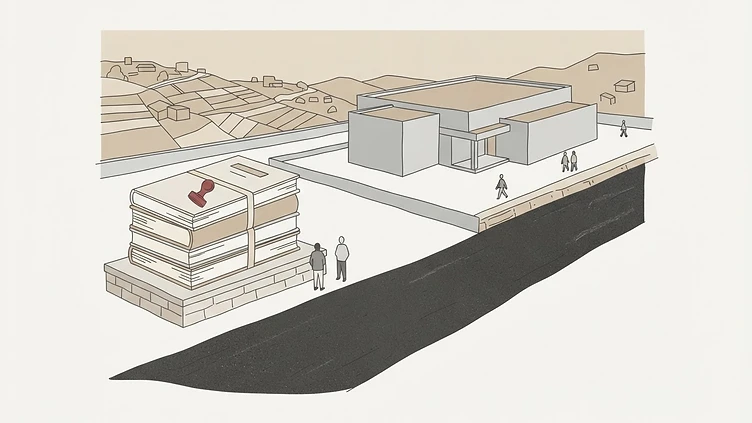
Illustration: Apex Africa picture desk
The Cameroonian state is currently pursuing two distinct administrative paths: a high-visibility infrastructure push in the North West Region and a defensive, inward-looking bureaucratic audit within the National Assembly. This divergence exposes a regime attempting to project stability in restive areas while simultaneously tightening control over its own legislative apparatus. The failure to reconcile these disparate strategies suggests that the upcoming 2027 electoral cycle will be defined by managed optics rather than substantive institutional reform.
Key judgement
The government's dual-track strategy of regional infrastructure investment and legislative administrative auditing is a defensive maneuver to consolidate power ahead of the 2027 elections, rather than a genuine effort at governance reform. This approach will likely fail to address the underlying political alienation in the North West, creating a high risk of electoral volatility.
The analysis is based on consistent reporting from multiple independent sources regarding the government's recent actions in Bamenda and the National Assembly's internal audit.
What to watch
- 2027 National Budget release: Watch for shifts in infrastructure spending vs. administrative payroll costs.
- National Assembly reorganization outcome: Watch for the consolidation of leadership power following the staff census.
- North West regional security: Watch for any uptick in unrest following the completion of the current infrastructure phase.
Implications for decision-makers
- Policymakers must recognize that infrastructure projects in conflict zones are insufficient to replace political inclusion.
- Institutional investors should discount the stability of the current regime until the 2027 electoral process is clarified.
- Opposition leadership must pivot from criticizing government optics to presenting a comprehensive alternative governance vision.
The
Divergence of State Priorities
As of late October 2026, the Cameroonian state is operating under a dual-track strategy that reveals the fragility of its current governance model. In the North West Region, specifically in the regional capital of Bamenda, the government is aggressively pushing a narrative of reconstruction and service delivery. Prime Minister Dion Ngute’s visit on October 14, 2026, to evaluate state-funded infrastructure projects serves as the primary anchor for this executive-led campaign. By focusing on the physical manifestation of the state—roads, clinics, and administrative offices—the government aims to reclaim legitimacy in a region long defined by conflict and alienation.
Conversely, in the halls of the National Assembly in Yaoundé, the focus is entirely different. The legislature is currently preoccupied with an internal administrative overhaul following a physical staff census conducted between September 10 and 23, 2026. While the executive branch is busy attempting to build outward in the North West, the legislative branch is busy auditing its own payroll and organizational structure. This disconnect is not merely a matter of departmental focus; it is a fundamental misalignment in how the state perceives its own survival.
For the ruling RDPC, the North West infrastructure push is a calculated attempt to demonstrate that the state is still functional and capable of delivering public goods. However, the simultaneous inward turn of the National Assembly suggests that the political elite is more concerned with securing its own institutional house than with addressing the broader systemic failures that have plagued the country for decades. This is a classic case of political containment: using development as a shield in the periphery while using administrative audits as a sword in the center.
The
Bamenda Infrastructure Pivot
Prime Minister Dion Ngute’s visit to Bamenda was not a routine administrative check; it was a high-stakes political performance. By personally evaluating progress on projects linked to the 2019 Major National Dialogue, the government is attempting to validate the promises made during that period of intense national crisis. The focus on the Office of the Public Independent Conciliator is particularly telling, as it represents the state’s attempt to institutionalize grievance resolution in a region where the state’s authority has been severely contested.
However, the governance reality on the ground remains starkly different from the rhetoric of the Presidential Plan. While the government highlights the completion of the first construction phase of key institutions, the actual impact on the daily lives of Bamenda’s residents is mediated by the ongoing security situation. Infrastructure projects in a conflict zone are often viewed by the local population as temporary concessions rather than permanent improvements. The government’s reliance on these projects to buy peace is a strategy that has historically yielded diminishing returns.
Furthermore, the reliance on partner-funded projects to drive this development suggests that the state’s own fiscal capacity is limited. When the government must rely on external partners to fund basic infrastructure in a regional capital, it exposes the structural weakness of the national budget. This is not a sign of a robust, self-sustaining state; it is a sign of a state that is increasingly dependent on external validation to maintain its domestic authority.
For political strategists, the Bamenda pivot is a reminder that visibility is not the same as viability. The government is betting that the residents of the North West will prioritize the completion of a road or a clinic over the deeper political grievances that have fueled the regional crisis. This is a high-risk gamble that ignores the reality that infrastructure without political inclusion is merely a target for future dissent.
The
National Assembly’s Defensive Audit
While the executive is busy in Bamenda, the National Assembly is engaged in a defensive crouch. The staff census conducted in September 2026 is a clear signal that the legislature is preparing for a period of intense scrutiny. By verifying staffing levels and updating administrative records, the Assembly is attempting to clean up its own house before the 2027 elections. This is a standard move for an institution that fears the potential for political turnover and the subsequent exposure of past irregularities.
This administrative reorganization, which follows similar moves by the Senate, suggests that the legislative leadership is anticipating a shift in the political winds. By establishing a personnel database that accurately reflects the workforce, the Assembly is creating a baseline of control that will be difficult for any incoming opposition to dismantle. This is not about efficiency; it is about institutional entrenchment. The leadership is ensuring that the administrative machinery of the state remains firmly in the hands of the current establishment.
Critics might argue that this is a necessary step toward modernization and accountability. However, the timing of the audit—just months before the expected 2027 elections—suggests a more cynical motive. It is a preemptive strike against the possibility of a new administration coming in and finding a bloated, unmanageable, or corrupt bureaucracy. By auditing itself now, the current leadership is setting the terms of the transition, or lack thereof.
Rebutting the
Stability Narrative
Proponents of the current government’s strategy will argue that these actions—the infrastructure push in the North West and the administrative audit in Yaoundé—are evidence of a state that is finally getting its act together. They will point to the completion of projects in Bamenda as proof that the government is responsive to local needs, and they will cite the legislative audit as proof that the government is committed to institutional integrity. This narrative is seductive, but it is fundamentally flawed.
Stability is not the absence of conflict or the presence of a clean payroll; it is the presence of a functioning social contract. The government’s current approach is entirely top-down, focusing on the mechanics of power rather than the substance of governance. By treating the North West as a project site and the National Assembly as a personnel file, the government is ignoring the fundamental political reality: the people of Cameroon are demanding a change in the way they are governed, not just a change in the way the state manages its own affairs.
Furthermore, the argument that these actions are evidence of a "new" approach ignores the fact that they are deeply rooted in the same old patterns of patronage and control. The infrastructure projects are still tied to the same political networks that have dominated the region for decades, and the legislative audit is still being conducted by the same leadership that has presided over the Assembly for years. Nothing has fundamentally changed; only the optics have been updated for the 2027 cycle.
We must also confront the reality that these actions are reactive, not proactive. The government is not leading; it is responding to the pressure of the upcoming elections and the persistent threat of instability. This is a state that is running on autopilot, as many opposition leaders have correctly identified. The fact that the President has returned to the country does not change the underlying reality that the state is struggling to maintain its grip on power.
The 2027
Electoral Calculus
As we look toward the 2027 elections, the divergence between the executive and legislative strategies will become even more pronounced. The government will continue to use the North West as a showcase for its "developmental" credentials, while the National Assembly will continue to focus on internal consolidation. This will create a fragmented political landscape where the ruling party is fighting on two fronts: one in the regions, where it must prove its relevance, and one in the capital, where it must protect its institutional base.
Opposition parties, such as the MRC under its new leader Tiriane Noah, will need to navigate this landscape with extreme caution. The government’s strategy is designed to force the opposition into a trap: if they criticize the infrastructure projects, they are seen as anti-development; if they ignore the legislative audit, they are seen as uninterested in institutional reform. The opposition must find a way to bridge this gap and present a coherent alternative that addresses both the regional and national dimensions of the crisis.
The ruling party’s jitters, as reported by Africa Intelligence on October 23, 2026, are a clear indication that the leadership is aware of its vulnerability. The decision to set the elections in motion despite these concerns is a sign of desperation, not confidence. The government is betting that the opposition will remain divided and that the status quo will hold, but this is a gamble that could easily backfire if the public’s frustration reaches a breaking point.
Scenarios for the
Coming Months
Scenario 1: The government successfully manages the optics of the 2027 elections, using the infrastructure projects to secure a narrow victory in the North West and the legislative audit to maintain control in Yaoundé. This would lead to a continuation of the current, stagnant governance model, with the state becoming increasingly isolated from the needs of its citizens.
Scenario 2: The government’s strategy fails to resonate with the public, and the opposition manages to build a broad-based coalition that challenges the ruling party’s hegemony. This would lead to a period of intense political instability, as the current leadership struggles to maintain its grip on power in the face of widespread public dissatisfaction.
Scenario 3: The internal crisis within the ruling party, exacerbated by the legislative audit and the pressure of the upcoming elections, leads to a fracturing of the elite. This would create a power vacuum that could be exploited by both the opposition and other actors, leading to a period of unpredictable political maneuvering and potential conflict.
Watch items for the coming months include: the release of the 2027 budget, which will reveal the government’s true priorities; the outcome of the National Assembly’s administrative reorganization, which will show how much power the current leadership is willing to consolidate; and any further developments in the North West, which will indicate whether the government’s infrastructure push is having any real impact on the ground.
Strategic
Implications for Stakeholders
For policymakers and public officials, the implication is clear: the current strategy of managing the state through optics and containment is reaching its limit. It is time to move beyond the superficial and address the structural issues that are undermining the country’s stability. This requires a commitment to genuine institutional reform and a willingness to engage with the public in a more transparent and accountable manner.
For institutional investors and development organizations, the risk is that the government’s focus on infrastructure is a distraction from the deeper political and economic problems that are hindering growth. It is essential to look beyond the projects and assess the broader political context in which they are being implemented. Investing in a state that is focused on its own survival rather than the welfare of its citizens is a high-risk proposition.
For political strategists and campaign leadership, the lesson is that the 2027 election will be won or lost on the ability to connect with the grassroots. The government’s focus on the capital and the regional centers is a weakness that can be exploited by an opposition that is willing to go into the communities and listen to the people. The key is to build a campaign that is rooted in the reality of the people’s lives, not the rhetoric of the state.
Finally, for NGOs and civil society, the task is to hold the government accountable for its promises. The infrastructure projects in the North West and the administrative audit in the National Assembly must be subjected to rigorous, independent scrutiny. The public deserves to know whether these actions are truly in their interest or whether they are merely a means for the ruling elite to maintain its grip on power.
Conclusion and
Call to Action
The Cameroonian state is at a crossroads. The divergence between its executive and legislative strategies is a symptom of a deeper malaise that threatens the country’s future. The government’s attempt to manage this crisis through a combination of infrastructure projects and administrative audits is a strategy that is destined to fail. It is time for a new approach, one that is based on transparency, accountability, and a genuine commitment to the needs of the people.
Do not leave your future to chance. Contact us today for a confidential consultation to discuss how we can help you achieve your goals. Visit our website at https://apexafricastrategy.com to learn more about our services and how we can support your political and organizational objectives. The time for action is now.
Report an error in this briefing