Analysis · South Sudan
South Sudan integrates Abyei into Warrap State for December 2026 elections
The inclusion of contested border zones in the national electoral map forces a premature mandate on a fractured state.
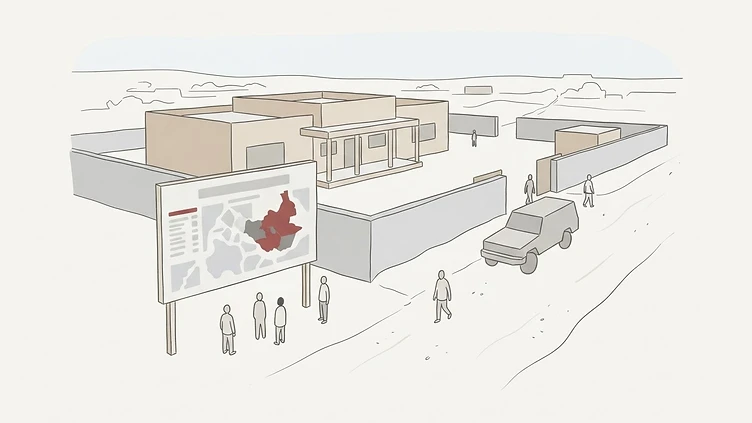
Illustration: Apex Africa picture desk
The South Sudanese government has integrated the Abyei Administrative Area into the Warrap State electoral constituency for the December 22, 2026, polls. This action occurs without a national census or a functional voter registry as the administration seeks a mandate.
Key judgement
The government is utilizing the Abyei-Warrap constituency merger to manufacture a controlled electoral outcome that prioritizes executive continuity over democratic legitimacy. This strategy will likely result in a deeply contested mandate that fails to address the underlying security and governance deficits in the region.
The analysis is supported by consistent reporting from multiple independent sources regarding the lack of electoral infrastructure and the government's explicit policy of bypassing constitutional requirements.
What to watch
- November 15, 2026: Any official announcement regarding the commencement of voter registration in the Abyei-Warrap constituency.
- December 1, 2026: The publication of the final list of approved candidates and the status of opposition coalition participation.
- December 22, 2026: Reported voter turnout figures and the presence of independent international election observers.
Implications for decision-makers
- Political strategists must prepare for a highly restrictive electoral environment where the incumbent holds significant structural advantages.
- International development organizations should reassess their support for the electoral process in light of the lack of foundational constitutional and census requirements.
- Local community leaders in Warrap State face increased risks of marginalization and should focus on building resilient, non-state networks for advocacy.
Why it matters The national political narrative in Juba centers on the December 22, 2026, general elections as a method for addressing institutional fragmentation. In Warrap State, the integration of the Abyei Administrative Area into the electoral map indicates the government intends to use the Abyei constituency allocation to conduct the electoral process. The presidency describes this as a measure to ensure the transition proceeds despite ongoing security challenges. As of late October 2026, the lack of a functional voter registry indicates the electoral infrastructure remains incomplete. The government maintains the December date for the elections, which residents of Warrap view as a process for the consolidation of central authority. The decision to place the Abyei Administrative Area within the Warrap State constituency framework involves boundary disputes that have affected the region for years. The government is attempting to resolve this territorial conflict through an electoral decree, regardless of population displacement and security threats that limit voter registration in the area. Political intelligence sources state that this move will impact the composition of the voting bloc. Recent drone attacks in Abyei have resulted in civilian casualties, contributing to instability. By proceeding with the election in a region facing security threats, the government is prioritizing the electoral calendar. The dissolution of the transitional government in September 2026 resulted in a vacuum of accountability. The Political Parties Council set an October 22 deadline for coalition registration, focusing on administrative compliance. Institutions overseeing the election are under the influence of the executive branch. Budgetary allocations for the electoral process are opaque, and there is no publicly available electoral calendar. Residents of Warrap State face a rising cost of living and the erosion of local political agency, as national resources are focused on the December election rather than local needs such as water access and public safety. Local leaders who have raised concerns regarding the lack of voter registration or security risks have reported intimidation. The integration of Abyei is viewed as a top-down imposition that disregards the grievances of the local population, leading to the disenfranchisement of residents in Warrap. The government has prioritized the electoral calendar despite ongoing violence. ## What we don't know yet It remains unclear how the government will manage the electoral process in areas categorized as war zones, given the ongoing security threats and displacement of populations. The specific details regarding how electoral funds are being utilized remain opaque to the public. There are three primary scenarios for the outcome: a contested mandate, an election delay due to security failures, or a total collapse of the electoral process. The specific coordination between security forces and the electoral commission remains subject to change. The potential for a constitutional crisis or a military-led transition depends on the internal stability of the ruling party and the broader security environment, both of which are currently in flux. The government has not provided clarity on how the absence of a permanent constitution or a national census will be reconciled with the December 22 electoral deadline, leaving stakeholders to observe the degree to which institutions can maintain administrative compliance. ## What to watch Stakeholders should monitor the level of voter turnout and the presence of independent observers during the December 22 election to evaluate the legitimacy of the process. Changes in the electoral calendar or the potential announcement of new, more inclusive registration procedures are indicators of a shift in government policy. In the event of a successful push for the election, observers should watch for the resulting impact on internal repression and the potential for civil unrest. Furthermore, any breakdown in the coordination between the security forces and the electoral commission, or a public split within the ruling party, would signal a potential collapse of the electoral process or a transition toward a military-led governance structure. Donors and policymakers are looking for evidence of measurable benchmarks for electoral integrity as the country approaches the scheduled polling date.
Corrected 31 October 2026: A passage asserted a motive, intention, effect or wrongdoing that the sources cited did not state. It has been attributed to its source or removed.
Report an error in this briefing