
Analysis · South Africa
South Africa's 2026 Local Government Elections: The Fragility of Coalition Arithmetic
Fragmented municipal councils face a post-election governance crisis as parties prioritize power over policy.
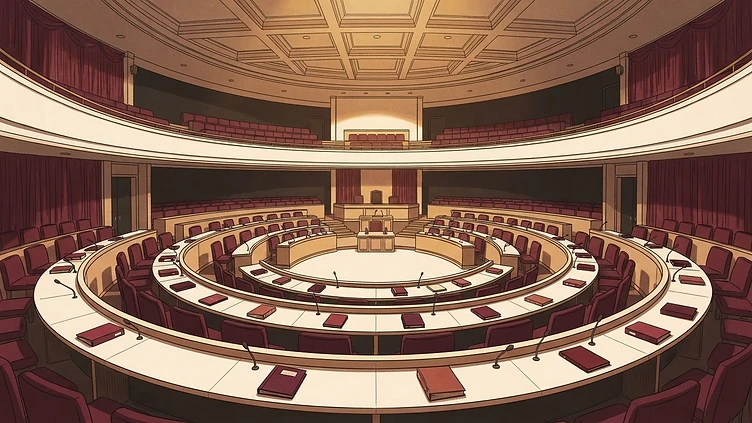
Illustration: Apex Africa
As South Africa heads to the polls on November 4, 2026, the proliferation of hung councils in major metros threatens to paralyze local governance. The reliance on decentralized, position-focused coalition negotiations risks repeating the instability of the past decade. This analysis examines how the absence of a national framework for coalition management leaves service delivery vulnerable to factional bargaining.
Key judgement
The evidence points to a post-election period defined by prolonged municipal instability, as the lack of a national coalition framework forces parties into short-term, position-based bargaining that undermines local service delivery.
The assessment is based on consistent reporting from multiple independent sources regarding the high probability of hung councils and the historical failure of decentralized coalition negotiations.
What to watch
- 2026-11-18: Failure to elect mayors in major metros within the 14-day constitutional window.
- 2026-11-20: Public release of coalition agreements detailing specific service delivery commitments versus mere position-sharing.
Implications for decision-makers
- Municipal administrators face heightened job insecurity as coalition partners trade executive positions for political support.
- Investors and development partners should anticipate delays in municipal procurement and infrastructure project implementation due to leadership uncertainty.
- Civil society organizations must prioritize monitoring the transparency of coalition agreements to hold new municipal leadership accountable.
The Arithmetic of Instability
South Africa’s 2026 Local Government Elections, scheduled for November 4, arrive at a moment of profound institutional uncertainty. With polling data consistently indicating that no single party is likely to secure an outright majority in major metros such as Johannesburg, Tshwane, and Ekurhuleni, the country faces a period of intense post-election volatility. The conventional wisdom that electoral outcomes will resolve municipal dysfunction is increasingly challenged by the reality of fragmented council arithmetic.
Political intelligence suggests that the real battle for power will commence only after the official declaration of results. Parties will have a narrow 14-day window to negotiate coalition agreements before mandatory council meetings must be convened. This compressed timeline, combined with the historical tendency for negotiations to center on executive positions rather than substantive programmes of action, creates a high risk of immediate administrative paralysis.
Governance and the Coalition Gap
Governance intelligence reveals a widening gap between the promise of the Revised White Paper on Local Government, launched by President Cyril Ramaphosa on October 22, 2026, and the operational reality of municipal management. While the White Paper emphasizes merit-based appointments and professionalization, the current coalition landscape incentivizes the opposite.
This politicization of the bureaucracy has direct consequences for community-level service delivery. In areas like Ekurhuleni, residents continue to grapple with persistent water supply challenges and infrastructure decay. When municipal leadership is preoccupied with the survival of a fragile coalition, the long-term planning required to address these systemic issues is frequently sidelined in favor of short-term political survival.
The Counter-Argument: Stability Through Reform
Some analysts argue that the 2026 elections could serve as a catalyst for a more mature coalition culture. Proponents of this view suggest that the sheer scale of municipal failure since 2016 has forced parties to recognize that voters will punish those who prioritize internal power struggles over basic service delivery. They point to ongoing discussions between the ANC and DA regarding the potential centralization of coalition negotiations as evidence of a shift toward more stable, programme-based governance.
However, this optimism overlooks the structural incentives that drive party behavior. Even if national leaderships attempt to centralize negotiations, the local-level factions that hold the balance of power in municipal councils often operate with significant autonomy. Without a binding national framework that mandates transparency and accountability in coalition formation, these agreements remain vulnerable to the same factional pressures that have historically destabilized municipal governance.
Scenarios and Indicators
Two primary scenarios emerge for the post-election period. In the first, parties fail to reach stable agreements, leading to a cycle of minority governments and frequent motions of no confidence, which would further erode public trust and service delivery. The indicator for this scenario would be the failure to elect a mayor within the 14-day constitutional window.
In the second scenario, a more durable coalition emerges, anchored in a formalised, public-facing programme of action. The indicator for this would be the early publication of a coalition agreement that explicitly links executive appointments to measurable service delivery targets, such as specific water and electricity infrastructure milestones. The absence of such public commitments would suggest that the status quo of position-trading remains the dominant political strategy.
Strategic Implications
For policymakers and political strategists, the immediate priority is the development of a robust, transparent coalition management framework. The current reliance on ad-hoc, decentralized negotiations is a strategic liability that undermines the legitimacy of local government. Political leadership must move beyond rhetoric and establish clear, enforceable rules for coalition formation that prioritize administrative continuity over partisan gain.
For NGOs and community organizations, the post-election period requires heightened vigilance. These groups must shift their focus from electoral mobilization to monitoring the implementation of coalition agreements. By demanding transparency in how municipal leadership is selected and how budgets are allocated, they can exert the necessary pressure to ensure that the new councils remain accountable to the residents they serve rather than the parties that nominated them.
Why it matters
As South Africa heads to the polls on November 4, 2026, the proliferation of hung councils in major metros threatens to paralyze local governance.
What we don't know yet
The record does not yet show how the decision is carried out.
What to watch
2026-11-18: Failure to elect mayors in major metros within the 14-day constitutional window.; 2026-11-20: Public release of coalition agreements detailing specific service delivery commitments versus mere position-sharing.
Report an error in this briefing