
Analysis · Mauritania
Analysis: Mauritania’s Economic Development and Fiscal Policy Challenges
Navigating structural dependencies and fiscal challenges in a volatile Sahelian climate
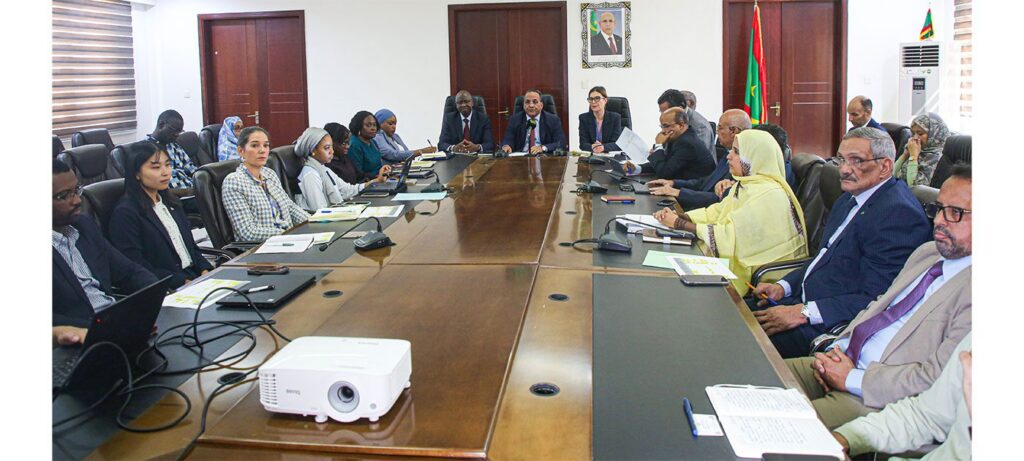
Mauritania faces a complex economic landscape defined by iron ore export dependency and the need for structural reform amidst regional security pressures. The government is balancing these fiscal demands against a stated requirement for inclusive growth and private sector development.
Key judgement
Mauritania's economic growth remains constrained by over-reliance on iron ore exports, bureaucratic inefficiencies, and a fiscal trade-off between urgent security spending and necessary social development.
The assessment relies on reporting from the IMF, World Bank, and African Development Bank, but relies on qualitative indicators regarding regulatory and implementation effectiveness.
What to watch
- Government success in reducing bureaucratic delays in public infrastructure projects as monitored by the World Bank.
- Changes in private sector investment volume in response to the Ministry of Economy's regulatory reform efforts.
- The evolution of fiscal allocation proportions between defense and social spending as observed by the African Development Bank.
Implications for decision-makers
- International investors will face persistent regulatory uncertainty until the government bridges the gap between its development strategy and implementation.
- Development organizations must navigate a fiscal environment where security imperatives may continue to limit available funding for social and economic projects.
- The Ministry of Economy must improve private sector engagement to successfully pivot away from iron ore export dependency.
Why it matters
Mauritania currently finds itself at a critical juncture in its developmental trajectory, which is defined by a complex interplay between resource dependency and the imperative for structural economic reform. According to International Monetary Fund reports, the country’s heavy reliance on iron ore exports creates significant vulnerabilities to global commodity price fluctuations. In response to these conditions, the central bank emphasizes that fiscal policy must prioritize debt sustainability to withstand these exogenous shocks.
While government officials state that public infrastructure projects are vital for long-term growth, the World Bank notes that the efficacy of these investments is frequently challenged by inefficient bureaucratic processes. Observers in Nouakchott argue that the current pace of reform is insufficient to absorb the expanding youth workforce. Addressing this, the Ministry of Economy suggests that improving the business climate for the private sector is a core priority, though private investors cite regulatory uncertainty as a primary barrier to entry.
Security dynamics in the Sahel add another layer of complexity; the African Development Bank observes that heightened regional instability demands increased budgetary allocations for defense, which in turn compresses the fiscal space available for social spending. International analysts suggest that these competing demands require a delicate balance between maintaining security and fostering inclusive economic growth. Furthermore, the transition toward a more diversified economy is hampered by limited energy infrastructure, a point frequently highlighted by regional development experts.
The government maintains that its current multi-year development strategy serves as a sufficient framework for addressing these systemic challenges, though civil society advocates caution that implementation remains uneven across different sectors of the economy. The reliance on iron ore exports continues to influence the country’s developmental path as the Ministry of Economy seeks to balance these structural imperatives with the limitations noted by international observers regarding infrastructure and regulatory environments.
What we don't know yet
The extent to which the government can reconcile its current multi-year development strategy with the specific critiques regarding uneven implementation remains to be seen. Civil society advocates have noted that while the framework exists, the application across different sectors of the economy is not uniform. Furthermore, the specific impact of the proposed improvements to the business climate for the private sector is currently unknown, given that private investors continue to cite regulatory uncertainty as a persistent barrier. While the Ministry of Economy has identified the private sector as a priority, the effectiveness of these efforts to mitigate the regulatory concerns of investors is not yet documented. The long-term impact of the compressed fiscal space—a consequence of increased defense spending as noted by the African Development Bank—on specific social spending programs remains a subject of ongoing discussion for international observers. Additionally, the exact timeline and funding mechanisms for overcoming the limitations in energy infrastructure, which regional development experts identify as a major barrier to economic diversification, have yet to be fully clarified or publicly detailed. The government’s approach to resolving the discrepancy between its stated infrastructure goals and the inefficiency of bureaucratic processes, as reported by the World Bank, is also a developing element of the national economic outlook.
What to watch
International observers identify the capacity to leverage private sector partnerships as the primary determinant of whether Mauritania can achieve its sustainable development goals. Future developments will likely hinge on the government’s ability to move beyond its current multi-year development strategy and address the bureaucratic inefficiencies highlighted by the World Bank. The ongoing demand for increased security spending, as monitored by the African Development Bank, will remain a critical factor in how much fiscal space remains for social and economic development.
The progression of the Ministry of Economy’s efforts to improve the business climate will be a key indicator of whether regulatory uncertainty can be reduced to attract more private investment. Observers in Nouakchott will continue to monitor whether the pace of reform changes sufficiently to accommodate the needs of the expanding youth workforce. As the regional situation in the Sahel evolves, the interplay between defense requirements and the urgency of structural economic reform will remain central to the country’s stability.
The ability of the state to streamline bureaucratic processes for public infrastructure projects, as addressed by the government and the World Bank, will be a critical measure of the effectiveness of long-term growth strategies. Success in these areas will dictate the government’s ability to mitigate the impacts of global commodity price fluctuations. Development experts will watch if the energy infrastructure limitations are addressed to support broader economic diversification.
Corrected 3 November 2026: The headline read "Mauritania’s Economic Resilience Amid Regional Instability". It now reads "Analysis: Mauritania’s Economic Development and Fiscal Policy Challenges".
Report an error in this briefing