Analysis · Ethiopia
Regional forces in Moyale clash as federal security presence remains absent
The recent border violence in Moyale signals a collapse of local governance as regional armies bypass federal authority.
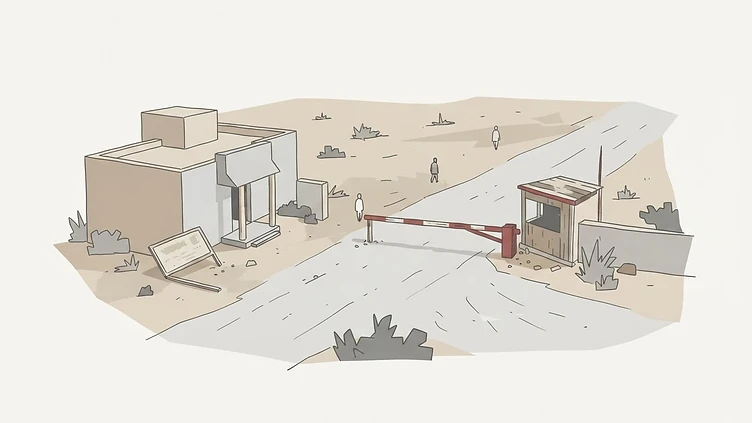
Illustration: Apex Africa picture desk
Armed clashes between Somali and Oromia regional forces in Moyale demonstrate a breakdown in federal administrative and security control. The lack of federal intervention during these October 2026 events signals a shift toward regional autonomy over national governance.
Key judgement
The Moyale border clashes demonstrate that the federal government has lost effective control over regional security, signaling a shift toward decentralized, paramilitary-led governance that threatens national stability.
High rating withdrawn: the file holds 6 relevant sources from 6 publishers and no primary record.
What to watch
- Deployment of federal troops to the Moyale border zone by 2026-11-11.
- Involvement of additional regional states in the Somali-Oromia conflict by 2026-11-15.
- Increase in refugee numbers crossing into Kenya as reported by the Red Cross by 2026-11-05.
Implications for decision-makers
- Political strategists must pivot from elite-level alliances to managing regional paramilitary power dynamics.
- Development organizations should prioritize immediate conflict-mitigation over long-term infrastructure projects in border regions.
- Policymakers face an urgent need to re-establish a neutral federal security presence to prevent further regional fragmentation.
Why it matters
The escalation of violence in the border town of Moyale involving armed clashes between Somali and Oromia regional forces marks a change in Ethiopian governance. While federal authorities in Addis Ababa project stability, regional administrations are acting as sovereign entities. The conflict, which intensified around October 24, 2026, began when a Somali regional flag was raised in a contested zone, triggering a kinetic response from Oromia-aligned security forces.
This represents a challenge to the federal government's monopoly on the use of force. While some observers categorize these incidents as ethnic skirmishes requiring traditional mediation, the structural reality is that regional governments have spent two years building paramilitary capabilities, with the tacit approval of the ruling Prosperity Party. When regional armies engage in combat, they test the limits of federal authority.
The federal government has failed to intervene decisively in Moyale, indicating that the central state no longer acts as the ultimate arbiter of regional disputes. Political strategists note that the Prosperity Party's reliance on regional power brokers is failing. By allowing regional presidents to manage security apparatuses, the federal government has created a system where local leaders prioritize territorial expansion over national cohesion.
The federal government is reduced to a spectator in a fragmented political landscape. This dynamic remains dangerous in border areas where ethnic and administrative boundaries provide a constant pretext for mobilization. The impact of this militarization is destructive for public service delivery. In Moyale, local government focuses on security and territorial defense rather than infrastructure and social services.
When municipal councils align budgets with regional militias, basic state functions like maintaining schools, clinics, and water systems are abandoned. The government prioritizes the procurement of cleaning equipment for public spaces in other regions while Moyale experiences instability, highlighting a disconnect in federal administrative priorities. Governance intelligence indicates that the absence of a unified security command has created a vacuum where local officials are accountable only to regional ethnic power bases.
In Moyale, the local administration functions as an extension of the regional security apparatus. The absence of an independent judiciary at the ward level means citizens must rely on ethnic militias for protection. Furthermore, regional governments use their own budgets to fund security operations rather than development projects.
This fiscal diversion shows that the social contract is being rewritten in favor of survivalist localism. Residents face displacement and economic stagnation, with thousands fleeing across the border into Kenya.
What we don't know yet
Critics of this analysis argue that the federal government is using a hands-off approach to allow for local ownership of peace processes, citing the establishment of a caretaker administration in Tigray as proof that the federal government manages regional transitions. However, the Tigray intervention is a top-down, federally-led initiative to reassert control, whereas the Moyale situation is a bottom-up collapse of authority. The argument that regional autonomy is a component of Ethiopian federalism overlooks the lack of institutional checks and balances.
Without federal oversight, regional autonomy devolves into regional authoritarianism. The clashes in Moyale demonstrate a system that has failed to integrate regional interests into a national framework. The federal government’s silence on the Moyale clashes, contrasted with its stance on Tigray, suggests a selective application of authority.
Additionally, the characterization of these conflicts as merely ethnic obscures the political and economic drivers of the violence. By framing the conflict as an ethnic dispute, the federal government avoids the responsibility of addressing the administrative failures that allow tensions to fester. The conflict in Moyale is a political struggle for control over resources and administrative territory, facilitated by the absence of a credible federal presence.
For political strategists and campaign leadership, the crisis necessitates a rethink of how to engage with regional power structures. The model of building alliances with regional elites is no longer sufficient, as these elites are beholden to their own paramilitary forces. Political actors must prioritize building cross-regional coalitions that emphasize national stability.
Development organizations must shift from long-term development to immediate humanitarian and conflict-mitigation support, as the collapse of local governance makes traditional projects difficult to maintain. Organizations should support local civil society groups working to bridge the divide between communities.
What to watch
The lesson of Moyale for policymakers is that the current model of federalism is unsustainable without a neutral, federally-controlled security presence in border regions. The federal government must move beyond rhetoric and take steps to reassert authority, starting with the demilitarization of regional border zones. This requires political investment and the willingness to confront regional leaders who have become accustomed to operating with impunity.
Failure to do so may lead to further fragmentation and the collapse of the federal project. Looking ahead, there are three scenarios for the Moyale crisis. In the first, the federal government successfully mediates a ceasefire and establishes a joint security task force, leading to a temporary stabilization.
The key indicator is the deployment of federal troops to the border zone, which should occur within the next 14 days. If this happens, it will signal a commitment to federal authority. In the second scenario, the conflict escalates, drawing in more regional forces and leading to a wider regional war. The indicator to watch is the involvement of other regional states, such as the Afar or Southern Nations.
If these regions mobilize forces in support of either the Somali or Oromia sides, it will be a sign that the conflict is spiraling out of control. In the third scenario, the conflict remains localized but becomes a permanent feature of the border landscape, with periodic outbreaks of violence that prevent development. The indicator to watch is the continued displacement of civilians into Kenya.
If the number of refugees continues to rise, it will indicate that the local population has lost faith in the state and that the region is becoming a no-man's land where local militias hold sway.
Report an error in this briefing