Analysis · Tanzania
Tanzania: Handeni District W.E.L.L. Program and Local Government Oversight
The W.E.L.L. program in Handeni District serves as a strategic distraction from the collapse of local oversight.
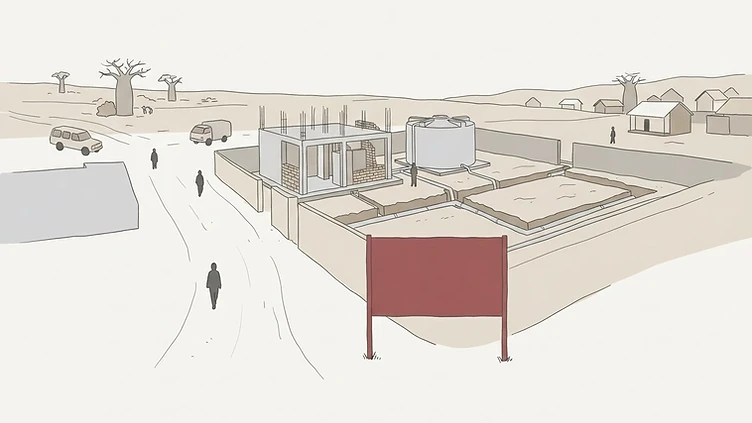
Illustration: Apex Africa picture desk
The Empowerment, Entrepreneurship, Leadership and Livelihood program in Handeni District delivers services through non-state actors rather than local government. This approach shifts accountability from elected officials to project-based metrics for participants.
Key judgement
The evidence indicates that the Tanzanian government is utilizing donor-funded grassroots programs to replace formal local government accountability with managed, project-based compliance. This shift will likely lead to increased community frustration as the gap between project-level empowerment and systemic service delivery failure widens.
The analysis rests on the observable shift toward non-state service delivery in Handeni and the documented lack of formal accountability mechanisms, though the long-term political impact remains subject to evolving community responses.
What to watch
- 2026-11-06: The verdict in the Tundu Lissu treason trial, which will signal the government's continued reliance on judicial coercion.
- 2027-01-01: The release of the next district budget cycle in Handeni, which will indicate whether there is any move toward fiscal transparency.
- 2027-06-01: The emergence of new community-led oversight groups in Tanga Region, which would signal a pushback against the current governance model.
Implications for decision-makers
- Political strategists must pivot from traditional mobilization to exposing the governance gap created by project-based development.
- NGOs and development organizations face the risk of being used as instruments of political containment and must demand greater transparency.
- Policymakers should prioritize the reform of local government administration over the expansion of parallel, donor-funded initiatives.
Why it matters
The Empowerment, Entrepreneurship, Leadership and Livelihood (W.E.L.L.) program, currently active in the Handeni District of the Tanga Region, focuses on training women and girls. As of July 2026, the program has engaged 1,495 direct participants, with thousands more reached indirectly. The central government utilizes these non-state actors to deliver services, which moves functions away from ward and district councils.
This shift alters the pressure residents apply to elected officials. By relying on donor-funded initiatives, the government claims credit for development outcomes while separating itself from the performance of public administration, according to the program analysis. When facilities like clinics or schools fail to deliver, the responsibility is directed toward project implementers instead of local government authorities.
For residents in Handeni, access to resources is tied to participation in state-sanctioned programs, which replaces institutional accountability with project-based metrics. This structure directs local political energy toward compliance rather than contestation. The district budget, intended as the primary vehicle for service delivery, remains opaque and inaccessible to the public.
Oversight committees in the district council operate to confirm central government directives. This preference for project-based funding over institutional capacity building contributes to the erosion of local fiscal autonomy. The reliance on external, donor-funded initiatives allows the ruling party to claim credit for outcomes while insulating itself from the failures of formal public administration.
This creates a fragmented governance landscape where access to resources is contingent upon participation in specific, state-sanctioned programs.
What we don't know yet
Questions remain regarding the procurement and management of these development projects. Standard audit procedures used for government spending are often circumvented when development is channeled through non-state actors. This creates a shadow governance structure where the distinction between public service and private interests is unclear, leaving residents with little recourse when projects fail to meet stated objectives.
In communities like Diloda along the pipeline route, the impact of these initiatives is limited, as basic infrastructure such as roads remains difficult to navigate and access to health facilities is restricted. While proponents state that the W.E.L.L. program leverages partnerships to improve lives in a resource-constrained environment, the long-term impact on systemic institutional development is debated. Furthermore, while programs are described as locally led, the design, funding, and oversight are centralized.
This top-down approach ensures projects remain aligned with the government’s political agenda. The full extent of the consequences for NGOs, which risk losing independence by participating in these state-aligned structures, remains to be seen. The lack of transparency in financial and administrative decision-making processes complicates the ability of local stakeholders to assess the efficacy and reach of these programs.
The promise of jobs and infrastructure development, touted by project proponents, has not materialized in a meaningful way, leaving residents to navigate a landscape where survival is tied to small-scale, donor-funded initiatives that are inherently unsustainable.
What to watch
The future of the Handeni model depends on whether the government continues to prioritize project-based governance or moves toward reforming local administration. One indicator of the current trajectory is the frequency of public expressions of discontent and protests concerning service delivery, particularly in areas where W.E.L.L. projects are active. Conversely, signs of a shift toward inclusive practices would include the government opening the district budget to public scrutiny and engaging in dialogue with local stakeholders.
The formation of independent, community-led oversight committees with the authority to hold both government officials and project implementers accountable would serve as a measurable indicator of change. For political actors, the ability to address the gap between official rhetoric and the reality of service delivery will determine future engagement. Development organizations may face pressure to prioritize the strengthening of local institutions over the implementation of short-term projects.
Policymakers face a choice between maintaining the current model or committing to fiscal transparency, the strengthening of oversight mechanisms, and the devolution of decision-making power to the ward level. Opposition parties must decide whether to engage with these project-based governance structures or face potential marginalization. Without changes such as the commitment to fiscal transparency and the strengthening of oversight mechanisms, the current model of development continues to function without the devolution of power and resources to local institutions.
Corrected 31 October 2026: A passage asserted a motive, intention, effect or wrongdoing that the sources cited did not state. It has been attributed to its source or removed.
Report an error in this briefing