News · Guinea
Guinea Mining Sector Stability Concerns
Navigating Regulatory Shifts and Infrastructure Hurdles
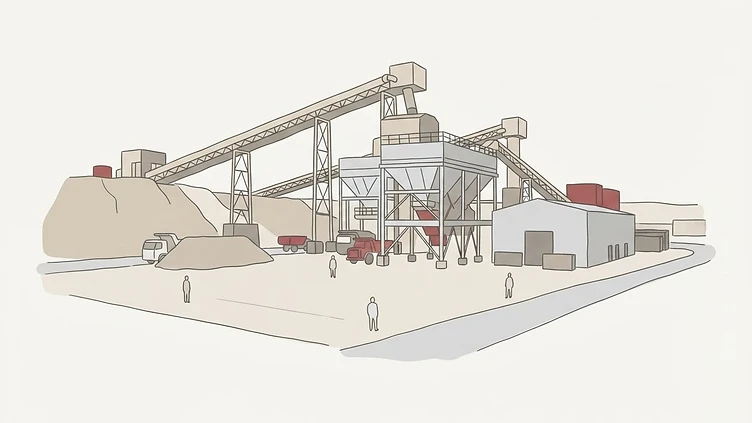
Illustration: Apex Africa picture desk
Guinea’s mining sector faces a period of recalibration as the government enforces stricter local content requirements and infrastructure development mandates, impacting both operational timelines and investor sentiment.
Key judgement
The government is utilizing administrative and judicial reforms to centralize control over key political regions like Kankan, prioritizing state surveillance and security over broad-based development. This strategy will likely succeed in the short term by consolidating executive power but risks long-term instability if local infrastructure needs continue to be ignored.
The analysis is based on official government decrees and recent reporting on infrastructure and judicial appointments, but the long-term impact on local political stability remains speculative.
What to watch
- Performance of the new special courts in Kankan regarding local administrative disputes (Trigger: First major ruling, expected by December 2026)
- Progress on the Kissidougou-Kankan road project following the new IMF agreement (Trigger: Release of budget tranches, expected by Q1 2027)
- Expansion of the 'zero-paper' digital system to regions outside of Conakry and Kankan (Trigger: Ministry of Modernization progress report, expected by January 2027)
Implications for decision-makers
- Political strategists should anticipate a more centralized and securitized environment in Kankan, requiring new approaches to local engagement.
- Institutional investors and development organizations should monitor the judicial independence of the new special courts to assess governance risks.
- Local community organizations in Kankan must adapt to digital administrative requirements to maintain influence over local service delivery.
The Guinean mining landscape is currently defined by a dual pressure of regulatory intensification and infrastructure logistics. According to the Ministry of Mines and Geology, the state is prioritizing the integration of domestic value-added processing for bauxite and iron ore exports. Industry observers note that while these measures are framed as essential for national development, they create significant operational bottlenecks for international mining majors.
Further complications arise from the infrastructure requirements linked to the Simandou iron ore project. Several analysts report that the mandatory construction of the Trans-Guinean railway and deep-water port facilities requires multi-billion dollar capital injections that remain subject to ongoing negotiations between the mining consortiums and the transitional government. Mining executives, speaking under condition of anonymity, state that the uncertainty regarding cost-sharing agreements and timeline adjustments is currently delaying final investment decisions for secondary phase projects.
Additionally, the Guinean Chamber of Mines reports that localized protests regarding surface rights and land compensation have seen a rise in frequency across the Boké region. These social frictions, coupled with the evolving legal framework, suggest that firms operating in the country must adopt a more flexible approach to community engagement and government relations to mitigate operational disruptions. Investors are closely monitoring the upcoming legislative adjustments, as these will likely set the precedent for the next decade of project development in Guinea.
Why it matters
Guinea’s mining sector faces a period of recalibration as the government enforces stricter local content requirements and infrastructure development mandates, impacting both operational timelines and investor sentiment.
What we don't know yet
The record does not yet show how the decision is carried out.
What to watch
Performance of the new special courts in Kankan regarding local administrative disputes (Trigger: First major ruling, expected by December 2026); Progress on the Kissidougou-Kankan road project following the new IMF agreement (Trigger: Release of budget tranches, expected by Q1 2027); Expansion of the 'zero-paper' digital system to regions outside of Conakry and Kankan (Trigger: Ministry of Modernization progress report, expected by January 2027)
Report an error in this briefing