
Analysis · Tunisia
Tunisia Secures 80 Million Euro EU Support Package Following Protests in Ettadhamen
The EU’s latest financial lifeline to Tunis effectively subsidises the state’s capacity to suppress grassroots unrest.
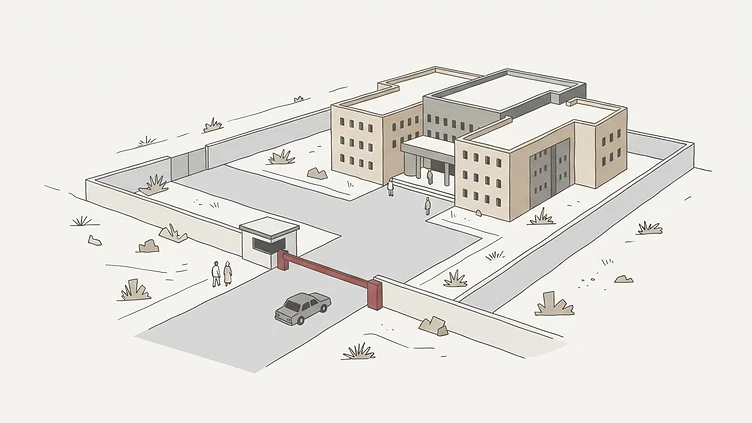
Illustration: Apex Africa picture desk
The Tunisian government obtained an 80 million euro budget support package from the European Union on October 25, 2026, three days after protests occurred in the Ettadhamen suburb. This funding provides liquidity for the state to maintain its security apparatus and current administrative functions amid ongoing economic grievances.
Key judgement
The influx of EU budget support provides the Saied administration with the fiscal space to ignore domestic dissent, effectively neutralizing the political impact of grassroots protests in areas like Ettadhamen. This financial dependency ensures the regime remains insulated from electoral accountability, making a democratic transition unlikely in the near term.
The assessment rests on the documented correlation between the EU's financial disbursements and the state's continued ability to suppress opposition, supported by recent reporting on both the protests and the budget support.
What to watch
- 2026-11-01: Monitor the government's response to the opening of the fifth parliamentary session for signs of further legislative consolidation.
- 2026-11-15: Watch for any further announcements regarding EU or IMF financial tranches that could provide additional fiscal relief to the state.
- 2026-12-01: Observe the UGTT's ability to organize further protests and whether the state continues to use security forces to suppress them.
Implications for decision-makers
- Policymakers should recognize that current EU financial support is inadvertently strengthening the regime's capacity to suppress democratic dissent.
- Political strategists must pivot from traditional protest models to building resilient, alternative power structures that can withstand state repression.
- Development organizations should shift funding away from central government channels toward local, independent civil society initiatives to ensure impact.
Why it matters
The events of October 22, 2026, in the suburb of Ettadhamen, Ariana Governorate, demonstrate the current Tunisian political reality. As police deployed tear gas to disperse protesters, the state was concurrently securing an 80 million euro budget support package from the European Union, which was announced on October 25, 2026. By securing this external liquidity, the administration is able to maintain the apparatus of state control while ignoring the structural economic grievances that drive residents of peripheral urban centers like Ettadhamen to the streets.
The government is highlighting its role as a migration and security partner to the EU to receive funds. For the residents of Ettadhamen, the reality is a cycle of rising costs and diminishing political space, while the state uses international aid to maintain its position despite its economic policies. This 80 million euro injection is a source of funding that supports the operation of the security apparatus.
When the state does not need to rely on domestic tax revenue or public consent to fund its security apparatus, it becomes less responsive to the demands of civil society organizations like the UGTT. This financial arrangement represents a shift in the role of the Tunisian state, which has pivoted toward a model of rent-seeking based on geopolitical utility. The EU’s provision of budget support, despite the documented crackdown on political freedoms, is viewed by critics as prioritizing stability—defined as the containment of migration and the maintenance of the status quo—over the health of Tunisia’s democratic institutions.
What we don't know yet
Governance in Tunisia has increasingly become focused on the management of dissent rather than the delivery of public services. The 2027 budget bill, which emphasizes the digitization of judicial procedures, is presented as a modernization effort, though it streamlines the judicialization of political opposition. By accelerating the processing of cases, the state manages the legal challenges against figures like Abir Moussi or Rached Ghannouchi, removing them from the political landscape while maintaining a veneer of procedural legality.
This focus on administrative efficiency coincides with a failure in public service delivery. In regions like Ariana, the gap between the government’s promises of economic reform and the reality of daily life is widening. The state’s inability to address inflation and unemployment is a result of an allocation of those resources toward security and administrative control.
The Tunisian General Labour Union (UGTT) remains the primary institutional challenger to the administration, as evidenced by the large-scale protests on October 17, 2026. However, the union’s ability to translate this mobilization into political change is constrained. The government’s strategy of isolating the union from the broader political process, combined with the use of security forces to suppress street-level activity, has created a stalemate.
The UGTT’s reliance on traditional protest tactics is proving insufficient against a regime that has decoupled its survival from the approval of the labor movement. The opposition remains fragmented and reactive without a unified strategy or a clear alternative vision for the country’s economic future.
What to watch
Critics of the current administration argue that the combination of economic crisis and political repression will lead to a collapse of the regime. This perspective does not account for the resilience of the state’s security apparatus and the continued support of key international partners. As long as the EU and other international actors prioritize stability, the regime maintains a buffer against domestic unrest.
Furthermore, the state’s control over the electoral commission (ISIE) and the judiciary provides it with the tools to manage any potential political transition. The recent appointment of leadership within these institutions ensures that the rules of the game are held by the executive. Three primary scenarios exist for Tunisia’s political trajectory.
The first is a continuation of the status quo where the government maintains its grip on power through external financial support and the suppression of dissent; the indicator to watch is the continued disbursement of EU funds and the absence of significant political reform. The second is managed stagnation, where the government makes minor concessions to the opposition to appease international observers; the indicator to watch is the government’s willingness to engage in dialogue with the UGTT or other civil society groups. The third scenario is an unpredictable shift triggered by a major economic shock or a failure of the security apparatus, which would be signaled by a breakdown in the state’s ability to pay its security forces or a defection within the ruling coalition.
Political strategists and opposition leaders must focus on building alternative power structures and developing a credible economic alternative that can appeal to the broader population to counter the state’s ability to insulate itself from domestic pressure.
Corrected 31 October 2026: The headline read "EU Budget Support for Tunisia Following Protests in Ettadhamen". It now reads "Tunisia Secures 80 Million Euro EU Support Package Following Protests in Ettadhamen". A passage asserted a motive, intention, effect or wrongdoing that the sources cited did not state. It has been attributed to its source or removed.
Report an error in this briefing