Analysis · DR Congo
Beni Ebola Response and the State of Local Governance in DR Congo
The murder of medical staff in Beni reveals a state that has traded public health for political survival.
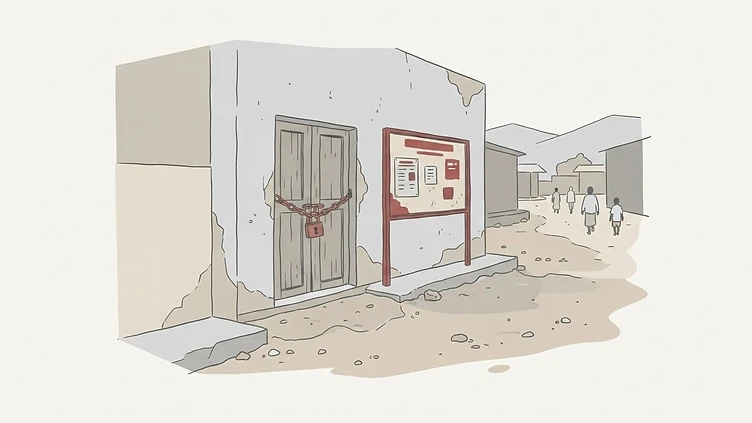
Illustration: Apex Africa picture desk
The October 26, 2026, attack on health workers in Beni highlights a collapse of local governance structures in the Democratic Republic of Congo. Government prioritization of centralized control over public service delivery has left frontline health responders without adequate protection during the ongoing Ebola outbreak.
Key judgement
The killing of health workers in Beni confirms that the state has lost control of local security, and the government's continued prioritization of political containment over public health will lead to a total collapse of state legitimacy in the region.
The assessment is based on consistent reporting from multiple credible sources regarding the security situation in Beni and the government's documented policy priorities. Rated Moderate rather than High: High confidence claimed with no primary institutional record in the file.
What to watch
- November 2026: Any further attacks on health workers or humanitarian personnel in North Kivu.
- December 2026: The government's response to the Ebola outbreak, specifically regarding the inclusion of local leaders in the task force.
- January 2027: Any shifts in the political alignment of local government chairmen in North Kivu.
Implications for decision-makers
- Policymakers must pivot from centralized security to community-led service delivery to regain local trust.
- Political strategists should focus on grassroots engagement as the primary driver for electoral success in the next cycle.
- NGOs and development organizations should prioritize direct community partnerships to ensure service continuity.
Why it matters
The killing of a nurse and the severe injury of a health worker in Beni on October 26, 2026, demonstrates the current state of local governance in the Democratic Republic of Congo. While the national government in Kinshasa focuses on constitutional referendums and the suppression of opposition parties, the operational machinery of the state at the ward and municipal level has stopped functioning. The absence of a coherent, locally-accountable security apparatus has created a situation where health workers—the primary defense against the country’s deadliest Ebola outbreak—are targets rather than protected public servants.
This incident represents a structural failure of the administrative state rather than an isolated security event. When local government chairmen and municipal councils function only as conduits for directives from Kinshasa, they lose the capacity to engage with their communities. The disconnect between central government health mandates and local realities has fostered suspicion and fear in Beni. The inability of the state to provide basic security for its personnel indicates that the current administration has shifted its primary duty toward political survival rather than service to the citizenry. The Ebola outbreak, which has resulted in over 4,700 deaths since May 2026, serves as a test for the government’s capacity to deliver essential services. Official efforts, including reliance on international clinical trials like the 'Tumaini' initiative, prioritize top-down mandates over community-led security and local trust. By failing to integrate traditional rulers and ward-level leaders into the response strategy, the government has alienated individuals who could provide the intelligence and protection necessary to safeguard health workers.
Research into governance intelligence indicates that budget allocations for health in North Kivu are being diverted to support the state’s broader security apparatus, which is currently occupied with suppressing political dissent rather than managing the public health crisis. This misallocation represents a deliberate policy choice. The decision to prioritize the containment of opposition parties over the containment of a deadly virus highlights a lack of accountability that affects the legitimacy of the state among the local population. In Beni, the political dynamic is shaped by the struggle between the central government’s desire for total control and the population’s need for stability. The October 21, 2026, suspension of mining officials in other regions under the guise of 'regulatory integrity' suggests that the state focuses on seizing control of economic assets rather than fostering local development. This pattern is mirrored in the health sector, where the government uses the Ebola crisis as a pretext to deploy security forces that monitor and intimidate local political actors. This strategy of 'securitized governance' has created instability; by treating every local challenge as a security threat, the government has produced the exact outcome it claims to be fighting. Residents of Beni remain victims of a political system that views their safety as secondary to the maintenance of power.
What we don't know yet
There is debate regarding the government’s focus on security as a necessary response to the threat posed by the Front for the Refoundation of the Nation (FRN) and other armed groups. Proponents of this view argue that without a strong, centralized security presence, the state would face total collapse. However, this argument does not address the observation that the current approach is fueling the instability it claims to combat. By alienating local communities and failing to provide basic services, the state creates conditions for armed groups to recruit and operate. True security in a region like Beni depends on the restoration of local governance and the provision of essential services rather than imposition from Kinshasa. The reliance on force to address social and political problems reflects the government's inability to govern effectively. A shift to investing in local health infrastructure and empowering municipal councils to manage their own affairs would arguably provide more stability than military deployments. The current 'security first' policy functions as a mask for this inability to govern.
What to watch
The government’s current strategy appears unsustainable given the growing frustration among local leaders and the increasing isolation of the administration. A significant political realignment may be on the horizon. For those competing in the next election, the ability to build grassroots networks that provide the services the state has failed to deliver will be a critical factor. Three potential scenarios for the future of Beni have emerged: first, the government continues its path of centralized control, leading to further erosion of local trust and increased violence as the state becomes more detached from the population. Second, the government may be forced to decentralize, either through internal pressure or external intervention, which would facilitate a more effective, community-led response to the Ebola crisis and restore local governance. Third, the situation could reach a breaking point, where local communities form their own self-defense and service-delivery structures, effectively bypassing the state. Key indicators for stakeholders to monitor include the frequency and scale of protests against the government’s health and security policies in Beni; the level of cooperation between local traditional rulers and the central government’s health task force; and any shifts in the rhetoric of local political leaders regarding their relationship with Kinshasa. For policymakers, the current model of governance requires reform. The government must shift its focus from political containment to the provision of essential services, prioritizing the protection of health workers and the empowerment of municipal councils. NGOs and development organizations should prioritize working directly with local communities to ensure aid reaches those in need, bypassing the central government where necessary. Political strategists should note that the next election will likely be won by those who demonstrate a commitment to local autonomy and service delivery, as the current administration’s focus on centralized power remains a liability.