Analysis · Zambia
Ministry of Energy and ZESCO Hand Over K50.88 Million Projects in Chikankata District
The K50.88 million infrastructure handover in Chikankata reveals how energy-sector patronage secures regional loyalty.
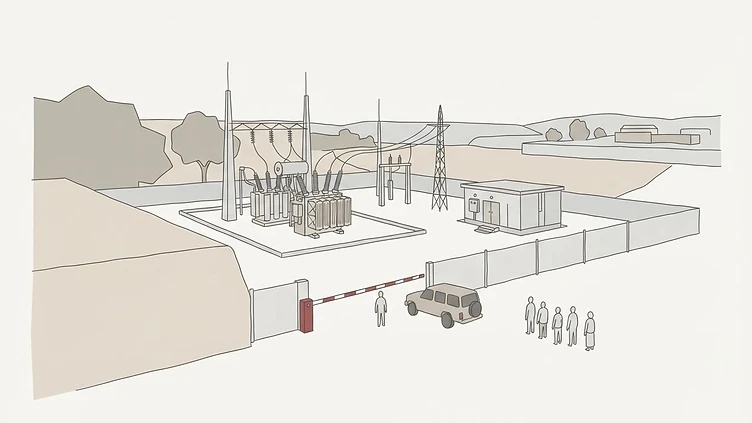
Illustration: Apex Africa picture desk
The Ministry of Energy and ZESCO launched K50.88 million in infrastructure projects in Chikankata District through the Kafue Gorge Lower Community Development Company. The rollout follows the August 2026 general election and coincides with plans for executive branch restructuring.
Key judgement
The government is delivering regional infrastructure through state-owned energy entities and private-public partnerships rather than through established local government budgetary and municipal oversight structures.
The analysis is based on official government announcements of infrastructure handovers and parliamentary motions, corroborated by independent reporting on the 2026 electoral environment.
What to watch
- The Auditor-General's report on public expenditure for the 2026 fiscal year regarding off-budget infrastructure funding.
- Parliamentary debate outcomes following the October 2026 request to reshuffle government ministries.
- Documentation of procurement regulations applied to the KGL Community Development Company in future project announcements.
Implications for decision-makers
- Local district councils lose oversight authority over infrastructure spending within their jurisdictions.
- The Auditor-General faces restricted access to audit funds managed through the KGL Community Development Company.
- Residents in project areas experience service delivery managed by state-owned energy entities instead of elected local representatives.
Why it matters
On October 22, 2026, the Ministry of Energy and ZESCO announced the handover of K50.88 million in infrastructure projects in Chikankata District. These projects are executed via the Kafue Gorge Lower (KGL) Community Development Company Limited. The administration describes these investments as a model of grassroots empowerment, focusing on water, sanitation, and education. Reports state that this approach involves the government relying on state-owned energy entities rather than traditional municipal councils to deliver essential services. Governance observers state that by utilizing ZESCO, the central government avoids standard district council budgetary oversight. According to these observers, this governance model makes service delivery contingent upon the alignment of local traditional leadership with national energy-sector priorities. Consequently, for Chikankata residents, access to infrastructure has transitioned from a managed right under elected representatives to a negotiated outcome between state-owned enterprises and traditional authorities. The timing of these handovers, occurring less than two months after the August 2026 general election, is viewed by political analysts as an effort to solidify support in areas critical to President Hakainde Hichilema’s re-election victory. By embedding the 'Grow Zambia' agenda into energy sector activities, the state creates a network that observers suggest is intended to transcend the electoral cycle. According to observers, this model prioritizes regions of strategic political interest, creating dependencies that may complicate the ability of opposition parties to gain traction in rural districts. Local political commentators state that while the provision of schools and water is beneficial, local autonomy is constrained because the top-down mechanism limits the ability of the community to define its own development priorities. Furthermore, the co-option of traditional leaders to facilitate these partnerships risks undermining their role as independent mediators, potentially fostering a disconnect between the government and the populace, according to local political commentators.
What we don't know yet
The transparency of the K50.88 million investment is questioned by governance observers. Because the funds are managed by the KGL Community Development Company, which is a private-public entity, the operations occur outside the standard procurement regulations typically applied to local government spending. According to regulatory experts, there is no clear mechanism for citizens to challenge the allocation of these specific funds or to demand accountability for potential project failures, as the Auditor-General’s office is currently sidelined by this arrangement. Furthermore, while the administration has requested a ministerial reshuffle to merge departments and consolidate executive control, governance observers note that the full extent of this legislative bypass is not yet realized. The actual impact of these centralized procurement methods on long-term local government capacity remains to be seen. Additionally, there is uncertainty regarding whether the government can sustain this level of infrastructure spending given potential future fiscal constraints. The lack of clarity surrounding the criteria for project selection versus regional political affiliation suggests, according to opposition spokespeople, that the long-term sustainability of these networks is dependent on consistent government revenue streams that are not yet guaranteed.
What to watch
The government’s parliamentary strategy is an indicator of future policy direction. Parliamentary analysts state that the upcoming budget debate in Parliament will test the administration’s ability to secure funding for these ongoing ZESCO-led projects. If the government fails to obtain the required funding, it may be forced to alter its development strategy. Another development to monitor is the proposed reshuffle of ministries, reported on October 26, 2026, which aims to create a leaner executive branch. If this consolidation proceeds, it will likely reduce the scope for legislative scrutiny regarding resource distribution, according to parliamentary analysts. A third factor to watch is the potential for legal challenges from opposition parties, who may contest the legality of these partnerships in court. Should the judiciary mandate a return to transparent and accountable procurement processes, the current governance model would face disruption. Finally, the political response within rural districts like Chikankata is critical; if the co-opted traditional leadership structures fail to address local grievances, dissatisfaction could manifest in future electoral cycles, according to local community leaders. Stakeholders are monitoring whether these infrastructure projects dampen local dissent or whether the absence of institutional accountability leads to further political polarization and instability in the region.
Corrected 31 October 2026: A passage asserted a motive, intention, effect or wrongdoing that the sources cited did not state. It has been attributed to its source or removed.
Report an error in this briefing