Article · Kenya
Turkana Oil Exports vs. Mombasa Tax Levies: How Resource-Rich Counties Are Diverging From Urban Revenue Models
The contrast between Turkana's resource-led growth and Mombasa's punitive taxation reveals a fractured devolution model.
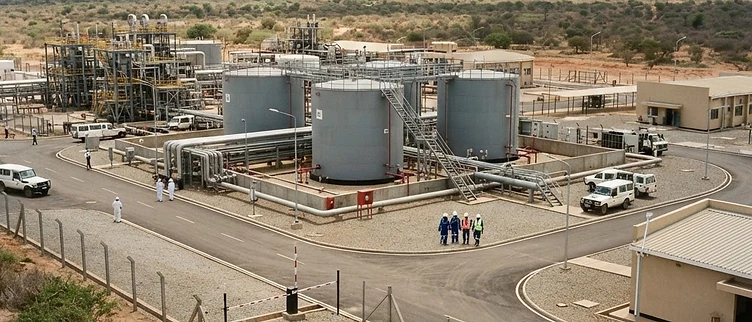
Illustration. AI-generated editorial image, not a documentary photograph.
The divergent economic trajectories of Turkana and Mombasa counties expose the fundamental instability of Kenya's devolved fiscal system. While Turkana leverages national resource extraction to anchor its future, Mombasa is stifling its private sector through aggressive, localized taxation. This analysis argues that without a standardized AI-driven fiscal oversight framework, the gap between resource-endowed and service-dependent counties will trigger a political crisis by 2027.
Key judgement
The evidence indicates that Kenya's devolution model is fracturing into a two-tier system where resource-rich counties gain national leverage while urban commercial hubs face fiscal decay due to predatory local taxation. This trend will likely trigger significant electoral volatility in 2027 as business interests and marginalized communities align against incumbent county administrations.
The rating rests on the consistency of reporting regarding fiscal pressures in Mombasa and the strategic shift in Turkana, though the long-term impact on 2027 electoral outcomes remains speculative.
What to watch
- 2026-12-01: Commencement of commercial oil exports in Turkana as a signal of national-county fiscal alignment.
- 2027-01-15: Publication of the next Auditor-General report on county trade payables to measure the scale of fiscal mismanagement.
- 2027-03-01: Any legislative move by the National Assembly to cap county-level business permit fees.
Implications for decision-makers
- Policymakers must prioritize the harmonization of county tax regimes to prevent the erosion of national economic competitiveness.
- Political strategists should anticipate that fiscal policy will be a central battleground in the 2027 elections, particularly in urban centers.
- Institutional investors and development organizations should demand greater transparency in county revenue utilization before committing further funding.
The Divergence of Devolved Economic Models
Kenya’s devolution experiment is currently undergoing a stress test that pits resource-rich peripheries against urban commercial hubs. In Turkana County, the narrative is defined by the promise of oil exports, with President William Ruto announcing on October 20, 2026, that commercial production in the South Lokichar Basin is slated for December. This development represents a shift toward state-backed resource extraction that promises to redefine the county’s fiscal autonomy. Conversely, in Mombasa, the economic reality is one of stagnation, as local car dealers protest what they describe as punitive, multiple levies imposed by the county government. The contrast is stark: one region is betting on the national government’s energy agenda, while the other is suffocating under the weight of its own local revenue-collection mandates.
This divergence is not merely an economic curiosity; it is a political fault line. The conventional wisdom suggests that devolution empowers counties to tailor their revenue strategies to local needs. However, the reality in Mombasa, where traders report paying three times the permit fees of their Nairobi counterparts, suggests that local autonomy is being weaponized to extract short-term liquidity at the expense of long-term business viability. Apex Africa’s Political Research & Analytics service identifies this as a failure of intergovernmental fiscal coordination. When counties operate as isolated revenue-collection fiefdoms, they undermine the national competitiveness that the 2010 Constitution was designed to foster.
Turkana’s Resource-Led Political Calculus
The announcement of oil exports in December 2026 is the culmination of years of negotiation between the national government and Turkana’s leadership. By aligning its local content regulations with national energy goals, the Turkana County Government is positioning itself as a strategic partner in the state’s economic agenda. This is a calculated move to secure a seat at the table for revenue-sharing discussions with private investors like Gulf Energy. The political stakes are high; the county administration is already managing the compensation of 3,600 project-affected people, a process that requires delicate balancing of local expectations against national timelines.
However, the reliance on oil revenue introduces a new form of dependency. By tethering its fiscal future to the South Lokichar Basin, Turkana risks becoming a captive of global commodity price fluctuations and national-level procurement decisions. The county’s recent tender for fuel and lubricants, advertised on October 13, 2026, highlights the scale of the infrastructure required to support this transition. If the promised economic benefits—roads, water, and jobs—fail to materialize, the political backlash will be directed at both the county governor and the national ruling coalition, creating a volatile environment for the 2027 electoral cycle.
Mombasa’s Taxation Trap and the Erosion of Trust
While Turkana looks to the future, Mombasa is grappling with the consequences of aggressive fiscal overreach. The Mombasa Car Dealers Association’s public protest on October 21, 2026, against what they term "punitive and unsustainable" levies, serves as a warning to other urban counties. The traders argue that the county’s tax burden is not only eroding profit margins but is also driving business away from the port city. This is a classic case of a local government prioritizing immediate revenue targets over the health of the tax base, a strategy that is increasingly common as counties struggle to meet their recurrent expenditure obligations.
This fiscal aggression is exacerbated by the lack of transparency in how these funds are utilized. Unlike the clear, project-based focus of the Turkana oil initiative, the revenue collected in Mombasa appears to disappear into the general administrative budget. The governance layer here is critical: the Auditor-General’s reports have consistently flagged the gap between revenue collection and service delivery in urban counties. When businesses are taxed into insolvency, the resulting loss of employment and economic activity creates a vacuum that is often filled by populist political movements, further destabilizing the local political landscape.
The Governance Gap in Devolution
The fundamental problem is that the current devolution framework lacks a robust, AI-driven mechanism to monitor the efficiency of county revenue collection. While the State Department for Devolution promotes the Second Kenya Devolution Support Program (KDSP II) to strengthen accountability, these efforts are often reactive rather than proactive. The system relies on manual audits and delayed reporting, which are insufficient to catch the kind of fiscal mismanagement currently occurring in Mombasa. Apex Africa’s AI & Data Intelligence service suggests that a real-time, automated fiscal monitoring system could bridge this gap by flagging anomalous tax hikes and tracking the flow of funds from collection to service delivery.
Without such a system, the "accountable devolution" promised by the government remains a rhetorical device. The recent increase in additional county allocations to KSh71.09 billion, signed into law by President Ruto on October 19, 2026, is intended to support health, agriculture, and water projects. However, without a corresponding improvement in local fiscal management, these funds are likely to be absorbed by the same inefficiencies that plague current county budgets. The risk is that the national government will eventually be forced to claw back fiscal powers, effectively reversing the progress of the last decade.
Rebutting the "Local Autonomy" Defense
Critics of centralized fiscal oversight argue that any attempt to standardize tax rates or monitor county spending infringes upon the constitutional autonomy of the devolved units. They contend that counties must have the freedom to experiment with revenue models to suit their unique economic profiles. This argument, while theoretically sound, fails to account for the reality of political patronage and the lack of institutional capacity at the county level. In practice, "local autonomy" has often become a cover for rent-seeking behavior that harms the very citizens the devolution was meant to serve.
Furthermore, the argument for absolute autonomy ignores the interconnectedness of the Kenyan economy. A business in Mombasa is not just a local entity; it is part of a national supply chain. When a county government imposes excessive levies, it creates a ripple effect that increases the cost of goods across the country. Therefore, the national government has a legitimate interest in ensuring that county fiscal policies do not undermine national economic stability. The goal should not be to abolish local control, but to subject it to the same standards of transparency and efficiency that are expected of the national treasury.
The Role of AI in Future Fiscal Stability
To navigate this crisis, Kenya must move toward an AI-driven approach to political and fiscal intelligence. By integrating data from the Kenya Revenue Authority, county treasuries, and private sector trade associations, the government could create a predictive model that identifies potential fiscal failures before they lead to protests or economic collapse. This is where Apex Africa’s Election Readiness service becomes essential; by mapping the relationship between fiscal policy and voter sentiment, political leaders can adjust their strategies to avoid the pitfalls of unpopular taxation.
For instance, an AI-powered dashboard could provide real-time visibility into the outstanding trade payables of each county, which stood at Sh172 billion as of June 30, 2026. By identifying which counties are consistently failing to pay their suppliers, the national government could intervene with targeted technical support or, if necessary, fiscal oversight. This would shift the focus from reactive crisis management to proactive governance, ensuring that the billions of shillings flowing to the counties actually translate into improved services for the residents of places like Turkana and Mombasa.
Scenarios for 2027 and Beyond
Looking ahead to the 2027 General Election, two scenarios emerge. In the first, the national government successfully implements a more rigorous fiscal oversight framework, leading to a stabilization of county revenues and a reduction in business-killing taxes. This would require a high degree of political will and the cooperation of the Council of Governors, which is unlikely to be forthcoming without significant pressure. In this scenario, the focus shifts to performance-based funding, where counties are rewarded for meeting specific service-delivery benchmarks.
In the second, more likely scenario, the current trend of fiscal fragmentation continues. Counties like Mombasa will continue to squeeze their private sectors, leading to further economic decline and increased political unrest. Meanwhile, resource-rich counties like Turkana will become the new centers of political power, creating a two-tier system of governance that exacerbates regional inequalities. This would likely lead to a surge in litigation and electoral challenges, as opposition parties capitalize on the dissatisfaction of business owners and marginalized communities.
Strategic Implications for Stakeholders
For policymakers, the immediate priority must be the harmonization of county tax regimes to prevent the kind of predatory practices seen in Mombasa. This requires a legislative overhaul of the Public Procurement and Asset Disposal Regulations to include stricter oversight of local revenue collection. For political strategists, the lesson is clear: fiscal policy is now a primary driver of electoral outcomes. Candidates who ignore the impact of their tax policies on the local business community do so at their own peril.
For NGOs and development organizations, the focus should be on building the capacity of local civil society to monitor county budgets. The residents of Turkana and Mombasa need the tools to hold their leaders accountable for the billions of shillings they receive. Apex Africa stands ready to assist political leaders and organizations in navigating these complex dynamics through our suite of intelligence and strategy services. We invite you to contact us for a confidential consultation at https://apexafricastrategy.com to discuss how we can help you secure your political and governance objectives.