Article · Nigeria
Enugu State’s Digital Infrastructure vs. The Analog Reality of Grassroots Political Patronage
The state's AI-driven governance platform masks a persistent reliance on traditional, clientelist political networks.
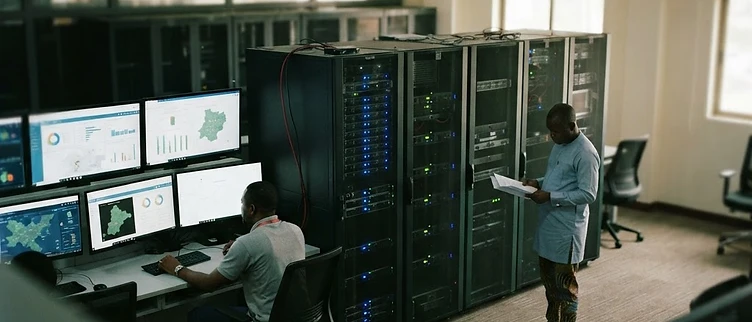
Illustration. AI-generated editorial image, not a documentary photograph.
Enugu State has aggressively deployed AI-enabled infrastructure and digital monitoring platforms to rebrand its governance model as data-driven and transparent. However, this technological veneer obscures a deepening reliance on traditional, ward-level patronage networks to secure political dominance ahead of the 2027 cycle. The state's digital transformation is not a replacement for political machine politics but a sophisticated tool for its consolidation.
Key judgement
The Enugu State government is using AI-driven infrastructure monitoring to centralize political control and optimize patronage networks, rather than to genuinely democratize governance. This digital strategy will likely succeed in consolidating the incumbent's power ahead of 2027 unless opposition forces develop independent data-verification capabilities.
The analysis rests on the observable deployment of digital tools alongside traditional political rally patterns; it would change if independent audits of project completion rates show a significant deviation from government-reported data.
What to watch
- 2027-01-15: Release of the 2027 state budget, specifically the ratio of funding for 'digital' versus 'physical' infrastructure.
- 2027-02-01: Any public report from the state auditor-general regarding the 'Project Meter' platform's accuracy.
- 2027-03-01: Emergence of independent, opposition-led data-verification platforms for infrastructure projects.
Implications for decision-makers
- Political strategists must shift from traditional campaign messaging to data-driven accountability campaigns to counter the state's digital narrative.
- Development organizations should conduct independent audits of state-funded projects rather than relying on government-provided digital dashboards.
- Institutional investors should be wary of the 'digital transformation' label, as it may mask underlying political risks and patronage-based procurement.
The Digital Facade of Enugu’s Governance
Enugu State has recently positioned itself as the vanguard of digital governance in Nigeria, leveraging AI-enabled surveillance and real-time project monitoring to redefine public administration. Under the administration of Governor Peter Mbah, the state has launched the 'Project Meter' platform, a digital dashboard designed to provide real-time oversight of infrastructure projects across its 260 political wards. This initiative, coupled with the deployment of AI-enabled cameras in patrol vehicles, is presented as a shift from reactive, civil-service-dependent governance to a proactive, intelligence-led model. The narrative is clear: technology is the antidote to the systemic inefficiencies that have historically plagued state-level service delivery in the Southeast.
However, this technological optimism ignores the underlying political reality of how power is exercised in Enugu. While the state government touts its 'Smart Schools' and 'Type-2 Primary Healthcare' centres as evidence of a new era, these projects are being deployed through the same traditional, ward-based political structures that have defined Nigerian politics for decades. The digital dashboard, while impressive in its technical architecture, functions primarily as a tool for centralizing control rather than democratizing it. By digitizing the monitoring process, the state government has effectively created a mechanism to track contractor performance and resource allocation, but it has done little to alter the fundamental power dynamics that dictate which communities receive priority and which remain marginalized.
The AI-Enabled Surveillance of Political Loyalty
The integration of AI into the state’s security architecture, including the deployment of surveillance infrastructure and command hubs, is frequently framed as a public safety imperative. Yet, in the context of the 2027 electoral cycle, this technology serves a dual purpose. By mapping community-level data and monitoring infrastructure progress in real-time, the administration is building a granular intelligence network that extends into the most remote wards. This is not merely about efficiency; it is about political mapping. The ability to track the progress of a school or a road in Nsukka or Nkanu East from a central hub in Enugu city provides the government with an unprecedented level of oversight over local political actors.
This intelligence-led model allows the state to identify potential pockets of dissent or electoral weakness long before they manifest as organized opposition. When the government claims to be 'redefining governance,' it is often referring to the optimization of its own political reach. The use of AI to monitor infrastructure is, in effect, a form of digital patronage. By ensuring that projects are visible and tracked, the administration can more effectively reward loyal wards and penalize those that show signs of political drift. The technology does not replace the political machine; it makes the machine more efficient, more responsive, and significantly more difficult to challenge.
The Myth of Technocratic Neutrality
Proponents of the Mbah administration’s digital agenda argue that the shift toward e-payment systems, digitized land transactions, and automated procurement processes removes the human element—and thus the corruption—from governance. They point to the Enugu State Housing Development Corporation’s recent reforms as a model for institutional transparency. The argument is that by removing the 'middleman' through digital interfaces, the state is creating a level playing field for investors and citizens alike. This narrative is seductive, particularly to international development partners and urban elites who view technology as a neutral arbiter of progress.
In reality, these digital systems are only as neutral as the people who design and control them. The 'Redefined Governance' blueprint, while technically sophisticated, remains a top-down initiative that prioritizes state-led economic growth over grassroots participation. The digital systems for revenue administration and project monitoring are designed to consolidate the state’s fiscal authority, not to empower local government councils or ward-level committees. When the state government bypasses traditional administrative channels to interact directly with contractors or citizens through digital platforms, it is not necessarily empowering the citizen; it is often bypassing the checks and balances that local government autonomy is supposed to provide.
The Persistence of Ward-Level Patronage
Despite the digital transformation, the 2027 electoral strategy remains firmly rooted in the traditional, ward-level mobilization of voters. Recent rallies in the Enugu North zone, where the administration has been actively consolidating support, demonstrate that the 'digital' governor still relies on the same old-fashioned political rallies and grassroots networks to maintain his base. The presence of the Secretary to the State Government at these events, framing the administration’s performance as a reason for continued support, highlights the tension between the modern, tech-driven image and the traditional, patronage-based reality.
This reliance on the 'ward' as the primary unit of political organization is not an accident. It is the bedrock of the state’s political stability. The digital infrastructure is used to monitor these wards, but the political work—the negotiation, the promises, the distribution of patronage—happens in the physical, not the digital, space. The administration’s ability to deliver 'dividends of democracy' is measured by the number of projects completed in each ward, a metric that is then used to justify the continued dominance of the ruling party. The technology provides the data, but the political machine provides the votes.
Rebutting the Technocratic Optimism
Critics of this analysis might argue that the focus on 'patronage' is a cynical misreading of a genuine attempt to modernize a stagnant state economy. They would point to the $30 billion economic ambition and the tangible infrastructure projects as evidence that the administration is genuinely committed to development, regardless of the political cost. They would argue that if the technology works—if the schools are built and the roads are paved—then the political motivations behind the deployment are secondary. This is the classic technocratic argument: that efficiency is the ultimate goal of governance, and that political maneuvering is merely a necessary evil to achieve it.
However, this view fails to account for the long-term consequences of centralizing power through technology. When governance is reduced to a series of digital metrics, the space for genuine political debate and local accountability shrinks. If the government can claim success based on a dashboard of 'completed projects,' it becomes much harder for civil society or opposition parties to challenge the quality, the necessity, or the equity of those projects. The technology creates a 'black box' of governance where the state’s own data becomes the only truth. By framing development as a technical challenge rather than a political one, the administration effectively silences dissent and narrows the scope of democratic participation.
The Role of Apex Africa’s Political Intelligence
For political actors and organizations operating in this environment, understanding the intersection of AI and patronage is critical. Apex Africa’s Political Intelligence service helps leaders navigate these dynamics by identifying the gap between the state’s digital narrative and the actual political ground game. We provide the data-driven insights necessary to challenge the government’s monopoly on information. By analyzing the distribution of infrastructure projects against electoral performance data, we can help our clients identify where the state’s 'digital' promises are failing to translate into tangible improvements for the average citizen.
Our approach is not to reject the technology, but to expose how it is being used to maintain the status quo. We help our clients build their own, independent data-gathering networks that can verify the government’s claims and provide a more accurate picture of service delivery. In an era where the state uses AI to monitor the electorate, the opposition must use data to hold the state accountable. This is the only way to break the cycle of digital patronage and ensure that the benefits of modernization are shared equitably across all wards, not just those that are politically convenient.
Scenarios for 2027 and Beyond
As the 2027 election approaches, we anticipate three potential scenarios for how this digital-patronage model will evolve. First, the administration may double down on its digital surveillance, using the 'Project Meter' platform to create a 'scorecard' for each ward, which will then be used to determine the allocation of state resources in the final months before the election. This would further entrench the ruling party’s control but could also lead to increased resentment in neglected areas. Second, the opposition may attempt to 'hack' the narrative by using social media and independent verification to expose the discrepancies between the digital dashboard and the reality on the ground, potentially turning the government’s own transparency tools against it.
Third, we may see a shift toward a more 'performative' digital governance, where the state invests more in the appearance of progress—digital boards, tablets, and high-tech hubs—while the core infrastructure needs of the rural population remain unaddressed. In this scenario, the technology becomes a distraction, a way to keep the urban middle class satisfied while the traditional political machine continues to operate in the shadows. Watch for the release of the 2027 budget and the specific allocation of funds to 'digital' versus 'physical' infrastructure as a key indicator of which path the administration is taking.
Strategic Implications for Stakeholders
For policymakers, the implication is clear: digital transformation is not a substitute for political reform. If the goal is to improve governance, the focus must be on strengthening the institutions that provide oversight, such as the judiciary and the legislature, rather than just building more digital dashboards. For NGOs and development organizations, the risk is that they may inadvertently legitimize a system of digital patronage by partnering with the state on projects that are designed to consolidate political power. They must demand greater transparency in how these digital systems are managed and who has access to the data they generate.
For political strategists, the lesson is that the 'digital' battleground is not just about social media presence; it is about the ability to map and influence the physical, ward-level reality. The party that can best integrate its grassroots network with a sophisticated, data-driven intelligence operation will have a decisive advantage in 2027. We recommend that all stakeholders invest in independent, third-party verification of government data. Do not rely on the state’s own dashboards to measure its success. If you are a political leader or an organization looking to compete in this environment, contact us at https://apexafricastrategy.com for a confidential consultation on how to navigate the digital-patronage landscape.