

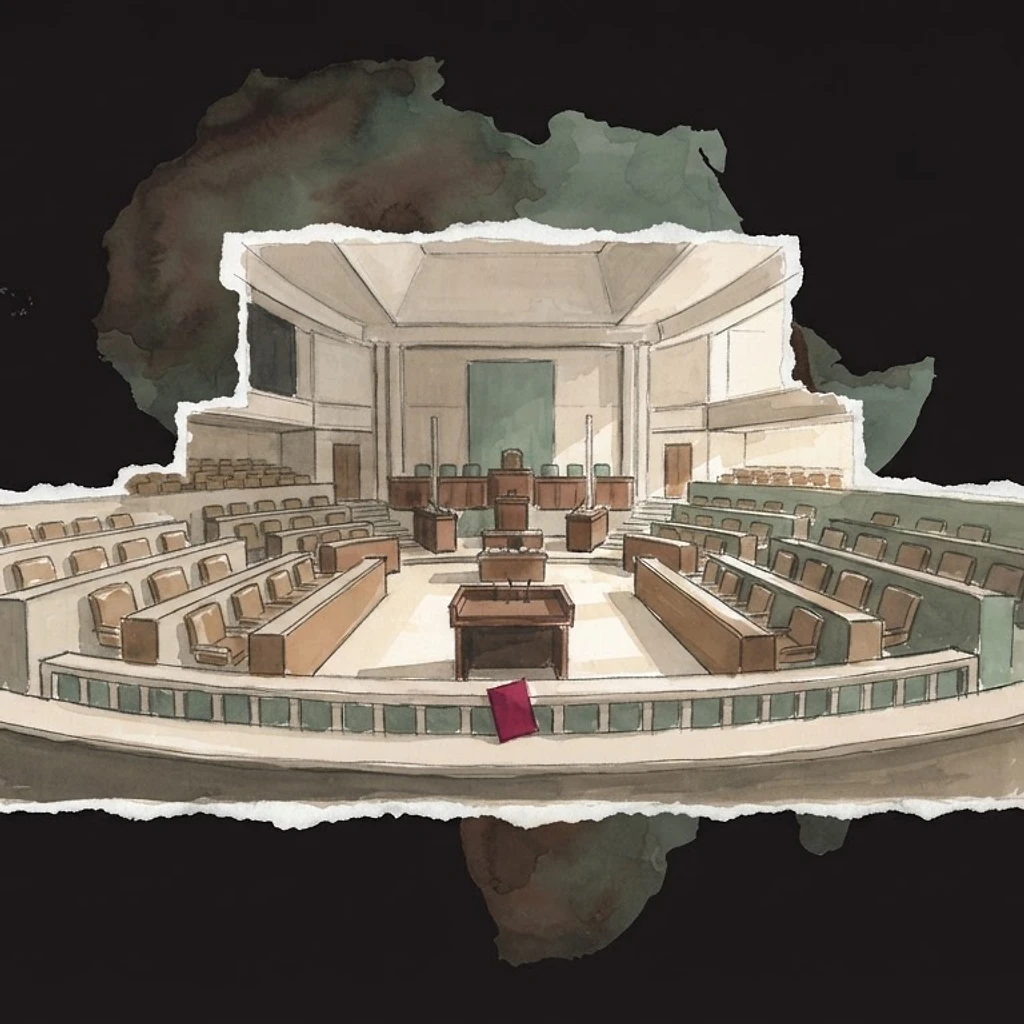
Illustration: Apex Africa
The Gambia Progresses Through Constitutional and Legislative Reform Processes
An examination of the evolving constitutional landscape and administrative governance in The Gambia
The Gambia is currently navigating a period of legislative reform as the government works to modernize its constitutional framework. International monitors and domestic stakeholders remain focused on the impact of these ongoing parliamentary debates on democratic stability.
The Gen Z Read
This story in plain English
Sixty seconds, no jargon. Written for readers new to the politics.
The Gambia is debating changes to its constitution, but disagreements over government powers, public consultation and media protections remain unresolved.
- President Adama Barrow’s administration says it supports term limits and stronger public institutions as constitutional reform continues.
- The Gambia Bar Association says lawmakers are divided over how much power the executive should have under proposed changes.
- The European Union mission says agreement between government and lawmakers will shape progress, while delays could affect future election plans.
- The Gambia Press Union wants stronger legal protections for journalists, and opposition figures say public consultations need more transparency.
No immediate change to jobs, school costs, transport or health is reported. The debate could shape the rules and protections around future elections and public debate, but any effects would take time and depend on what lawmakers agree.
Words decoded
- Term limits
- Rules that set how long a president or other elected official can stay in office.
- Executive
- The president and government officials who carry out laws and run public services.
- Legislature
- The lawmakers who debate and pass laws.
- Constitutional safeguards
- Rules in the country’s highest law that protect rights and limit government power.
What should matter most in The Gambia’s constitutional reform debate?
Be the first to answer
Key judgement
The discrepancy in the voter registry is a critical failure of electoral transparency that, if left unaddressed, will likely lead to a contested election result and heightened political instability.
High withdrawn: 2 relevant sources from 2 publishers.
What to watch
- 16 November 2026: Start of the official campaign period; monitor for any formal statements from the IEC regarding the data gap.
- 20 November 2026: Deadline for observer accreditation; monitor for any withdrawal of applications by civil society groups citing lack of transparency.
- 5 December 2026: Presidential election day; monitor for reports of voter roll discrepancies at polling stations.
Implications for decision-makers
- Political parties must prioritize independent data auditing to verify the integrity of the voter roll before the campaign period begins.
- The IEC must implement a transparent, public-facing data reconciliation process to restore confidence among opposition stakeholders.
- Development partners should condition further technical support on the establishment of an open, audit-ready electoral data management system.
Why it matters
The Gambia continues to navigate a delicate period of legislative reform as the government seeks to modernize its constitutional framework. According to reports from the African Commission on Human and Peoples' Rights (ACHPR), the administration of President Adama Barrow has expressed a commitment to term limits and institutional strengthening. This process of reform is central to the country's current democratic trajectory, although it is currently subject to intense parliamentary debate.
The Gambia Bar Association (GBA) reports that the reform process is marked by significant contention regarding the executive's scope of authority under the proposed drafts currently before the legislature. Furthermore, international observers from the European Union (EU) mission to The Gambia indicate that the success of these reforms depends largely on the consensus-building efforts between the executive and the legislative branches. The EU mission suggests that the current legislative inertia could potentially complicate the timeline for future electoral cycles.
Simultaneously, the Gambia Press Union (GPU) has highlighted that while legislative discussions are ongoing, there remain concerns regarding the legal protections for media practitioners during high-stakes political sessions. The GPU maintains that clear constitutional safeguards are essential to ensure the continued growth of democratic discourse in the country. Analysts at the West Africa Democracy Solidarity Network (WADEMOS) report that public sentiment regarding these reforms is divided; some citizens fear that the legislative gridlock may stall progress on broader socio-economic goals.
WADEMOS notes that the government has recently prioritized budget allocations toward public infrastructure, though they state that the impact on local community development remains to be fully measured. As various advocacy groups continue to monitor the situation, the interplay between constitutional aspirations and legislative realities remains the defining feature of the country's current governance. The government insists, via official communications from the Ministry of Information, that all reform processes remain within the established legal mandate.
Conversely, opposition party figures cited in recent transcripts from the National Assembly argue that the transparency of these consultations could be bolstered significantly. The convergence of these varied viewpoints suggests a complex path forward for The Gambia's democratic consolidation, as the different political actors continue to debate the framework and implementation of the proposed changes.
What we don't know yet
The durability of these legislative efforts will be tested in the coming parliamentary sessions, according to the most recent policy summary from the International Institute for Democracy and Electoral Assistance (IDEA), which posits that The Gambia is at a transitional juncture. While the government maintains, via official communications from the Ministry of Information, that all reform processes remain within the established legal mandate, the transparency of these consultations remains a point of contention. Opposition party figures cited in recent transcripts from the National Assembly argue that the transparency of these consultations could be bolstered significantly. Furthermore, while the National Audit Office (NAO) of The Gambia has released data indicating that fiscal management has improved in terms of transparency, the NAO warns that administrative efficiency still faces challenges due to legacy systems. The precise extent of these administrative hurdles and their long-term impact on the implementation of the proposed legislative reforms remains subject to further assessment by experts and auditors. The convergence of these varied viewpoints, including the government's insistence on its legal mandate and the opposition's calls for increased transparency, suggests that the path toward democratic consolidation involves complex negotiations that have yet to reach a definitive conclusion. The ultimate success of the government in navigating these challenges depends upon the ability of the executive and the legislature to reach a consensus, a factor highlighted by the EU mission as being essential for the stability of the electoral calendar.
What to watch
Future parliamentary sessions will be the primary venue for observing whether the legislative gridlock will be resolved and how the debate over executive authority will be settled. Stakeholders will be monitoring the impact of the current budget allocations toward public infrastructure to determine if measurable changes occur at the local community level, as noted by WADEMOS. Additionally, the ongoing discourse regarding legal protections for media practitioners will continue to be a focal point for the Gambia Press Union, which advocates for clear constitutional safeguards to protect practitioners during high-stakes political sessions. Observers will continue to track whether the administrative efficiency of government systems improves as the National Audit Office continues to monitor fiscal management, particularly regarding the resolution of issues related to legacy systems. The international community, including the EU mission, will continue to evaluate whether the consensus-building efforts are sufficient to maintain the established timeline for future electoral cycles. As various advocacy groups continue to monitor the situation, the resolution of the debate regarding the transparency of consultations, as highlighted by opposition party figures in the National Assembly, will serve as a key indicator of the direction of the country's democratic consolidation. The interplay between the stated commitment of the administration of President Adama Barrow to term limits and institutional strengthening and the ongoing parliamentary debates will remain a defining feature of the political landscape in the coming months. Observers will also keep a close eye on whether the African Commission on Human and Peoples' Rights provides further assessments on the progress of these reforms as the government moves through this transitional juncture.
Corrected 8 November 2026: The headline read "The Gambia: Navigating Legislative Reforms and Political Stability". It now reads "The Gambia Progresses Through Constitutional and Legislative Reform Processes".
Report an error in this briefing