
Analysis · South Korea
South Korean Political Volatility and Its Global Ramifications
Navigating the implications of Seoul's legislative friction and leadership challenges
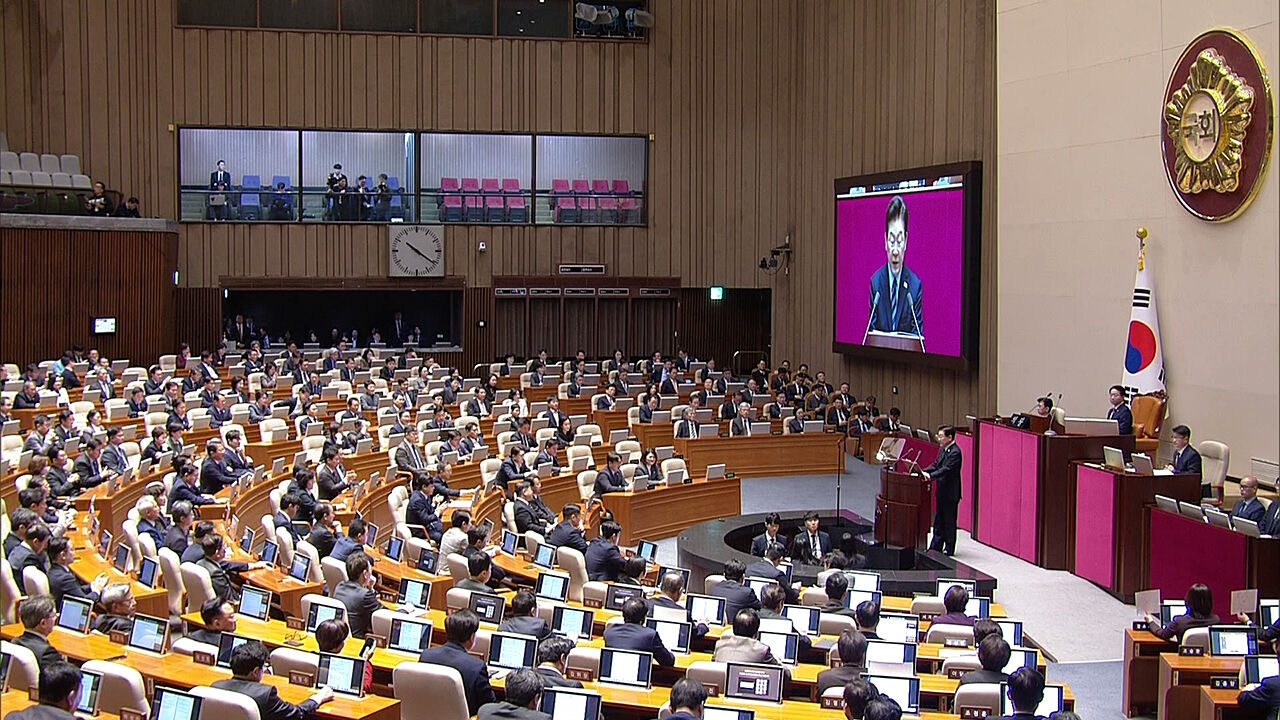
South Korea faces heightened political instability following a series of legislative conflicts and leadership challenges that have tested the country's governance frameworks and raised concerns among international observers about policy continuity.
Key judgement
The 2027 budget proposal is likely to face significant downward revisions as the ruling party seeks to avoid a total legislative deadlock, though the core AI and semiconductor investments will likely survive in a reduced form. The outcome will depend on the ruling party's willingness to trade fiscal control over the Future Response Fund for opposition cooperation on the broader budget bill.
The assessment rests on the current legislative arithmetic and the stated positions of both parties; it would change if the ruling party decides to bypass the committee process entirely.
What to watch
- 2026-11-15: Outcome of the National Assembly Budget and Accounts Committee hearings on the Future Response Fund.
- 2026-12-02: Final vote on the 2027 budget bill in the National Assembly.
- 2026-11-20: Any formal agreement between the DPK and PPP floor leaders regarding budget cuts.
Implications for decision-makers
- Policymakers should prepare for potential delays in the disbursement of 2027 infrastructure funds if the budget deadline is missed.
- Institutional investors should monitor the Future Response Fund negotiations as a proxy for the government's long-term fiscal discipline.
- NGOs and development organizations should track the allocation of AI-related grants to identify potential shifts in public-private partnership priorities.
South Korea is currently navigating a period of significant political volatility, characterized by sharp divisions between the executive branch and the National Assembly. This friction has manifested in repeated legislative gridlock, hindering the government's ability to implement fiscal reforms and long-term economic strategies. Analysts at the Seoul Institute for Political Studies suggest that these internal tensions are primarily driven by the narrowing margin of public approval for the current administration, which has emboldened opposition parties to block major bills.
Furthermore, local media outlets including The Korea Herald have reported on the increasing frequency of protests organized by labor unions and youth advocacy groups, who claim that the administration's current approach to labor market flexibility is undermining worker protections. While government officials have publicly argued that these measures are essential for enhancing national competitiveness in the global semiconductor and technology sectors, opposition leaders continue to characterize these policies as regressive. The persistence of these confrontations has prompted credit rating agencies to observe that if the gridlock continues, the nation's sovereign outlook could be pressured.
Independent observers, such as the Center for Strategic and International Studies, highlight that this domestic instability complicates the administration's ability to navigate complex regional security challenges. Specifically, the necessity of maintaining a unified front in response to regional threats is undermined when internal policy debate becomes overtly confrontational. The political landscape is further complicated by the impending electoral cycles, where opposition parties are leveraging the legislative deadlock to argue for a shift in national priorities.
As the administration works to address these domestic hurdles, the international community watches closely to determine whether the government can secure the necessary legislative support to maintain its commitments on the global stage. Experts maintain that the outcome of these internal disputes will determine the effectiveness of South Korea’s outreach programs and technology investments abroad. The ongoing situation remains fluid, as stakeholders continue to debate the long-term impact of these political maneuvers on the country's stability and its standing as a major economic powerhouse, with several international monitors expressing concern that failure to resolve these issues could weaken the nation's role as a reliable anchor for international market security and strategic partnerships.
Report an error in this briefing