


São Tomé Constitutional Court Reviews President Vila Nova’s Appointment of Américo Ramos
The MLSTP challenges the prime minister’s reappointment, arguing that the President ignored the election results.
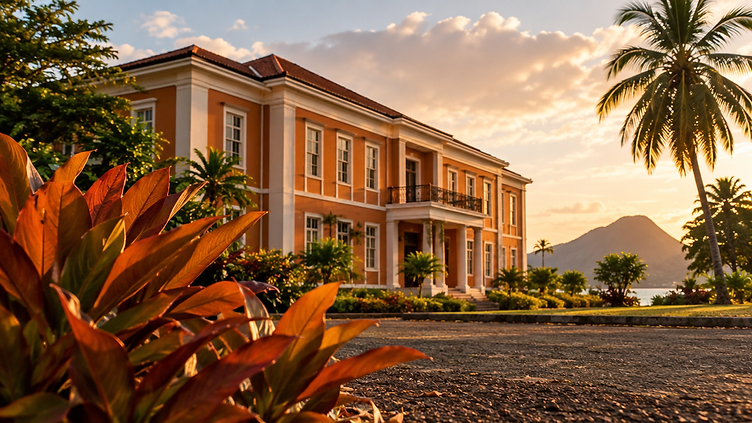
President Carlos Vila Nova reappointed Américo Ramos as Prime Minister after the September 2026 legislative elections, in which the MLSTP won the most seats. The MLSTP petitioned the Constitutional Court to annul the appointment, arguing that the President failed to respect the electoral outcome. The court has not yet ruled on the petition.
The Gen Z Read
This story in plain English
Sixty seconds, no jargon. Written for readers new to the politics.
São Tomé’s Constitutional Court is reviewing a challenge to President Vila Nova’s decision to reappoint Américo Ramos as prime minister.
- The 27 September 2026 election left parliament without a majority: the MLSTP won 24 of 55 seats and the ADI won 23.
- After the ADI agreed to support from a six-seat coalition, President Carlos Vila Nova reappointed ADI leader Américo Ramos on 12 November.
- On 13 November, MLSTP deputies asked the Constitutional Court to cancel the appointment, saying the President ignored the election result and required consultations.
- The court has not ruled; the ADI agreement gives its partners 29 seats, one more than the 28 needed for a majority.
There’s no reported change yet to jobs, school, prices, transport or health. The court’s decision could affect which political group governs, but the reporting doesn’t show what that would mean for daily services; watch for those effects over time.
Words decoded
- Constitutional Court
- A court that decides whether government actions follow the country’s constitution.
- Hung parliament
- A parliament where no party has enough seats to govern alone.
- Parliamentary support agreement
- A deal where one group agrees to back another group in parliament.
- Annul
- To officially cancel a decision.
Which should carry more weight in choosing a prime minister?
Be the first to answer
Key judgement
The evidence indicates that the political stability of the new government depends entirely on the Constitutional Court's interpretation of the parliamentary support agreement. If the court upholds the appointment, the ADI-led coalition will likely consolidate power, but if it annuls the decree, the country faces a prolonged constitutional crisis.
The reporting is consistent across multiple independent sources regarding the election results, the legal challenge, and the cabinet appointments.
What to watch
- Constitutional Court ruling on the MLSTP petition (expected late November 2026)
- Formal swearing-in of ministerial appointees and subsequent resignation from parliamentary seats (expected early December 2026)
- First plenary session of the National Assembly to test the government's majority (expected December 2026)
Implications for decision-makers
- The ADI-led government must manage potential legislative gridlock while the legal challenge remains unresolved.
- MLSTP leadership faces pressure to maintain party unity while pursuing its legal strategy against the executive.
- Institutional investors and development partners should monitor the stability of the 20th Constitutional Government for potential impacts on public policy implementation.
The Appointment Dispute
President Carlos Vila Nova appointed Américo d’Oliveira dos Ramos as Prime Minister on 12 November 2026, tasking him with leading the 20th Constitutional Government. The appointment followed the 27 September legislative elections, which produced a hung parliament. The Movement for the Liberation of São Tomé and Príncipe (MLSTP) won 24 of the 55 seats, while the Independent Democratic Action (ADI), led by Ramos, won 23.
On 13 November, MLSTP deputies asked the Constitutional Court to annul the presidential decree appointing Ramos. The MLSTP argues that the decision violated constitutional requirements to consult political parties and consider the election results. The party also disputes the President’s stated reliance on “parliamentary sustainability,” arguing that this justification for not appointing the election winner has no basis in the national constitution.
Why it matters
The petition places the Constitutional Court at the centre of a dispute over the appointment and the interpretation of parliamentary support agreements. The court has not yet ruled on whether the petition is admissible or on its merits.
Background
After the election, ADI signed a parliamentary support agreement with the MCI-PS/PUN coalition, which holds six seats. The agreement gives ADI and its partners a combined 29 seats, above the 28-seat threshold for a majority. President Vila Nova dismissed the previous government on 10 November; it remained in a caretaker role until the new cabinet was sworn in on 18 November. The cabinet has 11 ministers and one secretary of state. Hélio Silva Vaz de Almeida returned to the finance portfolio.
Parliamentary Status
Two ADI deputies, Orlando da Mata and Adnilson de Sousa, were appointed to ministerial positions and continued to participate in parliamentary sessions. Former National Assembly president Delfim Neves criticised their dual roles and said they should have vacated their seats upon appointment. ADI’s parliamentary leadership maintains that their status as MPs remains valid until they are formally sworn into their executive offices.
The briefing reports differing views on the government’s legitimacy and the support agreement. Critics say procedural disputes and the decision not to appoint the MLSTP have undermined legitimacy. ADI coalition supporters argue that the parliamentary support agreement provides a basis for governance and that the President acted within his authority.
What we don’t know
The available material does not establish when the Constitutional Court will rule, whether it will admit the petition, or how it will decide on the merits. It also does not establish whether da Mata and de Sousa have since been sworn into their ministerial offices or left their parliamentary seats.
What to watch
- The Constitutional Court’s ruling on the MLSTP petition.
- Whether da Mata and de Sousa formally leave their parliamentary seats after being sworn into ministerial roles.
- The government’s first budget and legislative agenda.
Key Statistics
| Value | Label | Note |
|---|---|---|
| 24 | MLSTP seats in the National Assembly | Results of the 27 September 2026 election |
| 23 | ADI seats in the National Assembly | Results of the 27 September 2026 election |
| 29 | Seats held by ADI and its coalition partners | Based on the support agreement with MCI-PS/PUN |
| 11 | Ministers in the new cabinet | Cabinet sworn in on 18 November 2026 |
Sources
- Rio Times — São Tomé’s New Premier Faces Court Challenge — https://www.riotimesonline.com/sao-tome-new-premier-court-challenge — 2026-11-18
- Afreeque — Two São Toméan MPs appointed to government still sit in Parliament — https://afreeque.com/en/news/two-sao-tomean-mps-appointed-to-government-still-sit-in-parliament — 2026-11-21
- Afreeque — Américo Ramos takes office as prime minister of São Tomé and Príncipe — https://afreeque.com/en/news/americo-ramos-takes-charge-of-sao-tome-s-government — 2026-11-16
- UANWORLD — São Tomé and Príncipe names 11-minister cabinet amid legitimacy dispute — http://uanworld.com/story/sao-tome-new-cabinet-november-2026 — 2026-11-19
- Africanews — São Tomé's president reappoints PM following legislative elections — https://www.africanews.com/2026/11/13/sao-tomes-president-reappoints-pm-following-legislative-elections/ — 2026-11-13
- Africa News Watch — São Tomé and Príncipe’s president asks Américo Ramos to form government — https://africanewswatch.com/2026/11/16/sao-tome-americo-ramos-reappointed-prime-minister — 2026-11-16
Report an error in this briefing