

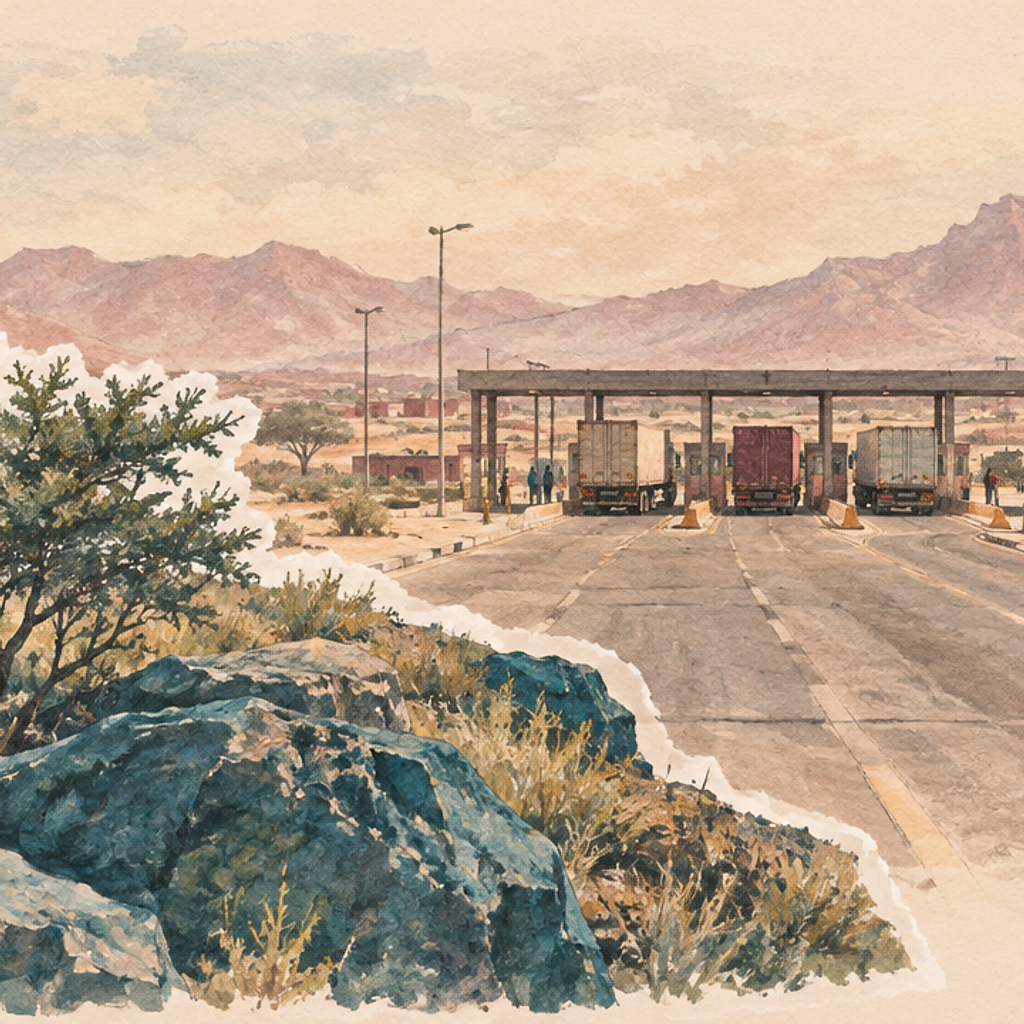
Illustration: Apex Africa
Namibia’s Trade Facilitation Framework Versus South Africa’s Local Election Volatility
Namibia prioritizes AfCFTA integration while its neighbor navigates the fragmentation of municipal governance.
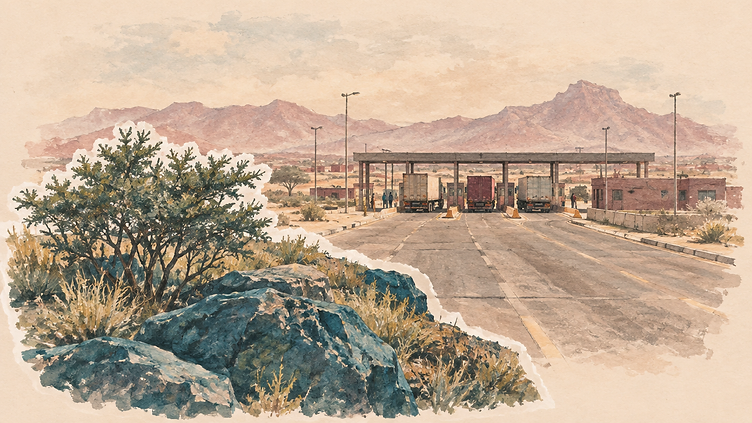
While South Africa grapples with the fragmentation of local government following its 2026 municipal elections, Namibia is focusing on institutionalizing trade through the African Continental Free Trade Area. The contrast highlights a divergence between internal political instability in the region's largest economy and Namibia's strategic push for economic integration. This shift underscores the importance of stable administrative frameworks in securing long-term investor confidence across the SADC region.
The Gen Z Read
This story in plain English
Sixty seconds, no jargon. Written for readers new to the politics.
Namibia launched a guide to help businesses trade under an African trade pact, while South African cities faced coalition talks after local elections.
- Namibia’s government, the UN Economic Commission for Africa and the Namibia Chamber of Commerce and Industry launched a guide for trade under the African Continental Free Trade Area.
- South Africa’s Electoral Commission reported that the African National Congress won 30.76% of the vote in the 2026 local elections.
- No party won a majority in Johannesburg or Tshwane, leaving parties to negotiate coalition governments.
- A total of 520 parties and 636 independent candidates contested more than 10,000 municipal seats in South Africa.
The Namibian guide aims to make cross-border trade procedures clearer for local businesses, but the reporting gives no evidence yet of changes to jobs, prices or transport. Any wider benefits would take time to reach people. In South African cities, coalition instability may disrupt public services and long-term infrastructure plans, but the report does not identify a specific change residents will feel now.
Words decoded
- African Continental Free Trade Area
- A pact among African countries intended to make it easier to trade goods across borders.
- Coalition government
- A government formed when parties share power because none won enough votes to govern alone.
- Municipal
- Relating to a city or local council and the services it runs.
- Trade facilitation
- Steps that make buying and selling goods across borders simpler.
What would matter most to you in these developments?
Be the first to answer
Key judgement
The evidence indicates that Namibia is successfully leveraging administrative stability to advance regional economic integration, while South Africa’s local government fragmentation continues to impede consistent policy implementation.
The assessment is based on official election results from the South African IEC and verified government-led trade initiatives in Namibia reported by multiple independent sources.
What to watch
- Formation of stable coalition governments in South African metros by 30 November 2026
- Volume of trade transactions processed under the new AfCFTA guide in Namibia by Q1 2027
Implications for decision-makers
- Investors should prioritize Namibia for trade-related infrastructure projects due to higher administrative predictability.
- Policymakers in SADC should monitor South African municipal stability as a key indicator for regional trade corridor reliability.
Institutional Divergence in Southern Africa
As of 9 November 2026, the political trajectories of Namibia and South Africa have diverged sharply, with the former prioritizing trade infrastructure and the latter managing the fallout of a fragmented local government landscape. While South Africa’s Electoral Commission (IEC) concluded its 2026 local government elections, revealing a significant decline in the African National Congress (ANC) vote share to 30.76%, Namibia has shifted its focus toward the operationalization of the African Continental Free Trade Area (AfCFTA).
This contrast is not merely coincidental but reflects different institutional priorities. In Windhoek, the government, in collaboration with the UN Economic Commission for Africa and the Namibia Chamber of Commerce and Industry, launched a guide to facilitate the trading of goods under the AfCFTA. Conversely, in South Africa, the political discourse is dominated by the necessity of forming functional coalition governments in major metropolitan areas like Tshwane and Johannesburg, where no party secured an outright majority.
The Governance Gap
The governance implications of these two paths are profound. South Africa’s municipal instability, characterized by a decade of revolving-door mayoralties and coalition volatility, threatens the continuity of public service delivery. The 2026 election results, which saw 520 political parties and 636 independent candidates contest over 10,000 seats, suggest that the trend toward fragmented local governance is likely to persist, complicating long-term infrastructure planning and fiscal accountability.
In contrast, Namibia’s focus on the AfCFTA framework represents a deliberate effort to standardize trade procedures and reduce the administrative burden on local businesses.
Counter-Argument: The Necessity of Political Stability
Critics might argue that Namibia’s focus on trade facilitation is premature if it does not address the underlying domestic political pressures that often mirror those in South Africa. They contend that without robust local government structures, even the best trade policies will fail to reach the grassroots level, where infrastructure and service delivery remain the primary concerns of the electorate.
However, this view overlooks the fact that Namibia’s administrative stability allows for the implementation of long-term economic strategies that are currently impossible in the volatile coalition environments of South African metros. While South African parties are preoccupied with the arithmetic of power-sharing, Namibian institutions are leveraging their relative stability to integrate into the broader continental market.
Future Scenarios
Looking ahead, two scenarios emerge for the region. First, if South Africa fails to stabilize its municipal coalitions, the resulting service delivery failures may lead to increased social unrest, potentially impacting regional trade corridors. Second, if Namibia successfully implements its AfCFTA trade guide, it could serve as a regional benchmark for administrative efficiency, attracting investors who are increasingly wary of the political uncertainty in neighboring markets.
Strategic Implications
For policymakers and investors, the divergence is clear: Namibia offers a more predictable environment for trade-related investment, while South Africa remains a high-risk, high-reward market contingent on the success of its new coalition arrangements. Stakeholders should prioritize engagement with Namibian trade bodies to capitalize on the new AfCFTA guidelines, while maintaining a cautious approach to municipal-level investments in South Africa until coalition governance proves sustainable.
Why it matters
While South Africa grapples with the fragmentation of local government following its 2026 municipal elections, Namibia is focusing on institutionalizing trade through the African Continental Free Trade Area.
What we don't know yet
The record does not yet show how the decision is carried out.
What to watch
Formation of stable coalition governments in South African metros by 30 November 2026; Volume of trade transactions processed under the new AfCFTA guide in Namibia by Q1 2027
Report an error in this briefing