
Risk Assessment · Morocco
Morocco Parliamentary Coalition Negotiations Following October 2026 Elections
Fatima-Zahra El Mansouri faces a fragmented House of Representatives as coalition talks stall over policy mandates.
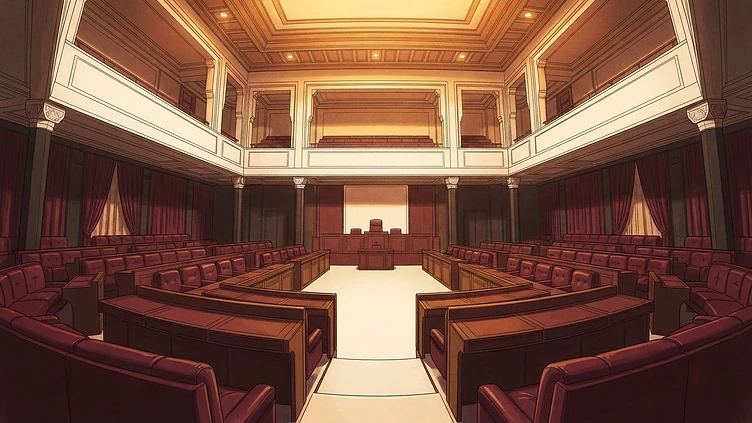
Illustration: Apex Africa
Prime Minister Fatima-Zahra El Mansouri is navigating coalition talks after the Authenticity and Modernity Party (PAM) secured 97 seats in the recent parliamentary elections. The government faces legislative hurdles as the Justice and Development Party and the Left Alliance have opted to remain in opposition.
Key judgement
The evidence indicates that the PAM-led government will struggle to maintain legislative cohesion, likely resulting in a weak administration that is highly susceptible to internal factional pressures and external opposition challenges.
The assessment rests on the current parliamentary arithmetic and the public refusal of major opposition parties to join the coalition, though the situation remains fluid.
What to watch
- The outcome of the next round of formal coalition negotiations between the PAM and centrist parties, expected by mid-November 2026.
- The introduction and debate of the government's first budget proposal in the House of Representatives, which will serve as a test of the coalition's stability.
- Any formal statements from the PJD or the Left Alliance regarding potential cooperation on specific legislative bills.
Implications for decision-makers
- Policymakers should anticipate delays in the implementation of the government's reform agenda due to the lack of a clear parliamentary majority.
- Institutional investors should monitor the stability of the coalition as a proxy for the government's ability to pass economic legislation.
- Political strategists for the PAM must prioritize securing centrist support to avoid legislative gridlock and potential early elections.
Why it matters
The formation of Morocco's new government under Prime Minister Fatima-Zahra El Mansouri is encountering friction as the Authenticity and Modernity Party (PAM) attempts to secure a stable parliamentary majority. Following the parliamentary investiture of Prime Minister Fatima-Zahra El Mansouri on October 22, 2026, the process of forming a functional governing coalition has entered a period of intense negotiation and uncertainty. The PAM, which secured 97 seats in the recent elections, is currently leading consultations with other parliamentary factions to build a stable majority.
However, the initial round of talks has revealed divisions that complicate the government's ability to pass legislation. The Justice and Development Party (PJD), a key opposition force, has declined to participate in the formal consultation process with the PAM committee. Secretary-General Abdelilah Benkirane has signaled a firm stance against joining the incoming government, citing fundamental disagreements over the political direction of the country.
This refusal forces the PAM to seek alternative partners, potentially leading to a more fragile and ideologically diverse coalition than originally anticipated. Simultaneously, the Left Alliance, comprising the Federation of the Democratic Left (FGD) and the Unified Socialist Party (PSU), has formally declared its intention to remain in opposition. The alliance has characterized this decision as a commitment to their electoral platform and a rejection of the current government's proposed policy framework.
By forming a joint parliamentary group, these parties aim to consolidate their influence and provide a more structured challenge to the PAM-led administration. This consolidation of opposition forces creates a hurdle for the government, particularly regarding the passage of reforms. With the PJD and the Left Alliance both positioned outside the governing coalition, the PAM must rely on smaller, centrist parties to reach the threshold for legislative success.
This reliance increases the leverage of minor coalition partners, potentially leading to policy concessions that could dilute the government's original reform ambitions. The parliamentary investiture itself was marked by sharp exchanges, with the National Rally of Independents (RNI) questioning the feasibility of the government's reform program. Accountability mechanisms are also under the spotlight, as civil society groups and trade unions demand greater transparency in the government's decision-making processes.
The ability of the El Mansouri administration to translate its electoral mandate into tangible improvements in public services will be the primary metric by which its performance is judged. Failure to deliver on these promises could alienate the electorate, which saw turnout drop to 38% in the recent elections. Proponents of the current coalition strategy argue that the PAM's leadership is necessary to ensure continuity in Morocco's diplomatic and economic policies, particularly in light of recent developments regarding the Sahara issue.
They contend that the current fragmentation is a temporary phase of the democratic process and that a stable government will emerge once the initial policy negotiations are concluded.
What we don't know yet
The record does not yet show how the decision regarding coalition partners is carried out. There remains uncertainty regarding the depth of the ideological divide between the PAM and the opposition, as the current fragmentation may prove resistant to traditional coalition-building tactics. It is also unclear if the government can secure a narrow majority with centrist partners that will be sufficient to prevent legislative gridlock.
What to watch
The outcome of the next round of formal coalition negotiations between the PAM and centrist parties, expected by mid-November 2026. The introduction and debate of the government's first budget proposal in the House of Representatives, which will serve as a test of the coalition's stability. Any formal statements from the PJD or the Left Alliance regarding potential cooperation on specific legislative bills.
In the first of two likely scenarios, the PAM successfully negotiates a narrow majority with centrist partners, leading to a period of legislative gridlock where only essential bills are passed. The key indicator for the government's stability will be the successful passage of the upcoming budget, which will require a unified front that currently remains elusive.
Corrected 4 November 2026: The headline read "Morocco's Parliamentary Coalition Negotiations: The PAM-Led Government's Struggle for Legislative Stability". It now reads "Morocco Parliamentary Coalition Negotiations Following October 2026 Elections". A passage asserted a motive, intention, effect or wrongdoing that the sources cited did not state. It has been attributed to its source or removed.
Report an error in this briefing