Analysis · Botswana
Kanye District Digital Transition: The Infrastructure Gap in the UDC’s National Service Delivery Strategy
The government's push for full digital migration faces significant local resistance due to persistent network outages.
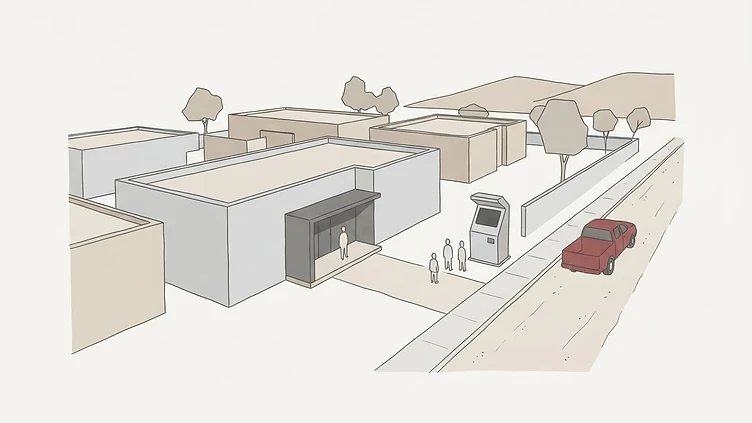
Illustration: Apex Africa picture desk
The Botswana government is accelerating its national digital transformation agenda, aiming for full online service delivery by November 2027. However, local feedback from Kanye District reveals that the policy is outpacing the physical infrastructure required to support it. This disconnect threatens to alienate rural constituencies and undermines the UDC's promise of inclusive governance.
Key judgement
The government's aggressive digital-first policy is creating a political vulnerability in rural districts where infrastructure lags behind legislative mandates, likely leading to increased local friction as the 2027 deadline approaches.
The analysis relies on official government statements and local council records, but the long-term impact on electoral outcomes remains speculative.
What to watch
- November 2026: Formal launch of the SmartBots digital transformation strategy.
- January 2027: Reports on service accessibility during the school admission period in rural districts.
- Q2 2027: Parliamentary review of the Digital Services Act implementation progress.
Implications for decision-makers
- Policymakers must prioritize rural connectivity infrastructure to prevent the digital transition from alienating non-urban constituencies.
- Political strategists should monitor local council feedback as a leading indicator of potential electoral dissatisfaction with the UDC's modernization agenda.
Digital Mandates and Local Realities
The Botswana government has committed to a comprehensive digital transformation strategy, anchored by the Digital Services Act of 2025. This legislation mandates that all public services must be accessible online by November 2027. While the administration frames this as a modernization imperative, the practical implementation in regions like Kanye District highlights a widening gap between national policy goals and the lived experience of citizens.
During a recent council session, Minister of Communications and Innovation David Tshere confirmed that the government is prioritizing the Delta Digital Data Centre in Gaborone to stabilize system performance. The administration argues that this centralized cloud infrastructure will eliminate the frequent downtime that has historically plagued public service delivery. However, the reliance on a centralized hub does little to address the connectivity deficits that persist at the periphery of the national network.
The Infrastructure Bottleneck
Local representatives in Kanye have voiced significant skepticism regarding the feasibility of this transition. Councillor Mosekisi Rangobana of Kgosing Ward noted that while the digitalization of services could theoretically benefit the agricultural sector, the current reality is defined by frequent network outages. For residents in rural wards, the promise of a 'digital-first' government remains an abstraction when basic connectivity remains unreliable.
This tension is not merely technical; it is a political liability for the Umbrella for Democratic Change (UDC) coalition. By mandating a digital-only pathway for services, the government risks creating a two-tier system of citizenship. Those with stable internet access and digital literacy will navigate the new bureaucracy with ease, while those in underserved districts like Kanye may find themselves effectively disenfranchised from essential public services.
Counter-Arguments and Policy Intent
Proponents of the digital strategy argue that the phased rollout of the SmartBots initiative and the recent cooperation agreement with Huawei will eventually bridge these gaps. They contend that the focus on cloud hosting and AI-powered public security will create a robust foundation that justifies the initial disruption. From this perspective, the current downtime is a temporary friction point in a necessary evolution toward a more efficient, data-driven state.
However, this optimistic view overlooks the lack of a comprehensive cloud computing policy. As of October 2026, the government has yet to finalize the regulatory framework governing where and how public data is hosted. Without clear standards for data sovereignty and service continuity, the reliance on external partnerships and centralized infrastructure may introduce new vulnerabilities rather than resolving existing ones.
Future Scenarios
Two primary scenarios emerge for the next 12 months. In the first, the government successfully accelerates fibre-optic expansion to rural districts, mitigating the connectivity issues raised by local councillors and stabilizing public trust. In the second, the digital mandate proceeds without corresponding infrastructure investment, leading to a surge in service delivery complaints and potential electoral backlash in rural constituencies during the 2027 budget cycle.
Strategic Implications
For policymakers, the immediate priority must be to decouple the digital mandate from the assumption of universal connectivity. The UDC leadership should consider implementing hybrid service delivery models that maintain physical access points in districts like Kanye until network stability is verified. For political strategists, the risk is clear: if the digital transition is perceived as an urban-centric project that ignores the needs of the rural electorate, it will provide a potent narrative for opposition parties to exploit in the lead-up to the next electoral cycle.
| Value | Label | Note |
|---|---|---|
| 4.4% | Projected 2026 real GDP growth | Bank of Botswana, Oct 2026 |
| 99.7% | Service availability on national fibre backbone | BoFiNet AGM, Aug 2026 |
| 2027 | Deadline for full digital service migration | Digital Services Act, 2025 |
| 17 | Number of geoscientists completing training | DailyNews, Oct 2026 |
Why it matters
The Botswana government is accelerating its national digital transformation agenda, aiming for full online service delivery by November 2027.
What we don't know yet
The record does not yet show how the decision is carried out.
What to watch
November 2026: Formal launch of the SmartBots digital transformation strategy.; January 2027: Reports on service accessibility during the school admission period in rural districts.; Q2 2027: Parliamentary review of the Digital Services Act implementation progress.
Report an error in this briefing