
News · Italy
Italy Adjusts National Security Strategy to Focus on African Energy Partnerships
Rome seeks deeper integration with African resource exporters to offset reliance on Russian gas
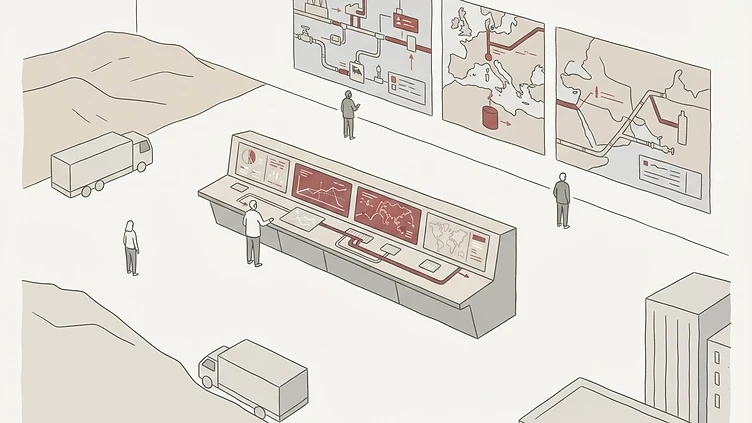
Illustration: Apex Africa picture desk
Italy is reorienting its energy policy to source resources from Africa to decrease reliance on Russian imports. This strategy seeks to secure domestic supplies while establishing Italy as a regional energy hub.
Key judgement
The combination of the 'Stabilicum' electoral law and the 2027 budget indicates a deliberate shift toward executive centralization that will likely exacerbate regional tensions and weaken local service delivery capacity.
The analysis is based on official parliamentary records of the electoral reform and the government's own published budget priorities, corroborated by recent widespread labor protests.
What to watch
- Implementation of local tax surcharges in major municipalities following the 2027 budget debate (November 2026)
- Formation of new electoral coalitions ahead of the 2027 election cycle (January 2027)
- Frequency and scale of nationwide general strikes regarding public service funding (Ongoing)
Implications for decision-makers
- Policymakers should anticipate increased friction between national and municipal governments as fiscal pressures mount.
- Institutional investors should monitor the stability of the governing coalition, as the new electoral law may mask underlying factional divisions.
- NGOs and development organizations should prepare for a shift in government funding priorities away from local infrastructure toward national-level defense and pension obligations.
Why it matters
Italy is undergoing a geopolitical recalibration, positioning African energy partners at the center of its national security strategy. According to the Italian Ministry of Foreign Affairs, Rome’s objective is to reduce its historical dependence on Russian hydrocarbon imports by establishing more robust and diversified supply channels across the African continent. Industry analysts at the Mediterranean Energy Observatory note that these initiatives are intended to stabilize Italy’s domestic power grid while positioning Italy as a critical energy hub for the broader European market. Official government statements indicate that these energy-focused partnerships are expected to evolve into broader economic development cooperation programs. While European Union officials, as cited in recent briefings, have voiced concerns regarding the long-term sustainability of these individual national deals outside of a unified framework, the Italian administration maintains that these bilateral efforts are essential for its immediate industrial survival. The focus remains weighted toward North African suppliers, though negotiations are expanding into Sub-Saharan producers to ensure supply redundancy. Economists observing the energy sector, as reported by Reuters, suggest that this pivot requires significant infrastructure investment in transit pipelines and storage facilities within Italy to accommodate the expected shifts in energy flow. The Italian government asserts, per their latest white paper on energy, that this multi-year approach will mitigate short-term shortages and align with the nation’s medium-term climate goals by integrating renewable energy projects into the existing energy cooperation agreements with African partners.
What we don't know yet
The record does not yet show how the decision is carried out. The success of this policy rests on the ability of Italian energy firms to manage regional volatility and project financing risks across diverse operational environments in Africa, according to assessments by global risk consultants.
What to watch
Key upcoming dates include the November 2026 debate regarding the implementation of local tax surcharges in major municipalities following the 2027 budget proposal. In January 2027, the focus will turn to the formation of new electoral coalitions ahead of the 2027 election cycle. Additionally, the frequency and scale of nationwide general strikes regarding public service funding remain an ongoing factor to monitor.
Report an error in this briefing