Risk Assessment · Sudan
Detentions of Civil Servants in El Obeid and Impacts on Local Governance
Arbitrary arrests of medical and teaching staff in North Kordofan are dismantling the remaining local administrative base.
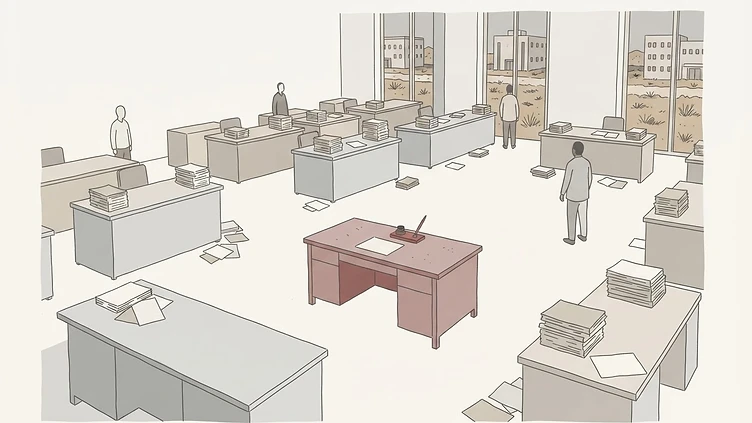
Illustration: Apex Africa picture desk
The UN mission reported that the detention of essential service providers in El Obeid is a coordinated effort to purge local administration. These actions affect medical and teaching staff, impacting the infrastructure necessary for future governance transitions.
Key judgement
The systematic detention of civil servants in El Obeid is a deliberate strategy to dismantle local administrative capacity, ensuring that no independent governance structures remain to challenge central authority in a post-conflict transition.
The analysis is based on direct documentation from the UN mission report on El Obeid and corroborated by broader trends in Sudanese institutional decline reported by the WHO and UN agencies.
What to watch
- Appointment of military-aligned personnel to replace detained civil servants in North Kordofan (Trigger: Immediate)
- Official closure of additional public schools in El Obeid (Trigger: November 2026)
- Statements from the North Kordofan state government regarding the status of detained staff (Trigger: Ongoing)
Implications for decision-makers
- Policymakers must shift from general humanitarian aid to targeted protection for local administrative personnel to prevent total institutional collapse.
- International NGOs should bypass state-controlled channels to deliver essential services, as current state structures are actively hostile to independent service providers.
- Political strategists must account for the loss of local administrative infrastructure when planning for future electoral or governance transition timelines.
Why it matters
The UN mission reported on October 26, 2026, that arrests in El Obeid are a coordinated effort to purge the local administration of individuals suspected of harboring independent political loyalties. By targeting the professionals responsible for maintaining city clinics and schools, the authorities are dismantling local governance structures required for any future electoral or democratic transition. This demonstrates that the conflict in Sudan has moved beyond territorial control to the active suppression of local civic life.
This strategy ensures that when the national political environment shifts, there will be no functioning local institutions or neutral administrative personnel left to facilitate a return to civilian governance. Since the outbreak of the national conflict in April 2023, Sudan has seen a steady decline in the functionality of its public institutions. In October 2026, the UN mission reported that arbitrary detention, torture, and enforced disappearances have become prominent features of the conflict.
Additionally, 33.7 million people in Sudan require humanitarian assistance, and up to 80% of health facilities in conflict-affected areas are non-functional. On October 28, 2026, the Sudanese Foreign Ministry accused Ethiopia of hosting drone launch platforms, which the Ministry states complicates the national security landscape. While some observers state these detentions are collateral damage of the struggle between the Sudanese Armed Forces and the Rapid Support Forces, evidence from El Obeid suggests a deliberate objective to enclose civic space.
Interrogations of detained staff focused on tribal identity and perceived political allegiances, rather than military activity, indicating that the state is using the war to eliminate potential local leaders. Critics state these actions are a necessary security measure to prevent infiltration, yet the indiscriminate nature of the arrests—targeting teachers and medical staff based on residence or family connections—undermines the state's ability to provide basic services. By alienating the professional class, authorities are ensuring long-term administrative collapse.
For policymakers, the situation necessitates a shift in focus from purely humanitarian aid to the protection of local administrative personnel. Providing resources to a system that is actively purging its service providers is ineffective. The destruction of local governance in North Kordofan will make future election readiness efforts difficult, as the local infrastructure for voter registration and civic engagement is being dismantled.
What we don't know yet
It remains unclear whether these detentions are being directed by a centralized national command or are the result of autonomous actions by local security commanders in North Kordofan. The status of those detained remains a point for further clarification, as official statements from the North Kordofan state government have yet to emerge. Furthermore, the total impact on the long-term sustainability of the remaining professional population in El Obeid depends on whether the pattern of detention continues or if external interventions lead to a shift in current policies.
What to watch
In the coming months, the situation in El Obeid will likely follow one of two paths. If the pattern of detention continues, a total cessation of public service delivery is expected, leading to a humanitarian crisis that forces the displacement of the remaining professional population. If international pressure or local mediation succeeds, a temporary cessation of arrests may occur, though this may represent a tactical pause rather than a change in policy. Key indicators include: the appointment of military-aligned personnel to replace detained civil servants in North Kordofan (Trigger: Immediate); the formal closure of additional public schools in El Obeid (Trigger: November 2026); and any official statements from the North Kordofan state government regarding the status of the detained staff (Trigger: Ongoing).
Corrected 1 November 2026: The headline read "El Obeid: The Systematic Detention of Civil Servants and the Erosion of Local Governance". It now reads "Detentions of Civil Servants in El Obeid and Impacts on Local Governance".
Report an error in this briefing