Analysis · Morocco
Tender for Mosque Reconstruction in M'Semrir, Tinghir Province
The prioritization of religious infrastructure over essential services reveals a deepening crisis of regional governance.
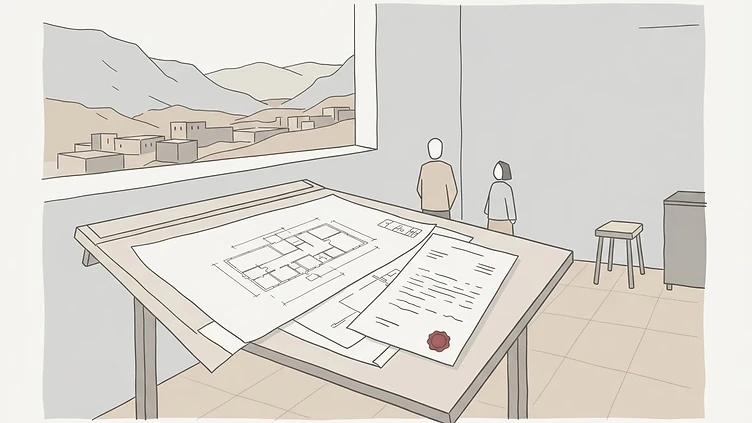
Illustration: Apex Africa picture desk
The October 2026 announcement of a 10.1 million dirham tender for a mosque in M'Semrir highlights a focus on religious infrastructure over local service delivery in Draa-Tafilalet. By utilizing the Regional Directorate of Islamic Affairs as the procurement authority, the state removes the M'Semrir municipal council from the decision-making process.
Key judgement
The centralization of procurement in Draa-Tafilalet is creating a structural governance deficit that will likely trigger localized social unrest in rural provinces like Tinghir. The state's prioritization of symbolic infrastructure over essential services is unsustainable and will force a political realignment at the local level.
The analysis is based on verifiable procurement data from official government tender portals and recent regional development reports. Rated Moderate rather than High: High confidence claimed with no primary institutional record in the file.
What to watch
- 2026-11-19: Deadline for the M'Semrir mosque tender; monitor for contract award details.
- 2026-12-01: Observe local council meeting minutes in Tinghir for reactions to regional budget allocations.
- 2027-01-15: Track any reports of service delivery protests in M'Semrir or surrounding communes.
Implications for decision-makers
- Local municipal leaders must pivot to data-driven advocacy to challenge regional budget allocations.
- Investors should anticipate increased political risk in rural provinces due to the widening service delivery gap.
- Development organizations should prioritize capacity-building for local councils to improve fiscal oversight.
Why it matters
The announcement of a 10.1 million dirham tender for the reconstruction of a mosque in the commune of M'Semrir, Tinghir Province, reported on October 2026, serves as an illustration of the current political situation in the Draa-Tafilalet region. While the state frames these investments as essential cultural preservation, the reality in rural Tinghir involves infrastructure and public service needs. By channeling capital into religious architecture rather than the expansion of primary healthcare or water sanitation, the regional administration prioritizes state presence.
The Regional Directorate of Islamic Affairs, acting as the primary procurement authority, removes the decision-making power from the local M'Semrir municipal council. This top-down approach ensures that the state’s ideological footprint is expanded, while the needs of the residents—such as the maintenance of sanitation systems or the expansion of primary health clinics—are relegated to secondary status in the regional budget. This reliance on centralized procurement vehicles ensures that local political actors remain dependent on regional patronage rather than their own constituents.
While the state reports the launch of 40 new health centers across the Draa-Tafilalet region, procurement notices for the extension of the Moulay Ali Chérif Regional Hospital and the maintenance of sanitation GEPs reveal a fragmented approach to service delivery. These projects are often delayed, underfunded, or poorly coordinated, leading to a situation where the official statistics of health center openings do not reflect the provision of medical care to the rural population. For residents, the contrast between the rapid mobilization of funds for religious infrastructure and the pace of essential service delivery is a source of resentment.
The 10.1 million dirham allocation is a figure that residents compare against the lack of investment in their local clinics. Critics of this procurement model note that the professionalization of the Regional Multiservice Company aims to modernize public administration, but they argue that efficiency without local accountability is a form of exclusion. The lack of transparency in how these large-scale tenders are awarded by the Regional Directorate of Islamic Affairs or the Regional Directorate of Equipment means the process is shielded from the scrutiny of local civil society, often prioritizing the interests of well-connected contractors over the public good.
What we don't know yet
The administration has not provided a public rationale for the specific spending priorities of the 10.1 million dirham allocation. It remains unclear if the state intends to engage in consultation with the residents of M'Semrir regarding future infrastructure projects or whether the administration will address the grievances of the population. While the state presents the expansion of religious sites as cultural preservation, the extent to which this project will be integrated with existing rural service delivery remains unconfirmed. Furthermore, the internal debate within the administration regarding the balance between regional directorate control and municipal autonomy is not public. The potential for the state to pivot toward a re-decentralization policy, which would grant more fiscal power to local communes, remains speculative. Whether the current procurement process will undergo changes in transparency or oversight remains to be seen. The state has not addressed the concerns regarding how the official statistics of health center openings reflect the actual availability of medical care in the rural population of Tinghir. The administrative response to the existing criticism of the centralized governance model is also currently unknown.
What to watch
Stakeholders and observers should monitor the frequency of public protests in Tinghir regarding service delivery as an indicator of regional sentiment. The level of engagement by local civil society in the procurement process will provide insight into the effectiveness of current administrative policies. It is important to watch for any shifts in the rhetoric of regional officials concerning the role of local councils, as this may signal a change in the state’s governance model. The development of local political movements campaigning on the issue of fiscal autonomy and the management of regional funds is another trend for observation. For policymakers, the sustainability of the current model of centralized regional governance depends on whether the state chooses to move toward an inclusive procurement process that incorporates local councils. For NGOs and development organizations, the focus remains on the capacity of local municipal bodies to demand accountability in the allocation of regional funds. The interaction between the regional directorates and local municipal actors serves as a primary indicator of whether the state will persist in its current exclusionary strategy or adapt to meet the functional requirements of the local citizenry. Continued observation of regional budget allocations will provide further clarity on the state's long-term priorities for the Draa-Tafilalet region.
Corrected 31 October 2026: The headline read "Draa-Tafilalet’s 10.1 Million Dirham Mosque Reconstruction and the Erosion of Local Fiscal Autonomy in Tinghir Province". It now reads "Tender for Mosque Reconstruction in M'Semrir, Tinghir Province". A passage asserted a motive, intention, effect or wrongdoing that the sources cited did not state. It has been attributed to its source or removed.
Report an error in this briefing