News · DR Congo
DR Congo National Assembly Adopts 2027 Budget Amidst Escalating Political-Military Tensions
The $24.8 billion budget prioritizes national dialogue funding as the government confronts the FRN-M23 alliance.
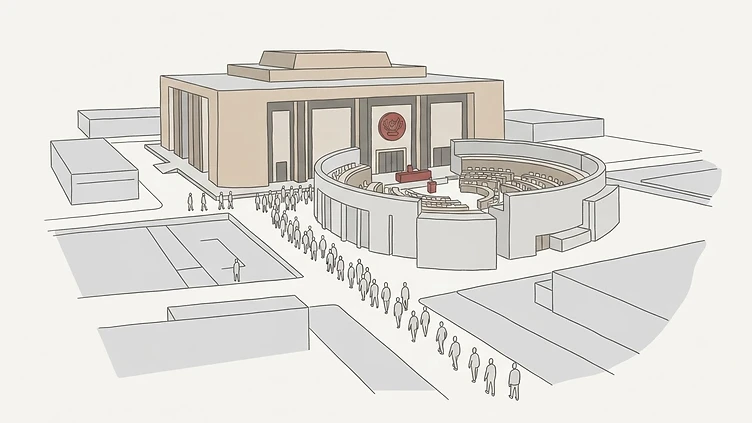
Illustration: Apex Africa picture desk
The National Assembly's recent adoption of a $24.8 billion budget for 2027 signals a shift toward state-led consolidation in response to the emergence of the Front for the Refoundation of the Nation. By allocating specific funds for a national dialogue, the administration seeks to neutralize the political-military challenge posed by the Kabila-led coalition. This strategy prioritizes institutional stability over electoral competition, effectively narrowing the space for opposition engagement.
Key judgement
The 2027 budget indicates that the Tshisekedi administration is prioritizing state-led institutional consolidation to counter the FRN-M23 alliance, likely at the expense of genuine electoral competition. This fiscal strategy suggests a move toward a managed political environment where the national dialogue serves as a tool for containment rather than democratic reform.
The analysis is based on the official 2027 budget proposal and recent government statements regarding the FRN, which are consistently reported by multiple independent sources.
What to watch
- Release of the 142 billion francs for the national dialogue by 2027-01-31
- Participation of major opposition parties in the government-led dialogue by 2027-03-31
- Any further legislative amendments to the 2027 budget following the Ecofin committee review by 2026-11-20
Implications for decision-makers
- Political strategists should anticipate a narrowing of the democratic space as the government uses fiscal control to marginalize opposition influence.
- Institutional investors and development organizations should monitor the implementation of the 2027 budget as a proxy for the government's ability to maintain stability amidst security threats.
- Opposition leadership must decide whether to engage in the government-led dialogue or risk further political isolation.
National Budgetary Priorities
The National Assembly of the Democratic Republic of the Congo declared the 2027 draft budget admissible on October 31, 2026, setting the fiscal framework at 57.5 trillion Congolese francs, approximately $24.8 billion. This budget represents a 12% increase over the 2026 revised figures, reflecting an aggressive attempt by the administration of President Félix Tshisekedi to stabilize state institutions. The allocation includes 142 billion francs specifically earmarked for a national dialogue, a mechanism the government intends to use to address the country's deepening political crisis.
This fiscal expansion occurs as the government faces significant pressure from the Front for the Refoundation of the Nation (FRN), a political-military alliance launched by former President Joseph Kabila in Goma on October 12, 2026. The alliance, which incorporates the March 23 Movement (M23), presents a direct challenge to the central government's authority. By formalizing the budget, the administration is attempting to project institutional continuity and financial credibility, particularly following the country's removal from the Financial Action Task Force’s grey list.
The Political-Military Challenge
The emergence of the FRN has fundamentally altered the national political landscape. By bringing together political figures and the military leadership of the M23, the coalition has moved beyond traditional opposition tactics, creating a dual-threat environment for the ruling party. President Tshisekedi has responded by labeling the former president a 'Rwandan proxy' in a statement to lawmakers on October 27, 2026, signaling a hardening of the government's stance against the new coalition.
The government's recent actions, including the use of security forces to disperse protests against constitutional changes, suggest that the administration is prioritizing containment over inclusive political competition.
Counter-Arguments and Institutional Reality
Proponents of the current budgetary strategy argue that the 2027 allocation is essential for maintaining state functionality in the face of an existential security threat. They maintain that without a robust fiscal response, the government would be unable to sustain the administrative apparatus required to manage the ongoing Ebola outbreak and the broader security crisis. From this perspective, the national dialogue is a necessary instrument to prevent the total collapse of state institutions.
However, this view fails to account for the erosion of trust in the Independent National Electoral Commission (CENI). The commission's perceived lack of impartiality, coupled with the government's control over its leadership selection, undermines the legitimacy of any dialogue process. The reliance on state-led initiatives to resolve political disputes often results in the further exclusion of opposition parties, which have already faced significant barriers to registration and participation.
Scenarios and Future Indicators
Two primary scenarios emerge for the coming months. The indicator for this would be the participation of key opposition figures in the dialogue process by early 2027.
In the second scenario, the FRN intensifies its military and political activities, rendering the national dialogue ineffective and forcing the government into a state of permanent emergency. This would be signaled by a failure to release the allocated 142 billion francs for the dialogue and an increase in security-related spending beyond the current budget projections. The stability of the administration will depend on its ability to maintain the loyalty of the security forces while managing the fiscal pressures of the 2027 budget.
Why it matters
The National Assembly's recent adoption of a $24.8 billion budget for 2027 signals a shift toward state-led consolidation in response to the emergence of the Front for the Refoundation of the Nation.
What we don't know yet
The record does not yet show how the decision is carried out.
What to watch
Release of the 142 billion francs for the national dialogue by 2027-01-31; Participation of major opposition parties in the government-led dialogue by 2027-03-31; Any further legislative amendments to the 2027 budget following the Ecofin committee review by 2026-11-20
Report an error in this briefing