Analysis · Côte d'Ivoire
Ivorian Government Inaugurates Four Border Police Posts in Cavally Region
The inauguration of new border posts in the Cavally region prioritizes external security over local administrative needs.
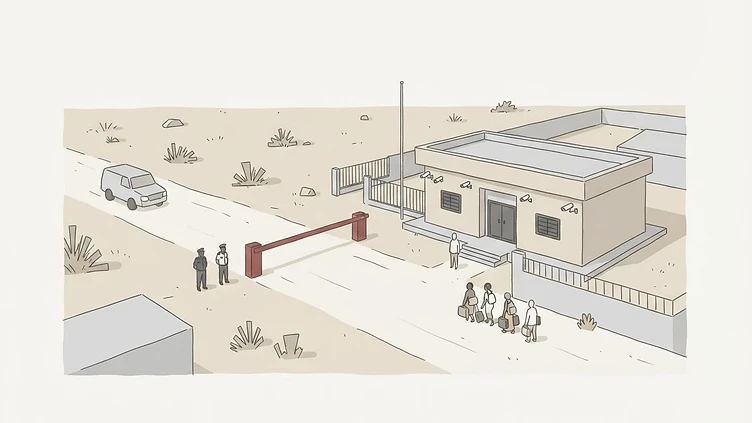
Illustration: Apex Africa picture desk
On October 23, 2026, the Ivorian government opened four new border police posts in the Cavally region, including one in Dohouba, with support from the IOM and Italy. While the government states these posts are for border governance, local residents report that they provide no improvements to local public services.
Key judgement
The prioritization of security infrastructure in the Cavally region, while ignoring local service delivery, will likely deepen the alienation of border communities from the central state. This strategy risks creating a governance vacuum that could be exploited by non-state actors, ultimately undermining the stability the government seeks to achieve.
The analysis is based on the official inauguration of security posts and the documented lack of corresponding local development investment, but the long-term impact on local political sentiment remains to be seen.
What to watch
- Allocation of local development funds in the 2027 national budget for the Cavally region (December 2026)
- Frequency of public protests or community-led petitions against the new border posts (November 2026 onwards)
- Reports of police-community friction in Dohouba and surrounding villages (Ongoing)
Implications for decision-makers
- Policymakers must integrate local development into security projects to ensure community buy-in and long-term stability.
- Political strategists should focus on the gap between state security rhetoric and local service delivery to build grassroots support.
- NGOs and development partners should prioritize participatory, community-led models over top-down security interventions.
Why it matters
On October 23, 2026, the Ivorian government inaugurated four new border police posts in the Cavally region, including one located in the village of Dohouba. This project was conducted in partnership with the International Organization for Migration (IOM) and received funding from Italy. The official narrative from the government states that these installations are essential for strengthening national border governance and regional stability. Residents of Dohouba and the surrounding areas report that the arrival of these police posts does not include investments in local public services, such as healthcare, education, or rural infrastructure. The stated focus of the installations is surveillance, border control, and the monitoring of migration flows. By prioritizing security infrastructure, the state signals to the population that the Cavally region is a zone to be managed rather than a community to be developed. This development illustrates how international partnerships affect local democratic processes, according to reports from the region. The government and its international partners dictate priorities for the territory, which local councils in the Cavally region describe as a process that sidelines them from their responsibilities regarding the welfare of their constituents. Local councils report that this creates an erosion of local autonomy and challenges the democratic legitimacy of their government institutions.
What we don't know yet
Governance in Côte d'Ivoire is marked by a gap between national policy announcements and service delivery at the local level. Although the government states these projects are evidence of its commitment to national security, there is no evidence of a corresponding commitment to the socio-economic development of the borderlands. There is a lack of transparency regarding the budget and the specific objectives of these projects. Accountability mechanisms, including local council oversight and public audits, are absent from the implementation of these border security projects. Decisions are made at the ministerial level in Abidjan, with little to no input from local authorities in the Cavally region. The reliance on international funding from partners like Italy creates a dependency that complicates the accountability landscape. There is no clear, publicly available framework for how these projects are managed and evaluated, meaning citizens cannot assess whether these investments deliver promised benefits. For the people living in Dohouba, the new border police posts are a symbol of the state's preoccupation with control. The local economy, which is dependent on cross-border trade and agriculture, is now subject to increased scrutiny and regulation. The government argues that this regulation is necessary to prevent illegal activities, yet it creates barriers for small-scale traders and farmers. The lack of investment in local infrastructure, such as roads and markets, means these communities bear the costs of security without receiving direct benefits. In the Cavally region, healthcare, school quality, and the reliability of water and power remain inadequate. Civil society organizations and community leaders have expressed concerns about the lack of consultation and the potential for the new police posts to be used as tools of intimidation. The lack of a transparent and inclusive process for the implementation of these projects has created a climate of suspicion.
What to watch
Critics argue that the security situation in the Sahel and the regionalization of conflicts necessitate a strong, centralized approach to border management, citing the threat of terrorism and violent extremism. An alternative view holds that security cannot be achieved in a vacuum and must be built on a foundation of inclusive and accountable governance. By focusing on security, the state ignores root causes of instability, such as poverty, inequality, and the lack of economic opportunity. Looking ahead, there are three potential scenarios for how the situation in the Cavally region might develop. The first is a continuation of the security-first approach, characterized by further militarization and continued neglect of local service delivery. Key indicators to watch are the level of public protest and the frequency of reports of police misconduct in the region. The second scenario is a shift toward a more balanced approach, where the government integrates security with development by investing in local infrastructure and service delivery alongside the border police posts. A key indicator to watch is the allocation of funds for local development projects in the Cavally region in the upcoming national budget. The third scenario is a grassroots-led movement for greater autonomy and accountability, where local communities and civil society organizations organize to demand a greater say in the management of their territory. The indicator to watch is the emergence of new, independent political movements or community-based organizations in the Cavally region focused on local governance and accountability. For policymakers, the current approach to border management risks the stability it seeks to protect. Establishing a consultative mechanism that includes local authorities, civil society, and community leaders in the planning and implementation of border projects is a potential next step.
Corrected 31 October 2026: The headline read "Ivorian Government Inaugurates New Border Police Posts in Cavally Region". It now reads "Ivorian Government Inaugurates Four Border Police Posts in Cavally Region". A passage asserted a motive, intention, effect or wrongdoing that the sources cited did not state. It has been attributed to its source or removed.
Report an error in this briefing