

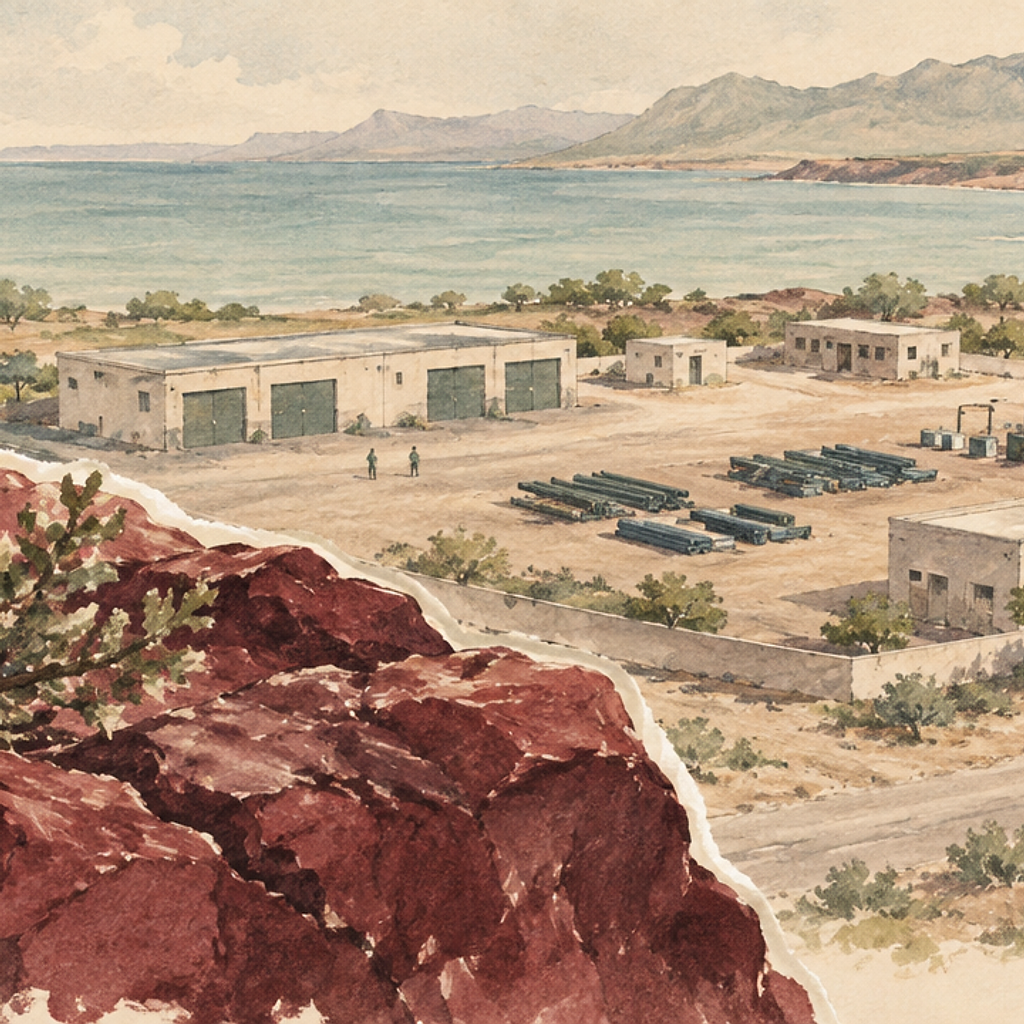
Illustration: Apex Africa
Djibouti Trains Berbera Port Staff in Maritime Operations
A six-month programme covers engineering and operations for 11 senior staff from Berbera Port.
Djibouti is providing technical training to 11 senior Berbera Port staff under a six-month programme. The briefing also records maritime-cooperation discussions between Djibouti and a Somali delegation, alongside separate infrastructure projects in Ali-Sabieh. The material does not establish whether the training will lead to a formal regional port-management agreement.
The Gen Z Read
This story in plain English
Sixty seconds, no jargon. Written for readers new to the politics.
Djibouti says it will train 11 senior Berbera Port staff in engineering and operations over six months.
- On 3 November 2026, Djibouti Ports and Free Zones Authority Chairman Aboubakar Omar Hadi met a Somali delegation to discuss maritime cooperation.
- Djibouti is to train 11 senior Berbera Port staff in engineering and operations over six months.
- On 4 November, the IGAD-EU Political and Security Committee met in Djibouti.
- The briefing also mentions a commercial gallery and technical high school planned through migration-funded projects in Ali-Sabieh.
There’s no reported change yet to jobs, prices, transport or services for people in Djibouti or Berbera. The training could build port skills over time, but the briefing gives no details on the lessons, jobs created or any formal agreement, so watch for further announcements.
Words decoded
- Djibouti Ports and Free Zones Authority
- Djibouti’s public body responsible for its ports and free-trade areas.
- Maritime cooperation
- Countries working together on ports, shipping or other sea-related matters.
- IGAD
- The Intergovernmental Authority on Development, a group of East African countries.
What would you most want to know about this training?
Be the first to answer
Key judgement
Djibouti is successfully transitioning from a passive transit hub to an active regional logistics manager by embedding its technical standards into Somali port operations. This strategy will likely secure its regional dominance despite increasing competition from other maritime gateways.
High withdrawn: 5 relevant sources from 5 publishers, no primary record.
What to watch
- Signing of a formalised regional port management agreement by Q1 2027
- Number of Somali business companies operating in Djibouti’s free zones as of 2027-06-01
Implications for decision-makers
- Regional policymakers should anticipate that Djibouti will increasingly dictate technical standards for maritime infrastructure in the Horn of Africa.
- Institutional investors should factor in the growing technical integration between Djiboutian and Somali port authorities when assessing regional logistics risks.
What happened
On 3 November 2026, Djibouti Ports and Free Zones Authority (DPFZA) Chairman Aboubakar Omar Hadi hosted a Somali delegation for discussions on expanded maritime cooperation. The briefing says Djibouti is to train 11 senior Berbera Port staff in engineering and operations over six months. It does not identify the source for this training detail or provide a primary record of the programme. The filed copy describes Berbera Port as managed with the involvement of DP World, but does not identify a source for that description.
The listed sources include Horn Review’s 11 November weekly report and an ETBusinessView article published on 6 November about Djibouti and Somalia’s search for alternative trade routes. The briefing also records a 4 November IGAD-EU Political and Security Committee meeting in Djibouti. The source list additionally includes IGAD, Geobit.ai, ORF and MFA Ethiopia.
Background
The briefing describes the training as technical cooperation between Djibouti and staff from Berbera Port. It does not provide further details on the curriculum, implementation or any formal agreement arising from the discussions.
The filed copy also mentions migration-fund infrastructure projects in Ali-Sabieh, including a commercial gallery and technical high school. It does not report an inspection of those projects: the cited sources do not support the claim that IGAD representatives inspected them on 11 November 2026.
Why it matters
The reported programme links Djibouti’s maritime-cooperation discussions with technical training for staff at Berbera Port. The material establishes the stated scope and duration of the training, but does not describe its operational arrangements or establish that it forms part of a formal regional port-management agreement. The available facts therefore support reporting the training and discussions, but not a conclusion about their wider effects.
What we don’t know
The material does not specify the training curriculum, implementation arrangements or whether a formal agreement was made or is being negotiated. It gives no timetable for any further cooperation. It also supplies no supporting data or source for the proposed indicator of Somali business-company numbers in Djibouti’s free zones, so no change in those numbers can be reported. The briefing does not establish what role, if any, international port operators may have in future cooperation.
What to watch
A formalised regional maritime or port-management agreement remains an unresolved possibility in the briefing, not a confirmed outcome. Further information on training arrangements or an agreement would clarify whether the cooperation develops beyond the reported programme and discussions.
Report an error in this briefing