

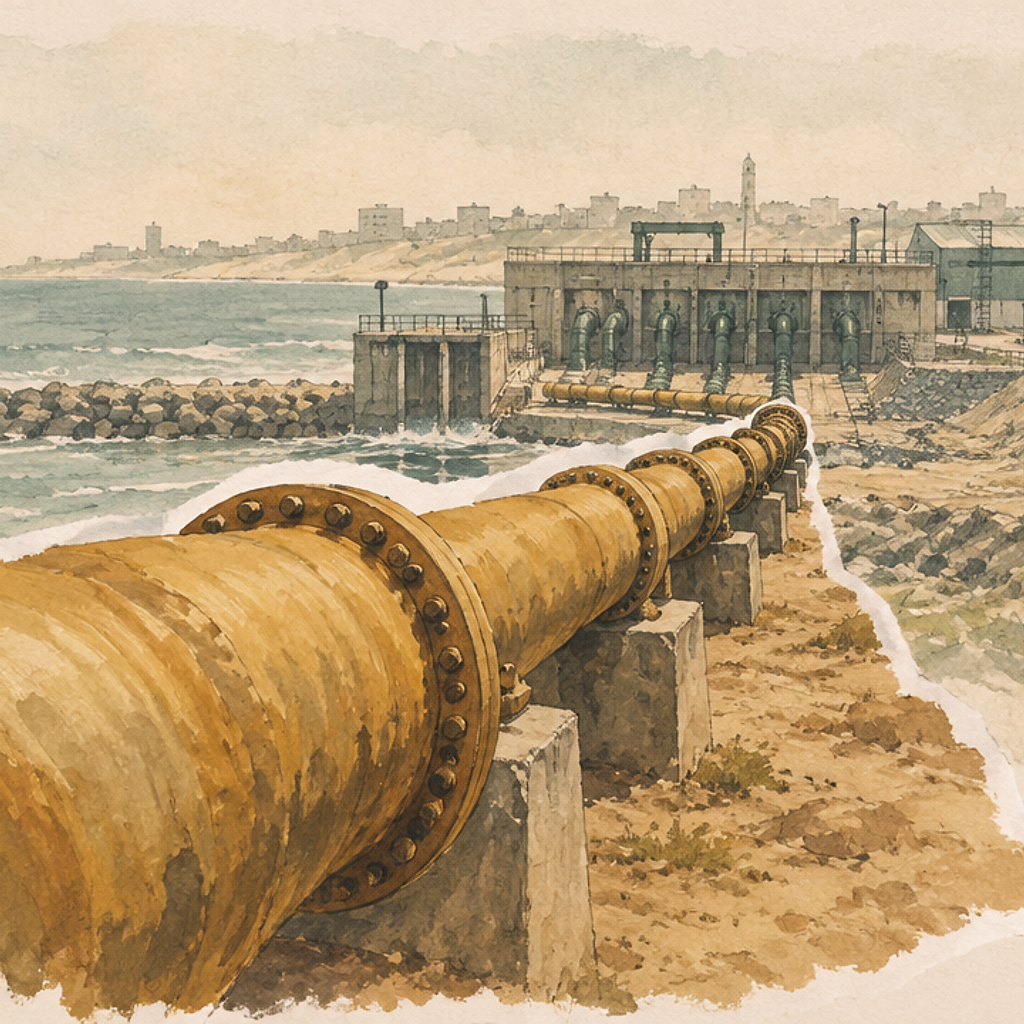
Illustration: Apex Africa
Casablanca-Settat Desalination Project: The Accountability Gap in Government Procurement and Conflict of Interest Oversight
Allegations of conflict of interest in major infrastructure contracts challenge the government's procurement integrity.
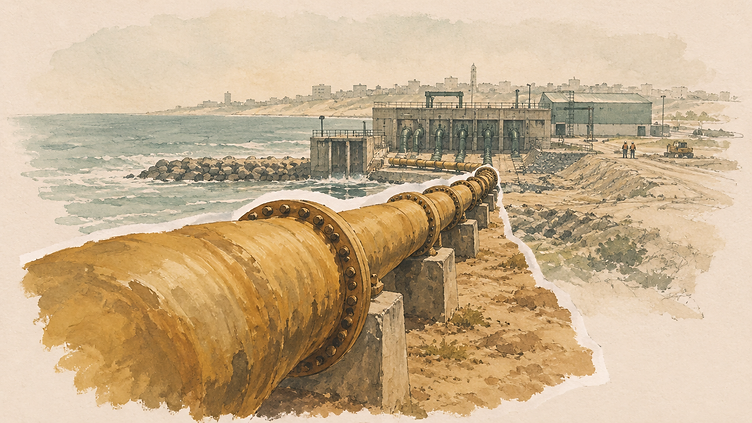
The Casablanca-Settat Desalination Project has become a focal point for allegations of conflict of interest involving the Prime Minister's business holdings. While the government pushes forward with large-scale infrastructure, the lack of transparent oversight mechanisms for procurement creates a significant political liability. This situation threatens to undermine the ruling coalition's credibility as it attempts to manage public anger over economic conditions.
The Gen Z Read
This story in plain English
Sixty seconds, no jargon. Written for readers new to the politics.
A desalination contract in Morocco is under scrutiny because the winning consortium includes a company owned by Prime Minister Aziz Akhannouch.
- The government awarded the Casablanca-Settat desalination project to a consortium that includes Afriquia Gaz, part of Aziz Akhannouch’s Akwa Group.
- Critics say Akhannouch’s business interests create a conflict of interest, while the government says the contract followed competitive bidding.
- The Court of Auditors oversees public spending, but the reporting finds little evidence of an independent review of this contract.
- The allegations have raised concerns about public trust as the government pursues tax reforms under Finance Bill No. 60-26.
The project is meant to address water scarcity, but the reporting does not show an immediate change to water access, prices or jobs. The main issue for now is whether public money is being awarded fairly; trust in that process may affect how people judge the government and its choices over time.
Words decoded
- Conflict of interest
- A situation where a public official’s private business interests could affect decisions made in office.
- Procurement
- The process a government uses to buy goods or services and award contracts.
- Court of Auditors
- Morocco’s body that checks how public money is spent.
- Competitive bidding
- A process where companies submit offers and compete for a government contract.
What matters most to you when a government awards a major contract?
Be the first to answer
Key judgement
The evidence points to a growing disconnect between the government's infrastructure agenda and public expectations for transparency, which will likely force a leadership transition within the RNI to preserve the coalition's viability.
The assessment rests on reported political maneuvering and public criticism, but lacks an official audit report confirming the alleged conflict of interest.
What to watch
- February 7, 2027: RNI national conference, which may signal a leadership change.
- Ongoing: Parliamentary review of Finance Bill No. 60-26, specifically regarding tax provisions for hydrocarbon operators.
- Ongoing: Public reaction to the Casablanca-Settat Desalination Project progress reports.
Implications for decision-makers
- Policymakers must prioritize transparent procurement audits to mitigate political risk and restore public trust.
- Political strategists should prepare for potential leadership shifts within the RNI as the party attempts to distance itself from current controversies.
Procurement and Conflict of Interest Allegations
The Casablanca-Settat Desalination Project, a critical infrastructure initiative, is currently under intense scrutiny following allegations of conflict of interest. Reports indicate that the project was awarded to a consortium that includes Afriquia Gaz, a subsidiary of the Akwa Group, which is owned by Prime Minister Aziz Akhannouch. Critics and political observers argue that this arrangement highlights a systemic failure in the government's procurement oversight, where the line between public policy and private business interests remains blurred.
While the government maintains that the project followed standard competitive bidding processes, the involvement of the Prime Minister’s own corporate interests has fueled public skepticism. This development is particularly sensitive given the current economic climate, where the government is attempting to implement structural tax reforms under Finance Bill No. 60-26. The perception of self-dealing in major state contracts risks alienating the public and complicates the ruling coalition's efforts to maintain political stability.
The Governance of Infrastructure Delivery
Effective governance in Morocco relies on the successful implementation of large-scale projects, such as the desalination plant, to address water scarcity and support economic growth. When major contracts are awarded to entities linked to high-ranking officials, the public's trust in the impartiality of the state's decision-making process is diminished.
Accountability for these projects rests with the relevant ministries and the Court of Auditors, which oversees public spending. Yet, there is little evidence that these bodies have conducted an independent review of the Casablanca-Settat contract to address the specific conflict-of-interest allegations. Without a robust, transparent audit, the government remains vulnerable to claims that its infrastructure agenda is driven by patronage rather than public necessity.
Counter-View: The Necessity of Private Sector Integration
Proponents of the current procurement model argue that the involvement of large, established conglomerates is essential for the rapid execution of complex infrastructure projects. They contend that the technical expertise and financial capacity of firms like those in the Akwa Group are necessary to meet the ambitious timelines set by the state. From this perspective, the focus on conflict of interest is a political distraction that ignores the practical requirements of national development.
However, this argument fails to address the fundamental requirement for competitive neutrality. Even if a firm possesses the necessary technical capacity, the appearance of impropriety in the awarding of state contracts undermines the legitimacy of the entire procurement system. A truly competitive process would ensure that the best value for the public is achieved without the baggage of political entanglement, regardless of the firm's size or history.
Strategic Implications for Political Actors
For the ruling coalition, the Casablanca-Settat project represents a significant political risk. The association of the Prime Minister with the project's procurement makes the government an easy target for opposition criticism and public protest. Political strategists must recognize that the failure to address these concerns through transparent, independent oversight will likely result in continued erosion of the coalition's support base.
Policymakers should consider implementing stricter disclosure requirements for government contracts and establishing an independent procurement ombudsman to review high-value projects. For civil society and NGOs, the priority should be to demand full transparency regarding the bidding process and the final contract terms. Failure to act on these issues will likely lead to further political volatility as the country approaches future electoral cycles.
Why it matters
The Casablanca-Settat Desalination Project has become a focal point for allegations of conflict of interest involving the Prime Minister's business holdings.
What we don't know yet
The record does not yet show how the decision is carried out.
What to watch
February 7, 2027: RNI national conference, which may signal a leadership change.; Ongoing: Parliamentary review of Finance Bill No. 60-26, specifically regarding tax provisions for hydrocarbon operators.; Ongoing: Public reaction to the Casablanca-Settat Desalination Project progress reports.
Report an error in this briefing