

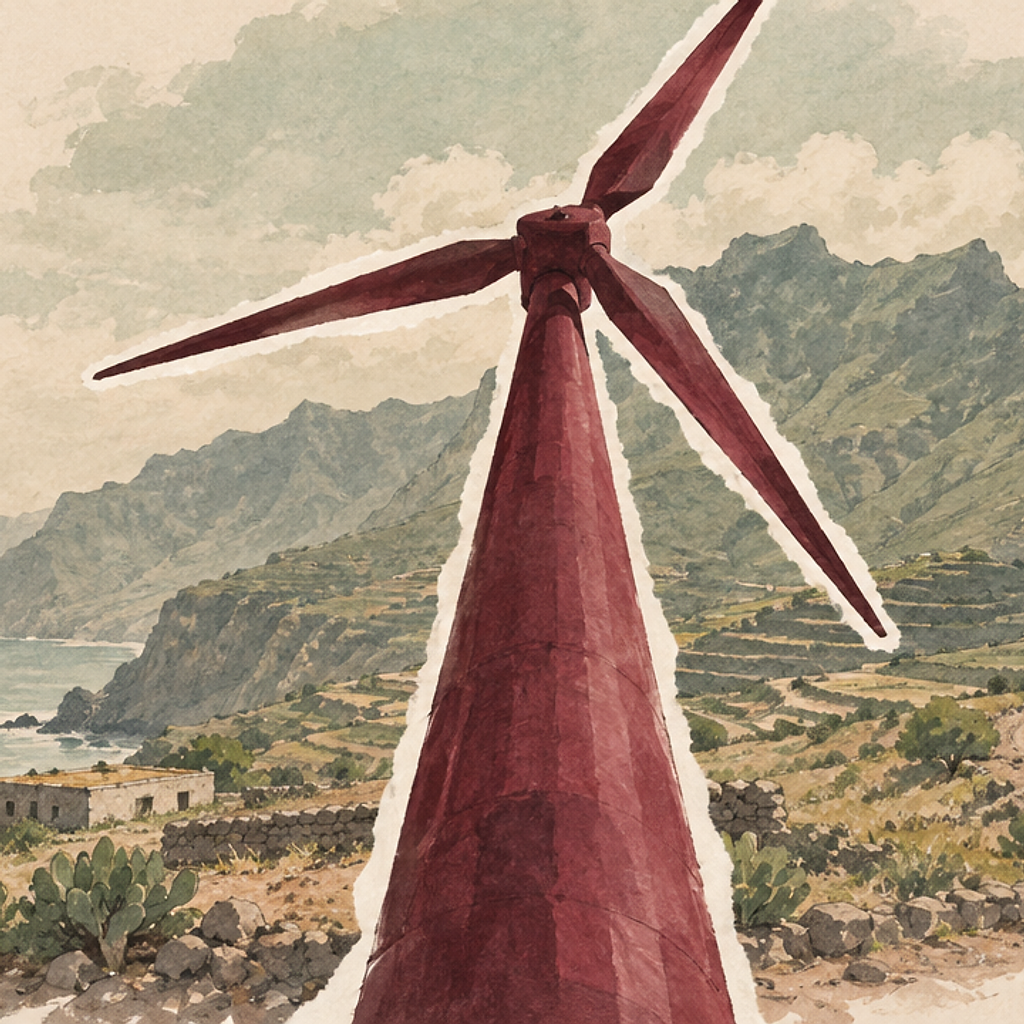
Illustration: Apex Africa
Cape Verde's Renewable Energy Transition
Assessing the archipelagic nation's shift toward sustainability
Cape Verde is leveraging its unique geographical position to pioneer a transition toward renewable energy, aiming for high levels of independence from imported fuels by 2030.
The Gen Z Read
This story in plain English
Sixty seconds, no jargon. Written for readers new to the politics.
Cape Verde is building wind and solar power to reduce imported fuel, but keeping the systems running will cost money.
- Government officials say imported energy makes Cape Verde’s economy more vulnerable to price swings.
- Cape Verde is using wind and solar power to cut fuel imports, with a goal of greater energy independence by 2030.
- Experts say connecting power across the islands and updating the grid will require major investment.
- Donors say progress depends on lasting partnerships, while the full maintenance costs are still unknown.
Less reliance on imported fuel could make energy costs more stable, which matters to an economy that depends heavily on tourism. But there’s no reported change to people’s bills, jobs or transport yet, and the costs and benefits may take years to become clear.
Words decoded
- Grid
- The connected equipment that carries electricity from power sources to homes and businesses.
- Inter-island connectivity
- The links needed to move electricity between Cape Verde’s islands.
- Public-private partnership
- A project carried out jointly by government and businesses.
- Imported fuel
- Fuel bought from other countries to produce energy.
Which matters more to you in Cape Verde’s energy plans?
Be the first to answer
Key judgement
The election will likely result in a period of intense institutional negotiation between the presidency and the PAICV-led legislature, with the success of the next administration contingent on its ability to reconcile fiscal constraints with public demand for economic reform.
The analysis is based on verified parliamentary seat counts, official election dates, and consistent reporting from multiple independent sources regarding the current political landscape.
What to watch
- November 15, 2026: Official results from the National Elections Commission to determine if a runoff is required.
- November 18, 2026: Announcement of the two candidates for a potential runoff by the Constitutional Court.
- January 2027: Initial legislative sessions to determine the feasibility of the proposed economic reforms.
Implications for decision-makers
- Policymakers must prepare for potential delays in budget implementation if the election results in a contested outcome or a prolonged transition.
- Institutional investors should monitor the stability of the PAICV-led cabinet's fiscal policy to assess the risk of continued high public debt.
- NGOs and development organizations should focus on monitoring the transparency of the electoral process to ensure continued public trust in democratic institutions.
Cape Verde stands at a critical juncture in its energy evolution, utilizing its vast wind and solar resources to reduce reliance on traditional fossil fuel imports. Government officials emphasize that the archipelago's reliance on imported energy creates economic volatility, a concern echoed by international development partners who monitor the nation's fiscal health. Analysts argue that this transition serves as a blueprint for other small island developing states, provided the logistical hurdles of inter-island connectivity can be overcome.
Infrastructure remains a primary point of discussion, with experts noting that the physical integration of intermittent power sources into the national grid requires significant capital investment and technical modernization. While the momentum is visible, stakeholders remain cautious about the long-term maintenance of these systems in a corrosive, saltwater-heavy environment. International donors highlight that while progress is consistent, the success of these programs depends heavily on sustained public-private partnerships.
The transformation is not merely about environmental impact, but about ensuring a stable, cost-effective energy supply for an economy heavily dependent on tourism. Looking at the long-term outlook, policymakers suggest that the focus will shift from initial installation to grid stability. What matters most is whether the nation can sustain these infrastructure costs without ballooning its debt profile.
We do not currently know the full extent of the maintenance costs that will emerge over the next decade.
Why it matters
Cape Verde is leveraging its unique geographical position to pioneer a transition toward renewable energy, aiming for high levels of independence from imported fuels by 2030.
What we don't know yet
The record does not yet show how the decision is carried out.
What to watch
November 15, 2026: Official results from the National Elections Commission to determine if a runoff is required.; November 18, 2026: Announcement of the two candidates for a potential runoff by the Constitutional Court.; January 2027: Initial legislative sessions to determine the feasibility of the proposed economic reforms.
Report an error in this briefing