Analysis · Nigeria
Nigeria Democratic Congress implements grassroots mobilization strategy in Bayelsa State
The Nigeria Democratic Congress is pivoting from large-scale rallies to direct voter engagement in Bayelsa State.
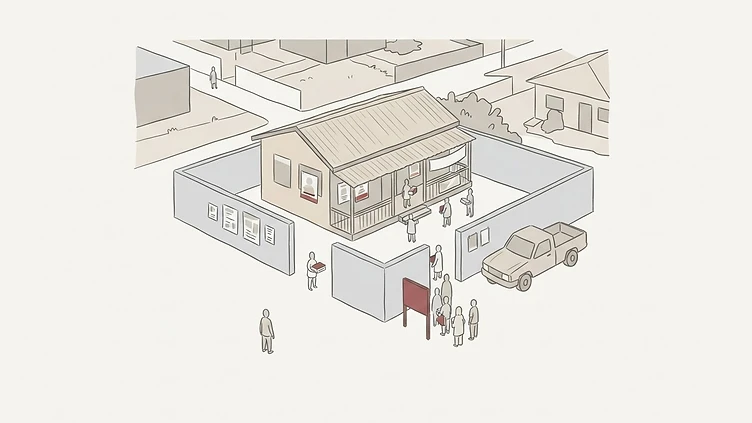
Illustration: Apex Africa picture desk
The Nigeria Democratic Congress is launching a grassroots-level campaign in Bayelsa State to challenge the All Progressives Congress. The party has appointed a new national council to execute this strategy ahead of the 2027 general elections.
Key judgement
The NDC's shift toward granular, grassroots-led campaign operations in Bayelsa State will likely force the APC to abandon its reliance on elite consensus, potentially leading to a more competitive and volatile 2027 electoral cycle.
The assessment rests on the recent formation of the NDC campaign council and its stated strategy, but the actual electoral impact remains contingent on the party's ability to sustain grassroots engagement against entrenched patronage networks.
What to watch
- November 30, 2026: The Practical Nigerian Content (PNC) Forum in Yenagoa, which will serve as a barometer for state-federal political alignment.
- December 15, 2026: The publication of the final register of voters by INEC, which will clarify the electoral map for the 2027 cycle.
- January 2027: The commencement of formal party primaries, which will test the cohesion of the APC and the effectiveness of the NDC's new campaign structure.
Implications for decision-makers
- Political strategists must pivot from large-scale rallies to data-informed, direct voter engagement to remain competitive in the 2027 cycle.
- Institutional investors and development organizations should monitor the potential for increased political volatility in Bayelsa as the NDC challenges the APC's regional hegemony.
- Policymakers in Bayelsa must address the growing demand for economic relief and infrastructure improvements to mitigate the risk of grassroots-led electoral backlash.
Why it matters
Bayelsa State serves as the location for a shift in political communication strategies ahead of the 2027 general elections. The ruling All Progressives Congress (APC) has historically relied on traditional patronage networks and elite consensus to maintain its position. In contrast, the Nigeria Democratic Congress (NDC) initiated a strategic pivot by forming a National Campaign Council, which was formally announced on October 26, 2026. This council includes figures such as former Governor Henry Seriake Dickson, Peter Obi, and Rabiu Musa Kwankwaso. The NDC intends to move away from large rallies toward a data-informed approach to voter mobilization. By targeting the eight local government areas of Bayelsa, the NDC aims to test whether its stated commitment to direct voter engagement can function within local political realities. The party leadership states that its strategy focuses on direct engagement, which is intended to challenge the APC’s reliance on top-down mobilization. This shift is a response to the disconnect between state-level governance and the lived experience of residents in areas including Southern Ijaw and Yenagoa. By positioning itself as a vehicle for grassroots-led accountability, the NDC aims to reframe the 2027 contest as a referendum on the efficacy of patronage-based systems. This approach may force a recalibration of campaign operations across the South-South zone where the APC has held control through institutional methods. The state government’s reliance on industry-linked economic activity is evidenced by the partnership between the Nigerian Content Development and Monitoring Board (NCDMB) and the state government to host the Practical Nigerian Content (PNC) Forum. While these forums are presented as drivers of local investment, the NDC campaign strategy seeks to address persistent gaps in public service delivery and infrastructure that define the daily lives of residents. The effectiveness of the NDC strategy depends on its ability to sustain engagement beyond the campaign cycle and demonstrate a structural change in how public resources are managed and distributed at the ward level.
What we don't know yet
The immediate economic pressures facing residents, such as the rising cost of living, represent a significant factor for the electorate. Labor unions recently demanded the implementation of a N70,000 transport allowance following federal government approvals, and the state government’s response to these demands will demonstrate its responsiveness to economic hardship. It remains to be seen if the NDC can link its campaign messaging to these economic grievances to attract support from civil servants and the broader public. While the government promotes international partnerships and the DeltasUNite secretariat, local communities report basic service failures. The NDC must show a clear understanding of these localized needs rather than relying on the popularity of national figures like Peter Obi. Critics of the NDC strategy argue that the APC’s institutional dominance, including its control over local government structures and ability to leverage federal resources, provides barriers for the opposition. This debate centers on whether voters are passive recipients of patronage or if economic pressures are eroding traditional loyalties. Furthermore, the potential for internal fractures within the ruling coalition, driven by candidate selection and resource allocation, remains a variable. The NDC strategy is designed to provide an alternative for disgruntled party members and independent voters, which may create a parallel infrastructure capable of responding to stresses within the APC coalition. The role of data in the 2027 election is also evolving, as the Independent National Electoral Commission (INEC) has begun integrating AI-driven auditing tools into its verification processes. The NDC’s ability to use AI and data intelligence to map voter sentiment and target communications will be a factor in its success.
What to watch
Three scenarios emerge for the Bayelsa electoral landscape. In the first, the NDC’s grassroots strategy gains traction, requiring the APC to engage in a policy-driven campaign. This scenario would indicate a more transparent electoral process, although it carries the risk of political instability due to clashes over local control. The primary indicator for this path is the level of voter turnout in the upcoming local government congresses. In the second scenario, the APC neutralizes the NDC challenge by co-opting grassroots leaders and relying on its patronage networks. This would lead to a consolidation of power and a potential deepening of the disconnect between the government and the governed, with the frequency of defections from the NDC back to the APC serving as a key indicator. In the third scenario, the election results in a stalemate, leaving neither party with a mandate, which would lead to litigation and a period of governance paralysis. For policymakers and political strategists, the situation in Bayelsa emphasizes the necessity for sophisticated campaign communications that prioritize direct engagement. Stakeholders are encouraged to address the economic and infrastructure concerns of the electorate. For NGOs and development organizations, the period provides an opportunity to advocate for transparency and accountability in the electoral process, specifically concerning the use of digital tools and data.
Corrected 31 October 2026: The headline read "Bayelsa State’s 2027 Electoral Calculus: How the NDC’s Grassroots Mobilisation Strategy Challenges APC Hegemony". It now reads "Nigeria Democratic Congress implements grassroots mobilization strategy in Bayelsa State". A passage asserted a motive, intention, effect or wrongdoing that the sources cited did not state. It has been attributed to its source or removed.
Report an error in this briefing