

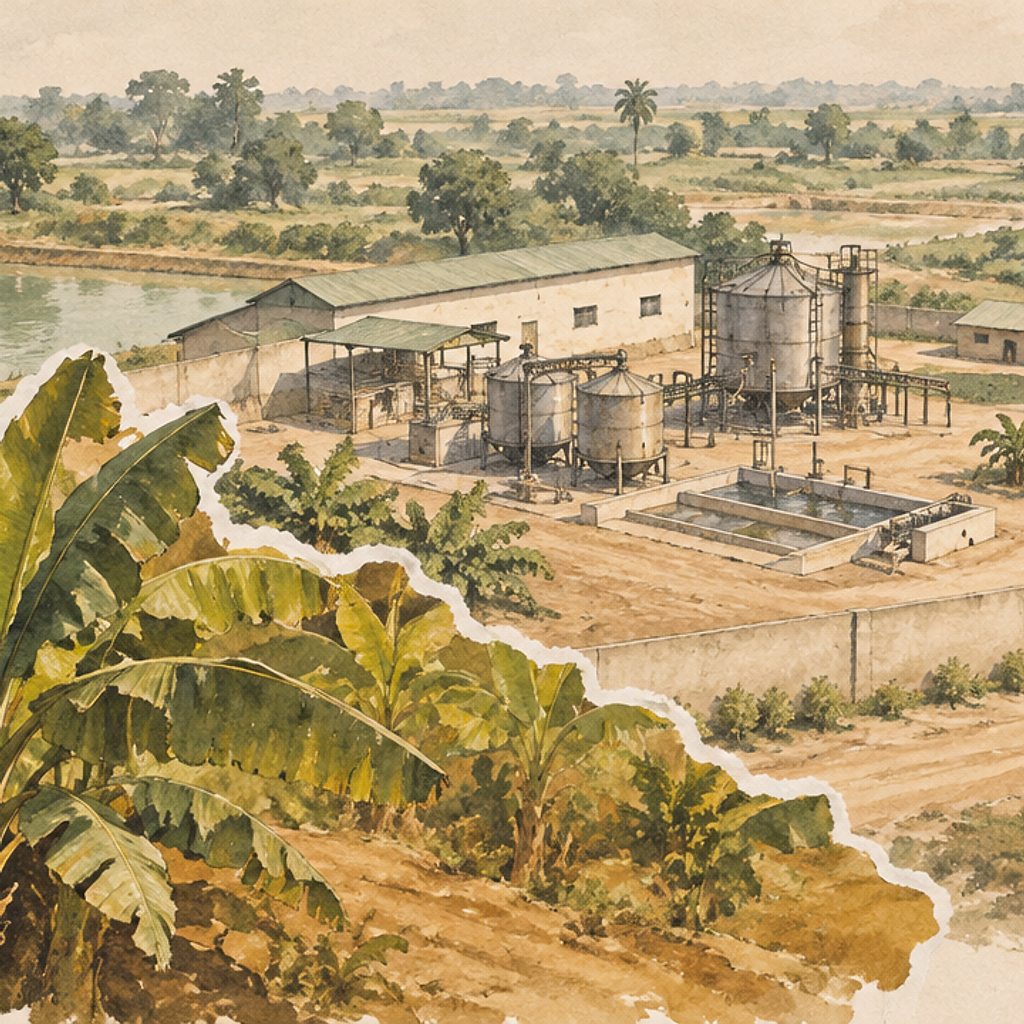
Illustration: Apex Africa
Bantè Agro-Processing Units Remain Weakly Integrated Into Local Value Chains
Weak integration of processing units in Bantè limits local income growth despite national industrialization goals.
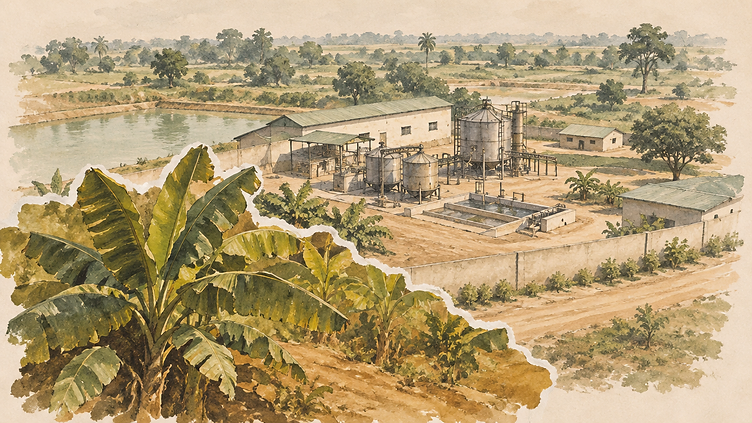
The government's push for industrialization through agro-processing units is failing to translate into local economic gains in the Collines Department. Research indicates that Bantè remains weakly integrated into these value chains, limiting the potential for job creation and income growth. This failure highlights a disconnect between national policy design and the operational realities of grassroots economic infrastructure.
The Gen Z Read
This story in plain English
Sixty seconds, no jargon. Written for readers new to the politics.
Bantè’s agro-processing units are not well connected to local farmers and markets, limiting jobs and income despite Benin’s industrialization drive.
- Benin’s industrialization strategy backs agro-processing units, but research finds their benefits are uneven across the Collines Department.
- In Bantè, weak links between processing, local farming and markets limit the value the commune gains from its agricultural output.
- National industrial zone employment rose 28.8% year on year in 2025, but the reporting says gains are concentrated in urban hubs.
- The Ministry of Decentralization and Local Governance, municipal councils and cooperatives face questions over local funding, technical help and market access.
For people in Bantè, weak local processing links mean fewer chances for farm produce to support local jobs and income. The reporting does not show an immediate change to school costs, prices or transport, so watch future budgets and whether units are operating better.
Words decoded
- Agro-processing
- Turning farm produce into food or other products that can be sold.
- Value chain
- The steps that take a product from its source to the people who buy it.
- Commune
- A local area in Benin governed by a municipal council.
- Industrialization
- Building up manufacturing and other industries in an economy.
What should be the main priority for improving local agro-processing in Bantè?
Be the first to answer
Key judgement
The copy argues that agro-processing in Bantè remains weakly integrated into local value chains, while national industrialization gains are concentrated in urban hubs. Whether the Ministry of Decentralization and Local Governance, municipal councils and agro-processing cooperatives improve local financing, technical support and market access can be tested against future budget allocations and reported operating conditions.
The copy cites research and national employment data but gives no identifiable research, records or first-hand accounts; municipal budget and processing-unit evidence would strengthen or change this assessment.
What to watch
- December 2026: Check whether municipal budget allocations for agro-processing support are announced.
- Q1 2027: Check reported operational status of processing units in Bantè commune.
- Mid-2027: Check whether local cooperatives report improved access to credit and market infrastructure.
- Review whether LoCAL funding is reported to have improved local processing-unit capacity.
Implications for decision-makers
- The Ministry of Decentralization and Local Governance and municipal councils face pressure to show whether financing and technical support reach processors in Bantè.
- Agro-processing cooperatives may remain unable to capture more value from agricultural output if market access and operational capacity do not improve.
- Political leadership risks weakening the credibility of local development agendas if campaign-era infrastructure promises do not translate into local economic gains.
- NGOs and development organizations may need to connect national funding mechanisms with processors’ stated operational needs.
Local Economic Integration Gaps
The government’s strategy to drive national growth through agro-processing units is encountering significant implementation hurdles in the Collines Department. While national policy emphasizes the role of these units in fostering territorial development, recent research confirms that the benefits remain unevenly distributed across localities. In the commune of Bantè, processing activity remains weakly integrated, preventing the local economy from capturing the full value of its agricultural output.
This lack of integration is not merely a technical oversight but a failure of campaign-era promises to deliver tangible economic infrastructure to rural wards. While national-level data points to a 28.8% year-on-year increase in industrial zone employment as of 2025, these gains are concentrated in urban hubs, leaving peripheral communes like Bantè to struggle with outdated infrastructure and limited market access. The gap between the government's industrialization rhetoric and the reality on the ground in Bantè undermines the credibility of local development agendas.
Governance and Accountability
The Ministry of Decentralization and Local Governance, which saw new appointments on November 4, 2026, faces the immediate challenge of reconciling these regional disparities. Current governance structures have struggled to provide the necessary financing and technical support required for small-scale processors to scale their operations. Without a shift in how resources are allocated to the commune level, the promise of 'more and better jobs' remains an abstraction for the residents of Bantè.
Accountability mechanisms, including the oversight of municipal development plans, have yet to address the specific needs of agro-food processors.
Counter-View: The Case for Centralized Efficiency
Proponents of the current administrative model argue that centralization is necessary to maintain macroeconomic stability and ensure that industrial projects meet national quality standards. They contend that by focusing resources on larger, more efficient industrial zones, the government can achieve economies of scale that would be impossible if funding were fragmented across hundreds of individual communes. From this perspective, the current lag in Bantè is a temporary phase of a broader, necessary structural transformation.
However, this argument fails to account for the long-term political cost of neglecting rural economic development. By prioritizing centralized industrial zones, the government risks alienating the very communities that form the backbone of its agricultural sector. The failure to provide localized support in Bantè does not just slow economic growth; it erodes the social contract between the state and its rural citizens, creating a fertile ground for political disaffection that could manifest in future electoral cycles.
Strategic Implications
The primary stakeholders—including the Ministry of Decentralization, local municipal councils, and agro-processing cooperatives—must pivot toward a more decentralized model of support. This requires moving beyond broad industrialization policies to provide targeted financing and market access for processors in less-integrated territories.
Political leadership must recognize that campaign promises regarding job creation will be judged by their impact on local livelihoods, not national growth rates. For NGOs and development organizations, the priority should be to bridge the gap between national funding mechanisms and the specific operational needs of local units. Failure to address these grassroots economic bottlenecks will likely result in continued stagnation, regardless of the success of national-level industrialization efforts.
Why it matters
The government's push for industrialization through agro-processing units is failing to translate into local economic gains in the Collines Department.
What we don't know yet
The record does not yet show how the decision is carried out.
What to watch
December 2026: Check whether municipal budget allocations for agro-processing support are announced.; Q1 2027: Check reported operational status of processing units in Bantè commune.; Mid-2027: Check whether local cooperatives report improved access to credit and market infrastructure.; Review whether LoCAL funding is reported to have improved local processing-unit capacity.
Report an error in this briefing