Analysis · Algeria
Algeria Sacrifices Biskra Irrigation for Leghrous Solar Grid Connectivity
The prioritization of national energy targets over Biskra’s irrigation needs exposes a deepening rural-state divide.
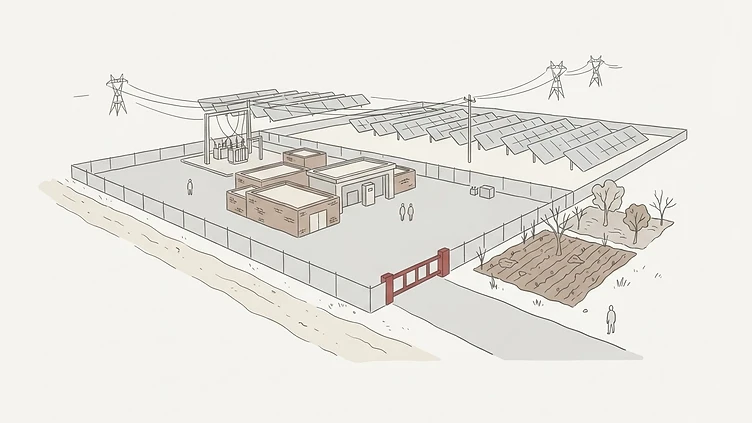
Illustration: Apex Africa picture desk
The recent commissioning of the Leghrous solar plant in Biskra Province highlights a dangerous shift in Algerian governance where national energy mandates override local agricultural sustainability. By prioritizing grid-connected renewable energy over the water-intensive needs of the region's date and cereal farmers, the state is effectively disenfranchising a critical rural constituency. This article argues that such top-down resource allocation creates a volatile political environment that threatens the ruling coalition's long-term stability in the Saharan periphery.
Key judgement
The evidence indicates that the state's prioritization of industrial energy projects in Biskra is creating a structural alienation of the rural agricultural base that will likely undermine the ruling coalition's electoral support in the province. This trend will manifest as increased local resistance to state-led infrastructure projects and a potential decline in voter turnout for government-aligned candidates.
The rating rests on the documented tension between energy infrastructure and agricultural water needs in Biskra, though the direct electoral impact remains a projection based on current political dynamics.
What to watch
- 2026-11-15: Monitor for reports of organized protests by agricultural cooperatives in Biskra regarding water access.
- 2027-01-10: Observe the government's response to the next provincial budget review for signs of increased agricultural subsidies.
- 2027-03-01: Track voter registration and local party activity in Biskra as a proxy for rural political engagement.
Implications for decision-makers
- Policymakers must integrate local agricultural water needs into the planning of future energy projects to avoid rural alienation.
- Political strategists should pivot campaign messaging to address local resource control and economic autonomy to retain rural support.
- NGOs and think tanks should increase monitoring of the environmental and social impacts of state-led industrial projects in Saharan provinces.
The Illusion of Green Development in Biskra
The recent commissioning of the 220.01 MWp Leghrous Solar Photovoltaic Power Plant in Biskra Province on May 18, 2026, has been hailed by the Ministry of Energy as a triumph of Algeria’s '3.2 GW Solar Development Plan'. However, beneath the rhetoric of national energy optimization lies a stark reality for the local population: the state is prioritizing industrial-scale energy production at the direct expense of the province’s fragile agricultural water table. While the government frames this as a sovereign breakthrough, the local political reality is one of deepening alienation among farmers who see their primary resource—groundwater—being diverted or mismanaged to support national grid stability.
This development is not merely a technical achievement; it is a political maneuver that centralizes control over Biskra’s resources. By anchoring the project in a region already suffering from severe water scarcity and soil salinity, the central government has effectively signaled that the needs of the national grid outweigh the survival of local agricultural cooperatives. This top-down approach to resource management ignores the specific ecological constraints of the Saharan edge, where the expansion of irrigation and energy infrastructure must be balanced with the preservation of arable land.
The Governance Gap in Resource Allocation
The governance of Biskra’s water resources has become a focal point of contention between local agricultural stakeholders and the central administration. Despite the launch of the FAO-backed 'Water Scarcity Initiative' (WSI) in May 2026, which aimed to strengthen resilience to drought, the actual implementation of policy remains heavily skewed toward industrial and energy-sector interests. The disconnect between the Ministry of Water Resources’ stated goals and the reality on the ground is palpable, as local farmers report increasing difficulty in accessing non-mineralized groundwater for their crops.
Accountability mechanisms, such as the provincial assembly and local water boards, have been largely sidelined in the decision-making process for the Leghrous project. The lack of transparency regarding the environmental impact assessments for the solar plant has fueled allegations from local civil society groups that the state is masking the long-term depletion of aquifers under the guise of 'green energy'. Without a robust oversight framework, the government’s reliance on centralized procurement and project management continues to erode the autonomy of local governance structures in Biskra.
Agricultural Vulnerability and the Salinity Crisis
Biskra’s agricultural sector, which is vital for the region’s economic stability, is currently facing a structural crisis. Scientific research from the Scientific and Technical Research Center on Arid Regions (CRSTRA) confirms that salinity has become a major issue, exacerbated by the rapid expansion of irrigation and the use of naturally mineralized groundwater. The government’s failure to address this salinity crisis while simultaneously pushing for energy projects that consume significant land and water resources is a recipe for long-term economic decline in the province.
For the residents of Biskra, the promise of 'diversified energy development' rings hollow when their primary source of income—date palm cultivation and sheep farming—is under threat. The reliance on fossil-fuel-heavy agricultural practices, which the solar plant is meant to mitigate, is being replaced by a new form of dependency on state-managed energy infrastructure. This shift does not empower the local farmer; it merely changes the nature of their subordination to the central state’s development agenda.
The Political Calculus of Rural Disenfranchisement
From an election strategy perspective, the government’s actions in Biskra represent a high-risk gamble. By alienating the rural agricultural base, the ruling coalition is creating a vacuum that could be exploited by opposition factions or local protest movements. The 'Election Strategy' service at Apex Africa emphasizes that political stability in Algeria’s provinces depends on the state’s ability to deliver tangible benefits to local communities. When the state is perceived as a predator of local resources rather than a provider of services, the electoral cost is significant.
Conventional wisdom suggests that the government’s control over the national grid and energy sector provides it with a structural advantage in Biskra. However, this analysis is incomplete because it ignores the grassroots resentment building in the province’s rural wards. If the government continues to ignore the local impact of its energy projects, it risks losing the support of the very constituencies that have historically provided the bedrock of its regional influence. The political cost of this neglect will likely manifest in future local elections, where the narrative of 'centralized capture' will resonate strongly with voters.
Rebutting the 'National Interest' Narrative
The strongest counter-argument to this critique is that the Leghrous solar plant is a necessary component of Algeria’s national energy security and climate change mitigation strategy. Proponents argue that the reduction of 373,000 tons of carbon dioxide emissions annually justifies the localized disruption caused by the project. They contend that the long-term benefits of a diversified energy mix will eventually trickle down to the provinces, providing the infrastructure needed for future industrial growth.
This argument fails because it ignores the immediate, localized consequences of the project. National energy security cannot be built on the ruins of local agricultural sustainability. The 'trickle-down' effect is a fallacy in a region where the immediate survival of farmers is at stake. Furthermore, the government’s failure to integrate local stakeholders into the planning process for the Leghrous plant demonstrates a lack of commitment to genuine, inclusive development. A truly sustainable energy policy would prioritize the needs of the local community, ensuring that the transition to green energy does not come at the cost of the region’s primary economic engine.
Strategic Scenarios for Biskra’s Political Future
Looking ahead, there are three likely scenarios for how the situation in Biskra will develop. First, the government may attempt to pacify local discontent by announcing new, small-scale agricultural subsidies or water-management projects, though these are likely to be insufficient to address the structural issues. Second, if the water crisis worsens, we may see an increase in organized protests by agricultural cooperatives, potentially leading to a broader political confrontation between the province and the central government. Third, the ruling party may attempt to co-opt local leaders to suppress dissent, which would likely lead to a further erosion of trust in local institutions.
To navigate these dynamics, political strategists must monitor the following indicators: the frequency and scale of local protests regarding water access, the level of participation in upcoming local elections, and the government’s response to the ongoing salinity crisis. A significant increase in protest activity or a decline in voter turnout would be clear signals that the current strategy is failing. For policymakers, the recommendation is clear: shift from a centralized, top-down approach to one that prioritizes local consultation and resource-sharing agreements.
Strategic Implications for Stakeholders
For policymakers and public officials, the implication is that the current model of energy-led development is unsustainable without a corresponding investment in local agricultural resilience. The key stakeholders—the Ministry of Energy, the Ministry of Agriculture, and local agricultural cooperatives—must engage in a formal dialogue to reconcile energy and water needs. Failure to do so will increase the risk of political instability in Biskra and other Saharan provinces.
For political strategists and campaign leadership, the lesson is that the 'national interest' narrative is no longer sufficient to secure support in the provinces. Campaigns must be built on a platform that addresses the specific, local grievances of the electorate, particularly regarding resource control and economic autonomy. Think tanks and NGOs should focus their efforts on documenting the local impact of state-led projects and providing a platform for community voices to be heard in the national policy debate. Apex Africa’s 'Election Strategy' and 'Constituency & Public Research' services are designed to help leaders navigate these complex dynamics by providing the data and intelligence needed to build sustainable, community-focused political platforms.
Conclusion: A Call for Strategic Realignment
The situation in Biskra is a microcosm of the broader challenges facing Algeria as it attempts to modernize its economy while maintaining political control. The government’s reliance on centralized, top-down development is increasingly at odds with the needs of its rural constituencies. To avoid a terminal collapse of its regional influence, the ruling coalition must pivot toward a more inclusive and locally-responsive governance model. We invite leaders and organizations to contact Apex Africa for a confidential consultation on how to navigate these shifting political landscapes at https://apexafricastrategy.com.
Report an error in this briefing