Article · Namibia
Windhoek Council Budget Review Exposes How Fiscal Dependency Blocks Local Service Delivery
The failure to decentralize fiscal authority is trapping Windhoek in a cycle of dependency on central government.
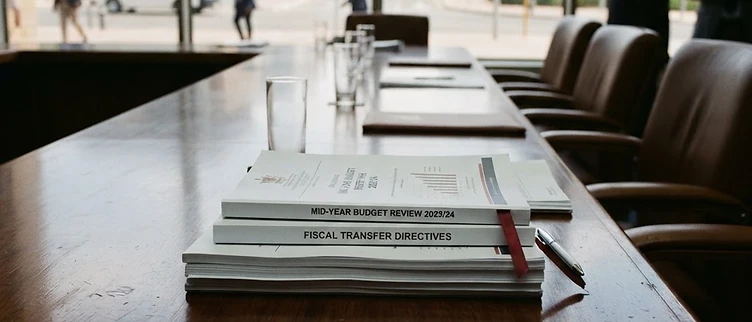
Illustration. AI-generated editorial image, not a documentary photograph.
The Windhoek Municipal Council is currently paralyzed by a fiscal structure that prioritizes central government control over local service delivery. Despite the rhetoric of decentralization, the recent mid-year budget review confirms that local authorities remain shackled to national directives. This article argues that the current governance model is a deliberate strategy to contain opposition-led councils by starving them of independent revenue streams.
Key judgement
The evidence indicates that the central government is using fiscal control as a deliberate tool to neutralize opposition-led municipal councils, ensuring that local governance remains a subordinate function of the state. This strategy will likely lead to increased political friction and service delivery failures in urban centers like Windhoek as the 2026 electoral cycle intensifies.
The analysis is based on consistent reporting from multiple credible sources regarding the 2026/2027 budget review and the ongoing political tensions between the central government and local authorities.
What to watch
- 2026-11-25: The Second Namibia Public-Private Forum (NAMPPF II) to see if any concrete fiscal decentralization measures are announced.
- 2026-10-31: The expiration of the tax amnesty program to see if the government grants the requested 24-month extension.
- 2026-11-01: Any new legislative motions in the National Council regarding municipal revenue-sharing formulas.
Implications for decision-makers
- Opposition-led municipal councils must pivot their strategy from service delivery promises to highlighting the structural fiscal barriers imposed by the central government.
- Institutional investors and development organizations should reassess the risk of municipal-level projects given the ongoing budgetary gridlock between Windhoek and the central government.
- Policymakers must address the growing gap between local service needs and centralized funding to prevent further erosion of public trust in local government institutions.
The Illusion of Municipal Autonomy
The political landscape in Windhoek is currently defined by a profound disconnect between the rhetoric of local empowerment and the reality of fiscal strangulation. While the Namibian government frequently speaks of decentralization as a pillar of its development agenda, the practical application at the municipal level tells a different story. The Windhoek Municipal Council, which has become a battleground for opposition influence, finds itself increasingly unable to execute independent policy due to the rigid constraints imposed by the central government. This is not merely a bureaucratic oversight; it is a calculated political dynamic designed to ensure that local governance remains subservient to the national executive.
Recent developments, including the 2026/2027 mid-year budget review tabled by Finance Minister Ericah Shafudah on October 22, 2026, highlight this trend. The budget focuses heavily on national-level tax reforms and macro-economic adjustments, leaving little room for the specific, urgent needs of urban centers like Windhoek. By centralizing the control of tax policy and revenue allocation, the state effectively strips the municipal council of its ability to respond to the immediate demands of its constituents. This creates a governance vacuum where local leaders are held accountable for service failures they lack the financial authority to rectify.
At Apex Africa, our Political Intelligence service identifies this as a classic 'enclosure' strategy. By maintaining control over the purse strings, the ruling party ensures that even in areas where they have lost electoral ground, they retain the power to dictate the pace and scope of development. This forces opposition councillors into a position of perpetual negotiation with central ministries, effectively neutralizing their ability to implement distinct policy platforms. The result is a stagnant local government that is unable to innovate or address the growing cost-of-living crisis facing urban residents.
The Fiscal Shackling of Local Governance
The financial dependency of the Windhoek Municipal Council on the central government is the primary mechanism of this control. With the Namibia Revenue Agency (NamRA) managing the bulk of tax collection, local authorities are left to rely on limited rates and service charges, which are often insufficient to cover the rising costs of infrastructure maintenance and public service delivery. The recent request by the Namibia Local Businesses Association (NALOBA) to extend the tax amnesty program until October 2026 underscores the fragility of the local business environment, which is the primary tax base for the municipality.
When the central government dictates the terms of tax relief and revenue collection, it directly impacts the municipality's ability to plan its own budget. The lack of a robust, independent fiscal framework means that Windhoek’s development projects are often subject to the whims of national political cycles. This is particularly evident in the slow progress of critical infrastructure projects, where funding is frequently delayed or redirected to align with national priorities rather than local needs. The governance layer here is clear: the gap between the promise of local autonomy and the reality of centralized fiscal control is widening.
This structural imbalance is not accidental. It serves as a powerful tool for political containment. By ensuring that the municipality remains financially tethered to the state, the ruling party can effectively manage the political fallout of service delivery failures. If the streets are not cleaned or the water infrastructure fails, the blame is easily shifted to the 'incompetence' of the local council, while the underlying cause—the lack of fiscal autonomy—is conveniently ignored in the national discourse.
The Grassroots Cost of Centralized Control
For the residents of Windhoek, this political maneuvering has tangible, negative consequences. The inability of the municipal council to secure consistent funding for basic services has led to a decline in the quality of public infrastructure. From the maintenance of roads to the provision of reliable water and sanitation, the local government is struggling to keep pace with the needs of a growing urban population. This is not a failure of local leadership, but a failure of a system that denies them the tools to succeed.
Community reporting from various wards in Windhoek indicates a growing frustration with the lack of visible progress. Residents are increasingly aware that their local representatives are being sidelined by central government interference. This has created a sense of alienation, where the democratic process at the local level feels increasingly performative. When the municipal council cannot deliver on its promises because it lacks the financial independence to do so, the trust between the electorate and their representatives is eroded.
Furthermore, the focus on national-level projects, such as the upcoming Second Namibia Public-Private Forum (NAMPPF II) scheduled for November 2026, often overlooks the granular needs of local communities. While these forums are important for national economic strategy, they rarely translate into immediate improvements for the average resident in a Windhoek ward. The disconnect between high-level policy discussions and the daily struggles of citizens is a hallmark of the current governance model, which prioritizes state-led development over community-driven solutions.
Rebutting the 'Efficiency' Argument
Critics of our thesis often argue that centralizing fiscal control is necessary for national efficiency and the prevention of corruption at the local level. They contend that local councils lack the capacity to manage large budgets and that central oversight ensures a more equitable distribution of resources across the country. This argument, while superficially appealing, fails to account for the reality of political patronage and the stifling effect of centralized bureaucracy on local innovation.
Efficiency is not achieved by stripping local authorities of their power; it is achieved by building their capacity and holding them accountable through transparent, local-level mechanisms. The current system of central control does not prevent corruption; it merely shifts it to a higher level where it is less visible and harder to challenge. By centralizing power, the state creates a bottleneck that slows down service delivery and prevents the kind of agile, responsive governance that is required in a modern urban environment.
Moreover, the claim that local councils lack capacity is a self-fulfilling prophecy. If local authorities are never given the opportunity to manage significant resources, they will never develop the necessary expertise. The argument for centralization is, in essence, an argument for the status quo, which serves the interests of those who benefit from the current power structure. It is a defensive posture that masks a deeper fear of genuine local empowerment and the political competition that would inevitably follow.
The Role of Political Intelligence in Navigating the Vacuum
At Apex Africa, we believe that understanding these dynamics is essential for any political actor looking to make a meaningful impact. Our Political Intelligence service provides the data and analysis needed to navigate the complex relationship between local and central government. By mapping the flow of funds and the decision-making processes that govern them, we help our clients identify the leverage points where they can push for greater autonomy and more effective service delivery.
For opposition parties and independent candidates, the challenge is to build a platform that addresses the structural constraints of the current system while simultaneously delivering tangible results for their constituents. This requires a sophisticated approach to campaign operations and communications, one that clearly articulates the link between local service failures and the central government's restrictive policies. It is about shifting the narrative from 'local incompetence' to 'centralized obstructionism.'
Our work with clients involves developing strategies that leverage local partnerships and community-based initiatives to bypass the bottlenecks created by the central government. By fostering stronger ties with the private sector and civil society, local councils can create alternative revenue streams and service delivery models that are less dependent on state funding. This is not about abandoning the state, but about creating a more resilient and autonomous local governance structure that can better serve the people.
Future Scenarios and Indicators to Watch
The political situation in Windhoek is at a critical juncture. As we look toward the next electoral cycle, there are three potential scenarios for how this dynamic might evolve. First, the central government may continue to tighten its grip, leading to further degradation of municipal services and a potential rise in civil unrest as residents lose patience with the status quo. The indicator to watch here is the frequency and intensity of public protests regarding service delivery in Windhoek’s wards.
Second, there may be a push for genuine fiscal reform, driven by pressure from both the opposition and a growing segment of the ruling party that recognizes the unsustainability of the current model. This would likely manifest as a legislative move to grant municipalities greater control over their own tax revenues. The indicator to watch is the introduction of any new bills in the National Assembly that propose a decentralization of tax collection or a more equitable revenue-sharing formula.
Third, we may see a period of continued stagnation, where the current system persists but is increasingly undermined by informal, local-level arrangements that bypass official channels. This would lead to a fragmented governance landscape where service delivery becomes increasingly privatized or dependent on non-state actors. The indicator to watch is the growth of public-private partnerships at the municipal level that operate independently of central government oversight.
Strategic Implications for Stakeholders
For policymakers and public officials, the implication is clear: the current model of centralized control is reaching its limits. To avoid a total collapse of local governance, there must be a move toward a more decentralized and accountable system. This requires a willingness to relinquish some degree of control in exchange for more effective and responsive service delivery. The first step is to initiate a comprehensive review of the current fiscal relationship between the central government and local authorities.
For political strategists and campaign leadership, the focus must be on building a narrative that connects local issues to the broader structural problems of the state. It is not enough to promise better services; one must explain why those services are currently failing and how the proposed reforms will address the root cause. This requires a deep understanding of the local political landscape and the ability to mobilize communities around a clear, actionable agenda.
For NGOs and development organizations, the opportunity lies in supporting the capacity-building efforts of local councils and fostering the growth of civil society. By providing the technical expertise and resources needed to manage local affairs, these organizations can help create a more robust and independent local governance structure. The goal should be to empower local actors to take ownership of their own development, rather than relying on the top-down, state-led approach that has dominated for so long.
Conclusion: The Path Forward
The future of Windhoek’s governance depends on the ability of its leaders to challenge the status quo and demand the autonomy they need to serve their constituents. The current budgetary stagnation is not an inevitable outcome of economic conditions; it is a political choice. By recognizing this, and by adopting a more strategic approach to local governance, it is possible to break the cycle of dependency and build a more resilient and prosperous city. We invite you to contact Apex Africa for a confidential consultation to discuss how our services can help you navigate these complex political dynamics and achieve your strategic objectives. Visit us at https://apexafricastrategy.com.