Article · Tunisia
Tunisian Diplomacy in Algiers Diverts Attention from Industrial Decay in Gabes
Tunisia’s focus on Libyan stability in Algiers ignores the environmental and economic collapse of the Gabes region.
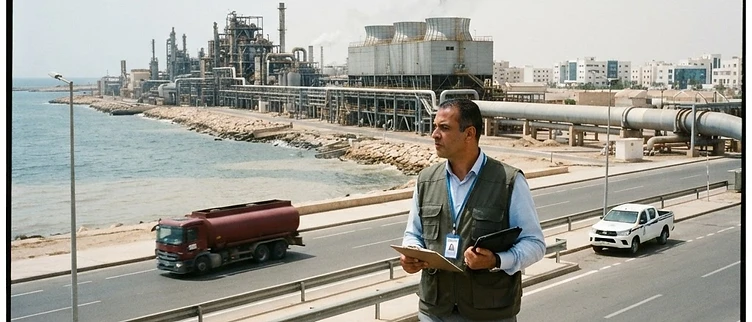
Illustration. AI-generated editorial image, not a documentary photograph.
The Tunisian government's active participation in the October 2026 Algiers Tripartite Mechanism on Libya serves as a strategic distraction from the deepening environmental and economic crisis in Gabes. While President Kais Saied projects regional leadership, the local reality in Gabes remains defined by industrial pollution and stagnant development. This article argues that the state prioritizes geopolitical posturing to maintain legitimacy while failing to implement promised structural reforms in its most vulnerable provinces.
Key judgement
The Tunisian government is utilizing regional diplomatic engagement in Libya as a strategic distraction to mask the failure of its domestic governance in regions like Gabes. This policy will likely lead to increased social unrest as the gap between state rhetoric and local service delivery continues to widen.
The analysis is supported by consistent reporting from multiple credible sources regarding both the Algiers diplomatic meetings and the documented environmental and governance failures in Gabes. Rated Moderate rather than High: High confidence claimed with no primary institutional record in the file.
What to watch
- 2026-11-15: Monitor for any concrete budget allocations or policy implementation updates regarding the Gabes environmental remediation plan.
- 2026-12-01: Observe if there is a shift in the frequency or tone of presidential visits to peripheral regions following the Algiers summit.
- 2027-01-15: Track the emergence of any new regional protest movements in Gabes or similar industrial hubs.
Implications for decision-makers
- Policymakers must recognize that regional diplomatic success does not substitute for domestic service delivery and risks alienating local constituencies.
- Institutional investors should exercise caution in Tunisia, as the lack of local governance transparency and accountability poses significant operational risks.
- NGOs and development organizations should pivot their focus toward strengthening local governance and community-led accountability mechanisms to mitigate the impact of centralized policy failures.
The Geopolitical Mirage of the Algiers Mechanism
On October 25, 2026, the foreign ministers of Tunisia, Algeria, and Egypt convened in Algiers to address the protracted Libyan transition. This meeting, part of the Tripartite Neighbouring Countries Mechanism, sought to project a unified front on regional stability and the necessity of Libyan-led elections. For the Tunisian administration, this diplomatic engagement is presented as a cornerstone of its foreign policy, emphasizing sovereignty and regional security. However, this high-level focus on Libya masks a profound disconnect between the state’s international ambitions and its domestic governance performance.
While the Algiers talks focused on the abstract goal of ending institutional division in Libya, the Tunisian state faces its own internal fragmentation. The government’s reliance on regional diplomacy serves as a convenient narrative to project strength and competence, effectively shifting the public gaze away from the failure to deliver on basic service promises. By positioning itself as a key broker in North African affairs, the administration attempts to insulate its domestic record from scrutiny, using the complexity of the Libyan crisis to justify the slow pace of internal reform.
This strategy is not merely a diplomatic choice but a calculated political maneuver. By engaging in regional power blocs, the Tunisian leadership seeks to secure external validation that compensates for declining domestic support. The rhetoric of 'sovereignty' and 'Libyan-led processes' mirrors the language used by the presidency to consolidate power at home. Yet, this focus on external stability ignores the reality that a state’s true sovereignty is measured by its ability to provide for its citizens, a metric in which the current administration is increasingly failing.
Gabes: The Cost of Neglected Governance
In stark contrast to the polished diplomatic communiqués issued in Algiers, the situation in Gabes Governorate remains a testament to systemic governance failure. Known as the 'Chernobyl of the Mediterranean,' Gabes has suffered for decades from the environmental degradation caused by the Tunisian Chemical Group’s phosphate processing facilities. Despite repeated promises of 'structural solutions' from the central government, the local population continues to face severe health risks, including high rates of respiratory diseases and tumors, as industrial pollution remains largely unchecked.
President Kais Saied’s unannounced visit to Gabes on August 10, 2026, was intended to signal a new commitment to addressing these environmental issues. However, more than two months later, there is little evidence of meaningful implementation. The gap between the president’s rhetoric and the reality on the ground is widening, as the state continues to prioritize the output of the phosphate industry over the health and safety of the residents. This is not a failure of policy design, but a failure of political will to hold state-owned enterprises accountable.
For the residents of Gabes, the government’s regional diplomatic efforts are irrelevant to their daily struggle for clean water and air. The lack of progress on environmental remediation is a direct consequence of a centralized governance model that prioritizes national economic output—often tied to state-controlled industries—over local community welfare. When the state fails to address the basic needs of its citizens in regions like Gabes, it undermines the very stability it claims to be promoting through its regional foreign policy.
The Intersection of Regional Strategy and Local Decay
The connection between the Algiers mechanism and the neglect of Gabes is found in the state’s reliance on political intelligence to manage dissent. By focusing on external threats and regional stability, the government creates a narrative of 'national unity' that stigmatizes local grievances as distractions or, worse, as threats to the state. This approach allows the administration to bypass local accountability mechanisms, such as municipal councils or regional development boards, which are often starved of the resources needed to address local crises.
Apex Africa’s Political Intelligence service identifies this as a classic 'diversionary governance' tactic. By keeping the political discourse focused on regional security, the state prevents the convergence of social movements across different provinces. If the unemployed graduates in Gabes were to successfully link their struggle with other marginalized regions, the political cost to the administration would be significantly higher. Thus, the Algiers talks are not just about Libya; they are about maintaining the status quo in Tunisia.
This strategy relies on the control of information to sustain hierarchical power structures. As noted in recent research on elite power dynamics, the state uses media control to frame its regional activities as essential for national survival. By doing so, it effectively silences local voices that demand accountability for the environmental and economic decay in places like Gabes. The state’s ability to manage this narrative is the primary tool for maintaining its grip on power in the face of declining public service delivery.
Rebutting the Stability Argument
Critics of this analysis might argue that regional stability is a prerequisite for domestic development. They would contend that without a stable Libya, Tunisia cannot secure its borders, manage migration, or foster the trade necessary to fund local projects in Gabes. From this perspective, the Algiers mechanism is not a distraction but a vital component of a long-term strategy to create the conditions for prosperity. This view suggests that the government is playing a 'long game' that will eventually benefit all regions.
However, this argument fails to account for the opportunity cost of the current approach. The resources and political capital invested in regional diplomacy are not being matched by investments in local governance. The 'long game' is a luxury that the residents of Gabes, who are dealing with immediate health crises, cannot afford. Furthermore, there is no evidence that regional stability, even if achieved, will automatically translate into better governance for Tunisia’s peripheral regions. The history of the last decade suggests that centralized power, even in stable conditions, tends to neglect the needs of the periphery.
Moreover, the assumption that the state is 'building' stability is flawed. By ignoring the grievances of its own citizens, the government is creating a source of internal instability that is far more dangerous than the regional challenges it seeks to manage. A state that cannot solve its own environmental and economic problems is inherently fragile, regardless of its diplomatic successes. The focus on Libya is a symptom of a government that is more comfortable dealing with external actors than with its own people.
The Failure of Accountability Mechanisms
Governance in Tunisia is increasingly characterized by the erosion of institutional checks and balances. The judiciary, the legislature, and local government bodies have seen their autonomy curtailed, leaving the executive branch as the sole arbiter of policy. In Gabes, this means that there is no effective mechanism to challenge the environmental impact of the Tunisian Chemical Group. The state-owned enterprise operates with a level of impunity that is protected by the central government, rendering local protests and civil society demands largely ineffective.
This lack of accountability is not an accident; it is a feature of the current political order. By centralizing authority, the administration ensures that all major decisions—whether they concern regional diplomacy or local industrial policy—are made in the capital. This prevents the development of local expertise and the empowerment of local leaders who might otherwise hold the state accountable. The result is a governance vacuum in the regions, where the state is present only as a source of regulation and control, not as a provider of services.
For investors and development organizations, this environment presents significant risks. The lack of transparency and the reliance on centralized, opaque decision-making processes make it difficult to ensure that development funds are used effectively. Apex Africa’s Election Readiness service emphasizes that without robust local governance, any electoral process—no matter how well-managed at the national level—will fail to produce legitimate, representative institutions. The current focus on regional diplomacy does nothing to address this fundamental weakness.
Scenarios for Future Development
Looking ahead, the situation in Gabes and the broader regional strategy of the Tunisian government are likely to follow one of three paths. In the first scenario, the government continues its current trajectory, prioritizing regional diplomacy while ignoring local grievances. This will likely lead to increased social unrest in the regions, as the gap between state rhetoric and reality becomes unsustainable. The government may respond with further repression, using the pretext of 'national security' to silence dissent, which will only deepen the crisis.
In the second scenario, the government is forced to pivot due to a major environmental or economic catastrophe in Gabes. This would require a significant shift in policy, potentially involving the decentralization of power and the allocation of resources to local authorities. However, given the current administration’s commitment to centralization, this is unlikely to happen without significant pressure from both the public and international partners. Such a shift would require a fundamental change in the state’s approach to governance.
In the third scenario, the government attempts to integrate local development into its regional strategy, using the Algiers mechanism to secure funding for border-region development. While this would be a more pragmatic approach, it would require the state to relinquish some control over the process. The indicators to watch include the release of specific budget allocations for Gabes, the appointment of local officials with genuine decision-making power, and a change in the tone of the state’s communication regarding environmental issues.
Strategic Implications for Stakeholders
For policymakers and public officials, the implication is clear: regional diplomacy cannot be a substitute for domestic governance. The state must urgently address the environmental and economic crisis in Gabes to maintain its legitimacy. This requires moving beyond empty promises and implementing concrete, transparent, and accountable solutions. Failure to do so will continue to erode the state’s authority and increase the risk of social instability.
For NGOs and development organizations, the focus should be on supporting local governance and civil society in the regions. By empowering local actors, these organizations can help create the accountability mechanisms that the state is currently suppressing. This is not just about providing aid; it is about building the capacity of local communities to advocate for their own interests and hold the state accountable for its performance.
For political strategists, the lesson is that the current focus on regional power dynamics is a high-risk strategy. While it may provide short-term political benefits, it ignores the long-term structural problems that will eventually determine the success or failure of any political project. Apex Africa’s Political Research & Analytics service can help leaders navigate these dynamics by providing the data and insights needed to balance regional ambitions with the necessity of domestic service delivery.
Conclusion: The Path Forward
Tunisia stands at a crossroads. The government’s attempt to project regional leadership through the Algiers mechanism is a fragile facade that masks deep-seated domestic failures. The environmental and economic decay in Gabes is not just a local issue; it is a national crisis that threatens the stability of the entire country. To move forward, the state must shift its focus from external posturing to internal accountability.
This requires a fundamental change in the way the state interacts with its regions. It means moving away from a centralized, top-down model of governance and towards one that empowers local communities and respects their right to a healthy environment and a sustainable economy. The path to true sovereignty lies not in the halls of power in Algiers, but in the streets and schools of Gabes and other neglected regions across Tunisia.
For those who seek to understand the true state of Tunisian politics, the focus must remain on the gap between the state’s promises and its performance. The regional dynamics are important, but they are only one part of the story. The real story is the struggle of the Tunisian people to hold their government accountable. To discuss how your organization can navigate these complex political dynamics, we invite you to request a confidential consultation at https://apexafricastrategy.com.