Article · Algeria
Tlemcen Local Elections Used to Consolidate State Control Over Regional Administration
The upcoming local vote in Tlemcen reveals a calculated strategy to neutralize regional political autonomy.
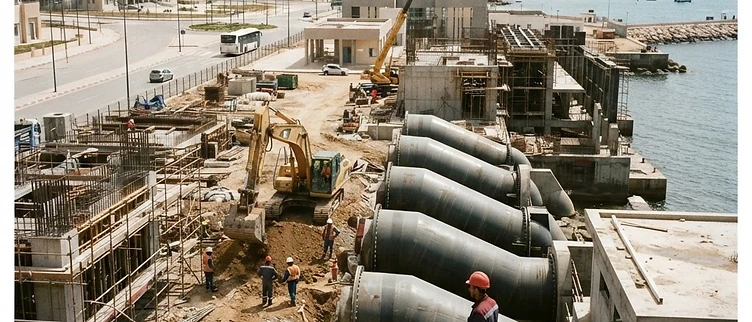
Illustration. AI-generated editorial image, not a documentary photograph.
The November 2026 local elections in Tlemcen Province are being framed by the central government as a democratic milestone, but they function as a mechanism to consolidate state control over regional administration. By leveraging infrastructure projects like the Marsa Ben Mehidi desalination plant, the ruling apparatus is attempting to manufacture consent while suppressing genuine local political competition. This strategy risks further alienating a population already wary of centralized decision-making and administrative expansion.
Key judgement
The November 2026 local elections in Tlemcen are a state-orchestrated exercise in administrative consolidation rather than a genuine democratic opening. The evidence points to a strategy of using infrastructure projects to manufacture consent, which will likely result in low voter turnout and continued central control over regional affairs.
The analysis is supported by consistent reporting on the 69-province administrative expansion and the state's explicit use of infrastructure projects as political tools in the lead-up to the November 2026 elections.
What to watch
- 2026-11-28: Official voter turnout figures for Tlemcen Province in the local elections.
- 2026-12-05: Post-election statements from local civil society groups regarding the fairness and transparency of the process.
- 2027-01-15: Budgetary allocations for Tlemcen Province in the 2027 national finance bill.
Implications for decision-makers
- Political strategists must pivot from national-level rhetoric to hyper-local service delivery narratives to counter state-led infrastructure messaging.
- Institutional investors should anticipate continued administrative bottlenecks in Tlemcen as local authorities remain tethered to central approval processes.
- NGOs and development organizations should prioritize independent monitoring of local government procurement to mitigate the risks of state-managed corruption.
The Illusion of Local Autonomy in Tlemcen
The upcoming local elections scheduled for November 28, 2026, in Tlemcen Province are being presented by the central government as a vital step in the expansion of Algeria’s administrative footprint. With the country now divided into 69 provinces, the state argues that this decentralization brings governance closer to the people. However, the reality on the ground in Tlemcen suggests a different narrative: the systematic absorption of local political energy into a state-managed framework that prioritizes administrative compliance over genuine representation.
This political maneuver is not merely about filling seats in local assemblies; it is a strategic effort to ensure that the new provincial structure remains tethered to the central executive. By framing the election as a technical necessity for the 69-province map, the government effectively depoliticizes the contest. This approach forces local candidates to focus on service delivery metrics dictated by Algiers rather than addressing the specific socio-political grievances of the Tlemcen electorate.
For political strategists, this represents a masterclass in containment. By controlling the narrative around the election, the state ensures that the focus remains on the 'efficiency' of the new administrative divisions. This strategy effectively sidelines opposition voices who might otherwise challenge the central government's grip on regional resources. The result is a political environment where the appearance of local governance masks the reality of centralized control.
Infrastructure as a Political Tool
The ongoing construction of the seawater desalination plant at 'Ain Ajroud' beach in the municipality of Marsa Ben Mehidi serves as the primary anchor for the government's campaign in Tlemcen. With a projected capacity of 300,000 cubic meters per day, the project is touted as a solution to the water security needs of 3 million citizens. However, the timing of the project's promotion, coinciding with the lead-up to the November elections, is a calculated political communication strategy.
By linking the desalination plant directly to the state's development agenda, the government creates a dependency loop. Residents are encouraged to view the project not as a basic right or a result of local advocacy, but as a gift from the central administration. This narrative is designed to secure electoral support by framing the ruling party as the sole provider of essential infrastructure, thereby marginalizing any alternative political platforms.
This strategy relies heavily on the visibility of state-led projects to drown out political discourse. When the government controls the narrative of 'development,' it becomes difficult for local actors to articulate a vision that does not involve subservience to the central budget. The desalination plant is not just a piece of infrastructure; it is a political instrument used to validate the necessity of the current administrative order.
The Governance Gap in Public Service
While the government highlights large-scale projects, the day-to-day reality of public service delivery in Tlemcen remains fraught with challenges. The recent installation of new leadership at the University Services Directorate of Tlemcen in June 2026, while framed as a routine administrative change, reflects the broader trend of centralizing oversight. These appointments are rarely about local capacity building; they are about ensuring that key institutions remain aligned with the central government's directives.
Accountability mechanisms, such as the recruitment competitions for university staff, are often opaque, leaving little room for public scrutiny. When the state controls both the funding and the personnel of local institutions, the potential for corruption and mismanagement increases. The lack of transparency in how these institutions are managed undermines the very concept of local governance that the 69-province reform claims to promote.
Furthermore, the reliance on central directives for local service delivery creates a bottleneck that prevents local authorities from responding to the immediate needs of their constituents. When a local council cannot make a decision without approval from the provincial or national level, the entire system becomes unresponsive. This structural inefficiency is a feature, not a bug, of the current system, as it ensures that local leaders remain dependent on the center for their political survival.
Rebutting the 'Decentralization' Narrative
Critics of this analysis might argue that the creation of new provinces and the focus on local elections are genuine attempts to empower regional communities. They point to the increased number of wilayas as evidence of a commitment to bringing government closer to the people. However, this argument fails to account for the lack of fiscal autonomy granted to these new provinces. Without the power to raise their own revenue or set their own development priorities, these provinces are merely administrative extensions of the central state.
True decentralization requires the devolution of power, not just the multiplication of administrative units. The current model in Tlemcen is one of administrative expansion, not political empowerment. By increasing the number of provinces, the state is actually increasing the number of points of control, making it easier to monitor and manage local political dynamics from the center.
Therefore, the claim that the November elections represent a 'revival' of local governance is a fallacy. It is a strategic consolidation of power that uses the language of decentralization to mask the reality of increased central oversight. The evidence from Tlemcen suggests that the state is more interested in maintaining control than in fostering a vibrant, independent local political culture.
The Role of Political Intelligence
For any political organization operating in Tlemcen, understanding these dynamics is crucial. Apex Africa’s Political Intelligence service provides the necessary insight to navigate this environment. By analyzing the intersection of state-led infrastructure projects and electoral mobilization, we help our clients identify the real power brokers and the hidden constraints on local political action.
In a landscape where the state controls the narrative, success depends on the ability to communicate a vision that resonates with the electorate while navigating the risks of state retaliation. Our research shows that the most effective strategies are those that focus on local issues while exposing the limitations of the central government's 'development' narrative. This requires a deep understanding of the local political economy and the ability to mobilize grassroots support in a way that is both impactful and sustainable.
We help our clients move beyond the surface-level rhetoric of the state and engage with the underlying political realities. Whether it is through targeted communication strategies or data-driven research, we provide the tools necessary to compete in an environment where the rules of the game are constantly being rewritten by the incumbent.
Future Scenarios for Tlemcen
Looking ahead, there are three likely scenarios for the political development of Tlemcen. First, the state successfully manages the November elections, resulting in a compliant local assembly that continues to prioritize central directives over local needs. This would solidify the current administrative model and likely lead to further centralization of power in the region.
Second, the low turnout observed in the July 2026 national vote continues, signaling a deep-seated apathy among the electorate. If the November turnout is significantly lower than expected, it would undermine the legitimacy of the new provincial structure and force the government to reconsider its strategy. This could create an opening for alternative political voices to gain traction.
Third, a localized protest movement emerges, driven by the gap between the government's promises of development and the reality of service delivery. If this movement gains momentum, it could challenge the state's control over the region and force a shift in the political landscape. The key indicator to watch is the level of engagement from local civil society organizations in the weeks leading up to the election.
Strategic Implications for Stakeholders
For policymakers and public officials, the implication is clear: the current strategy of administrative expansion is reaching its limits. To avoid further alienation, the government must move beyond symbolic gestures and grant genuine fiscal and political autonomy to the provinces. Failure to do so will only increase the risk of instability and public dissatisfaction.
For political strategists and campaign leadership, the lesson is that the state's control over infrastructure and resources is a formidable obstacle. Success requires a strategy that acknowledges this reality while offering a compelling alternative that addresses the specific needs of the local population. This means focusing on issues that the state ignores and building a coalition that transcends the traditional party lines.
For NGOs and development organizations, the focus should be on promoting transparency and accountability in local governance. By supporting local initiatives and providing independent monitoring of government projects, these organizations can help create a more informed and engaged citizenry. This is essential for the long-term health of the democratic process in Algeria.
Conclusion and Call to Action
The political situation in Tlemcen is a microcosm of the broader challenges facing Algeria. The tension between the state's desire for control and the people's need for genuine representation is at the heart of the current political dynamic. As we approach the November 2026 local elections, it is clear that the outcome will have significant implications for the future of local governance in the country.
At Apex Africa Strategy & Intelligence, we specialize in helping our clients navigate these complex political landscapes. Our expertise in political intelligence, research, and communications provides the edge needed to succeed in an increasingly competitive environment. If you are a political leader or organization looking to make a real impact, we invite you to request a confidential consultation at https://apexafricastrategy.com.