Article · Ghana
The Parliamentary Theater: Why Ghana’s Legislative Chaos Is a Symptom of Strategic Bankruptcy
The recent scramble for majority status in Accra is not a constitutional crisis; it is a failure of basic campaign arithmetic and long-term political planning.
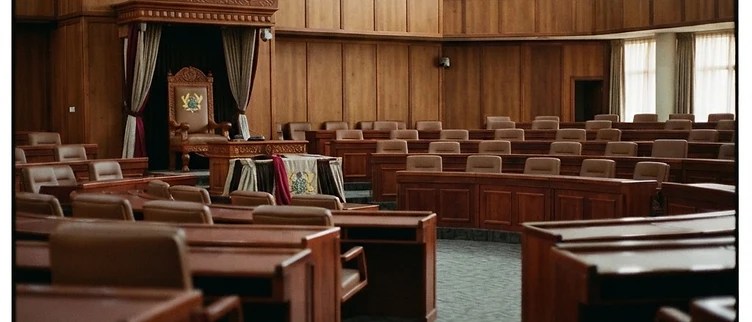
Illustration. AI-generated editorial image, not a documentary photograph.
The recent parliamentary brawls and seat-switching in Ghana are not signs of a broken democracy, but rather the inevitable result of parties failing to secure decisive mandates through rigorous constituency-level intelligence. By prioritizing performative legislative theater over disciplined electoral operations, both the NPP and NDC have exposed their inability to manage the modern realities of a hung parliament.
The Illusion of Legislative Power
The recent spectacle in Ghana’s Parliament, where the Minority Caucus attempted to seize the Majority seats following the declaration of four vacancies, was widely framed by the media as a constitutional crisis. It was nothing of the sort. It was a desperate, performative act of political theater designed to mask a deeper, more systemic failure: the inability of both the New Patriotic Party (NPP) and the National Democratic Congress (NDC) to secure a functional, stable majority through the ballot box. When parties cannot win decisively on the ground, they inevitably turn to the floor of the House to manufacture the power they failed to earn from the electorate.
This obsession with 'forcing' a majority—as seen in the aggressive posturing of the NDC and the defensive maneuvers of the NPP—is a strategic dead end. It treats the legislature as a battlefield for dominance rather than a space for governance. For political organizations, this is a fatal miscalculation. If you are spending your energy fighting over seating arrangements in the final months of a term, you have already lost the war for the voter’s trust.
The Failure of Constituency Intelligence
The root cause of this instability is not the Speaker’s rulings or the defection of MPs; it is the decay of constituency-level research. For too long, the major parties have relied on historical voting patterns and regional strongholds, assuming that the 'Ashanti' or 'Volta' labels would do the heavy lifting. This is lazy politics. The 2020 hung parliament was not a fluke; it was a warning shot that both parties ignored.
At Apex Africa, we see this constantly: parties that invest millions in national media campaigns while neglecting the granular, data-driven work required to secure individual seats. When you do not understand the shifting demographics, the local economic anxieties, and the specific grievances of a constituency, you are not running a campaign—you are running a gamble. The current parliamentary chaos is the direct result of parties that have lost touch with the micro-dynamics of their own districts, leaving them vulnerable to the whims of a few 'swing' MPs who hold the entire legislative agenda hostage.
Rebutting the 'Democratic Resilience' Narrative
Critics will argue that Ghana’s system is resilient because it survives these brawls, pointing to the peaceful transition of power and the recent victory of John Mahama as evidence of a healthy democracy. This is a dangerous complacency. A system that relies on the 'resilience' of its institutions to absorb the shock of constant political brinkmanship is a system that is slowly eroding its own legitimacy.
To suggest that the status quo is 'working' because the country hasn't descended into violence is to set the bar at the floor. The economic crisis that defined the 2024 election cycle—soaring food prices, a plunging cedi, and the weight of debt restructuring—was exacerbated by this very legislative paralysis. When the government is too busy fighting for its life in Parliament, it cannot govern. The 'resilience' narrative is a comfort blanket for political elites who are unwilling to admit that their inability to build a stable coalition or a clear majority is actively harming the nation’s economic recovery.
The Strategic Imperative: Beyond the Rhetoric
Winning in the current Ghanaian climate requires a shift from 'campaigning' to 'operations.' It is no longer enough to hold rallies or promise 'one district, one factory' policies. You must possess the Political Intelligence to identify which seats are truly at risk and the Election Readiness to defend them.
This is where our work at Apex Africa becomes critical. We help leaders move beyond the rhetoric of the campaign trail and into the science of electoral victory. This means deploying advanced data analytics to map voter sentiment in real-time, ensuring that resources are not wasted on safe seats but are instead concentrated where they can actually shift the parliamentary balance. If you are a candidate or a party leader, you must ask yourself: are you building a machine that can win, or are you just waiting for the next parliamentary brawl to define your legacy?
A Call for Professionalism
The era of relying on party loyalty to carry the day is over. The Ghanaian voter is increasingly transactional, driven by the harsh realities of an economy that has buckled under the weight of excessive borrowing and global shocks. If your strategy does not account for this, you are already obsolete. The parliamentary theater we have witnessed is a symptom of a political class that has forgotten how to win on the merits. It is time to stop the posturing and start the hard work of building a sustainable, data-backed path to power.
For leaders who are ready to move beyond the chaos and build a disciplined, winning organization, we offer the strategic clarity required to navigate these turbulent waters. Request a confidential consultation at https://apexafricastrategy.com.