Article · Cameroon
The Littoral Infrastructure Pivot Is a Sovereign Mirage Masking Electoral Decay
The Douala-Bafoussam road project is not a development breakthrough but a tactical distraction from party fragility.
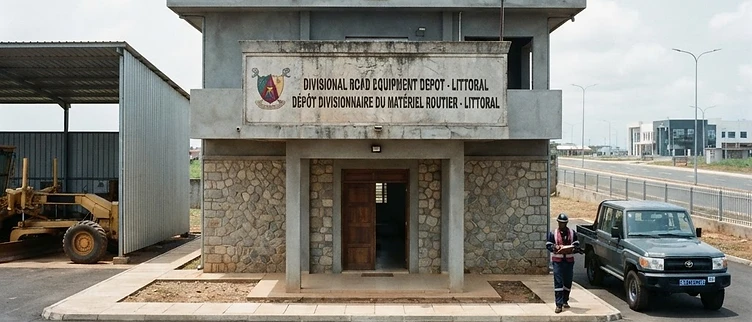
Illustration. AI-generated editorial image, not a documentary photograph.
The recent EUR 212.35 million financing agreement for the Douala-Bafoussam road corridor is being framed as a triumph of regional development. In reality, this infrastructure pivot serves as a strategic distraction from the deepening institutional decay within the ruling CPDM and the fragmented opposition in the Littoral region. By anchoring political legitimacy in capital-intensive projects, the state masks its inability to address the structural electoral crises currently unfolding in the region's council branches.
The Infrastructure Illusion
The recent announcement of a EUR 212.35 million financing agreement between the Islamic Development Bank (IsDB) and the Cameroonian government for the Douala-Bafoussam road project is being hailed by state media as a transformative milestone for the Littoral and West regions. While the project promises to rehabilitate 218 kilometres of national roads and 108 kilometres of feeder roads, it is fundamentally a political instrument rather than a governance solution. By focusing on high-visibility infrastructure, the administration attempts to project an image of stability and progress at a time when the political foundations of the Littoral region are visibly fracturing. This is not a development strategy; it is a tactical deployment of capital to buy silence in a region where electoral trust is at an all-time low.
Observers often mistake these large-scale procurement announcements for evidence of a functioning state apparatus. However, the gap between the signing of international financing agreements and the actual delivery of public services remains a defining feature of Cameroonian governance. The Littoral region, as the economic heart of the country, has become the primary theatre for this performative governance. By tying the economic survival of the Douala-Bafoussam corridor to international debt, the government effectively shields its local administrative failures from scrutiny, forcing residents to choose between the promise of future connectivity and the reality of current institutional neglect.
The Electoral Register Crisis
While the government celebrates the road project, the actual machinery of democracy in the Littoral region is stalling. As of October 22, 2026, the Elections Cameroon (ELECAM) regional delegations have been tasked with publishing provisional electoral registers across the country’s council branches. In the Littoral, this process is not merely a technical exercise; it is a site of intense political contestation. The focus on the Douala-Bafoussam road serves to divert public attention away from the irregularities and administrative bottlenecks that continue to plague the voter registration process, which remains the most critical determinant of the upcoming 2027 electoral outcomes.
Our analysis at Apex Africa suggests that the state’s reliance on infrastructure as a political buffer is a direct response to the failure of its traditional patronage networks. In the Littoral, where the opposition has historically found fertile ground, the ruling party is struggling to maintain its grip on local council structures. By prioritizing the Douala-Bafoussam corridor, the government is attempting to bypass the need for genuine grassroots engagement, betting that the promise of economic facilitation will outweigh the grievances of voters who are increasingly alienated by the lack of transparency in the electoral register update process.
The Opposition’s Strategic Mirage
It is a mistake to view the current opposition activity in the Littoral as a coherent challenge to the status quo. Parties like the Jouvence party, which has identified Douala 2 and Douala 5 as key targets for the upcoming elections, are operating within a political landscape that is structurally designed to favor the incumbent. The opposition’s focus on candidate lists and parliamentary bids ignores the reality that the electoral playing field is being tilted by the very infrastructure projects they are currently failing to critique. By engaging in the electoral process without first demanding a total overhaul of the administrative and judicial oversight mechanisms, the opposition is effectively legitimizing a system that is already rigged against them.
Furthermore, the internal crises within parties like the PCRN, which has been embroiled in tribalism accusations and leadership disputes, demonstrate that the opposition is currently incapable of mounting a unified front. The ruling party understands this fragmentation perfectly. By keeping the opposition focused on internal squabbles and the technicalities of candidate selection, the state ensures that no significant political movement can coalesce around the failures of public service delivery. The Douala-Bafoussam road project is the perfect distraction, providing a neutral ground where the government can claim to be serving the 'national interest' while the opposition remains trapped in the minutiae of party politics.
Governance and the Procurement Gap
Governance in the Littoral is increasingly defined by the distance between the Ministry of Public Contracts (MINMAP) and the actual sites of project implementation. While the government touts the EUR 212.35 million investment, there is no corresponding mechanism for public accountability regarding the procurement process itself. The history of infrastructure projects in Cameroon is littered with cost overruns, delays, and the diversion of funds into patronage networks. Without a robust, independent audit of the Douala-Bafoussam project, the public has no way of knowing whether these funds will actually reach the communities they are intended to serve.
This lack of transparency is not an accident; it is a feature of the current governance model. By keeping the procurement process opaque, the state maintains control over the flow of resources, ensuring that contracts are awarded to loyalists who can be relied upon to support the party’s electoral efforts. The Littoral region, with its high concentration of economic activity, is the most lucrative prize in this system. The road project is not just about transport; it is about the consolidation of power through the control of public capital, a strategy that has proven highly effective in neutralizing local dissent.
The Community Cost of Centralization
For the residents of the communities along the Douala-Bafoussam corridor, the promise of improved infrastructure is often a hollow one. While the project includes provisions for classrooms, health centres, and water facilities, these are frequently treated as secondary to the road itself. In practice, the focus on the main transport artery often leads to the neglect of the feeder roads and local services that are essential for the daily lives of the population. The centralization of decision-making in Yaoundé means that local needs are rarely prioritized unless they align with the broader strategic goals of the ruling coalition.
This disconnect between national policy and local reality is the primary driver of political apathy in the Littoral. When residents see their local council branches struggling to provide basic services while the state pours millions into a road project that primarily benefits large-scale commercial interests, the result is a profound loss of faith in the democratic process. The government’s failure to address this gap is not just a policy error; it is a fundamental betrayal of the social contract that is fueling the very instability the state claims to be preventing.
Rebutting the Development Narrative
Critics of this analysis will argue that the Douala-Bafoussam road is a necessary investment for economic growth and that criticizing it is a form of political cynicism that ignores the tangible benefits of infrastructure. They will point to the potential for lower transportation costs and increased access to markets as evidence that the project is a net positive for the region. This argument, however, fails to account for the opportunity cost of such projects. When the state prioritizes capital-intensive infrastructure over the strengthening of local institutions and the improvement of public services, it is making a deliberate choice to favor short-term political gain over long-term development.
Furthermore, the argument that infrastructure is inherently apolitical is demonstrably false in the context of Cameroon. Every major project is a political statement, a signal of where the state’s priorities lie and who it intends to reward. By ignoring the political context in which these projects are conceived and implemented, proponents of the 'development-first' narrative are effectively providing cover for the very corruption and mismanagement that they claim to oppose. The road is not a substitute for good governance; it is a distraction from the absence of it.
Strategic Implications and Recommendations
For political strategists and campaign leadership, the lesson is clear: the infrastructure narrative is a powerful tool that must be countered with a focus on the tangible failures of the state. Opposition parties must move beyond the technicalities of candidate selection and start building a platform that directly addresses the procurement and accountability gaps in the government’s development agenda. This requires a shift in focus from national-level rhetoric to the local, grassroots issues that actually affect the daily lives of voters.
We recommend that civil society organizations and think tanks prioritize the monitoring of the Douala-Bafoussam project, specifically focusing on the transparency of the procurement process and the actual delivery of the promised social infrastructure. By documenting the gap between the government’s promises and the reality on the ground, these actors can provide the evidence needed to challenge the state’s narrative. For policymakers, the recommendation is to decentralize the management of these projects, giving local councils a greater say in how resources are allocated and ensuring that the benefits of development are felt at the community level rather than just at the national level.
Future Scenarios
Looking ahead, we anticipate three potential scenarios for the Littoral region. In the first, the government successfully uses the road project to consolidate its support, leading to a muted electoral contest in 2027 where the ruling party maintains its dominance. In the second, the lack of transparency in the procurement process leads to public protests, forcing the government to make concessions but ultimately failing to change the underlying power dynamics. In the third, the opposition manages to coalesce around a platform of accountability, using the failures of the infrastructure project to mobilize voters and mount a genuine challenge to the ruling party’s hegemony.
To navigate these dynamics, leaders should utilize our Election Readiness and Political Intelligence services to monitor the shifting electoral landscape and identify the key pressure points where their interventions can have the most impact. The situation is fluid, and the ability to anticipate the state’s next move will be the difference between success and failure in the upcoming electoral cycle. We invite you to contact Apex Africa Strategy & Intelligence for a confidential consultation at https://apexafricastrategy.com to discuss how we can help you navigate these complex political waters.