Article · Somalia
The Kismayo Autonomy Myth: Why Jubaland’s Resistance Is Not a Democratic Stand but a Survivalist Calculation
Observers mistake Ahmed Madobe’s defiance for a principled defense of federalism, ignoring the cold, transactional reality of state-level power preservation.
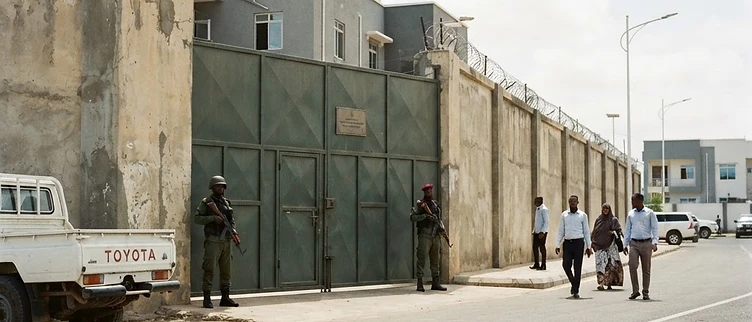
Illustration. AI-generated editorial image, not a documentary photograph.
The prevailing narrative frames Jubaland’s standoff with Mogadishu as a noble defense of federalism against central overreach. In reality, this is a calculated survival strategy by the regional elite to maintain control over local patronage networks and security architecture, proving that state-level politics in Somalia remains a game of transactional preservation rather than ideological governance.
The Mirage of Principled Federalism
For international observers and local pundits alike, the ongoing friction between the Federal Government of Somalia (FGS) and the Jubaland administration is frequently misread as a high-minded constitutional struggle. The dominant narrative suggests that President Ahmed Madobe is the vanguard of a federalist movement, heroically resisting the centralizing impulses of Villa Somalia. This interpretation is not only incomplete; it is fundamentally dangerous. By framing the conflict as a battle for the soul of Somalia’s federal structure, analysts ignore the granular, transactional reality of power in Kismayo. The resistance from Jubaland is not a principled stand for decentralization—it is a survivalist calculation designed to protect a specific, entrenched patronage network that has dominated the region for over a decade.
The Patronage Architecture of Kismayo
To understand why Jubaland remains the primary thorn in the side of the federal government, one must look past the rhetoric of 'constitutional rights' and examine the actual mechanics of state control. Jubaland’s political machinery is built upon a delicate, clan-based equilibrium that relies on the control of key economic nodes, including the port of Kismayo and cross-border trade routes. When the FGS attempts to impose national electoral laws or centralize the electoral commission, it is not merely challenging a legal framework; it is threatening the very infrastructure that allows the current regional leadership to distribute resources and maintain the loyalty of local clan elders. The 'federalism' that Jubaland defends is, in practice, a shield for regional autonomy that ensures the FGS cannot audit or dismantle these local power structures.
The Fallacy of the 'Democratic' Opposition
Critics of the FGS often point to the 'Somali Future Council' as a broad-based democratic coalition. However, this alliance is less a unified political movement and more a marriage of convenience between regional leaders who share a common existential threat: the loss of their individual fiefdoms. The opposition’s demand for local elections under existing state constitutions is not a push for grassroots empowerment; it is a strategic maneuver to ensure that the electoral process remains within the purview of the very incumbents who have already mastered the art of indirect, clan-based selection. By keeping the process 'local,' they effectively insulate themselves from the shifting tides of national politics and the potential for a truly representative, one-person-one-vote system that would render their current clan-based leverage obsolete.
Rebutting the 'Centralization' Critique
The strongest objection to this analysis is that the FGS is indeed overstepping its constitutional mandate, and that any resistance to such encroachment is inherently positive for the long-term health of the Somali federation. While it is true that the FGS has shown authoritarian tendencies, this argument fails to account for the fact that the current 'federal' status quo is equally exclusionary. The status quo is not a vibrant, decentralized democracy; it is a collection of regional autocracies that are just as resistant to internal reform as the central government is to power-sharing. Supporting the status quo in Jubaland under the guise of 'federalism' merely swaps one form of centralized control for another, smaller, and more opaque form of regional hegemony.
Navigating the Reality of State-Level Power
For political actors and organizations operating in this environment, the lesson is clear: rhetoric is a tool, not a strategy. At Apex Africa Strategy & Intelligence, we utilize advanced Political Intelligence to help our clients look past the public-facing narratives of 'federalism' or 'national unity' to identify the underlying structural incentives that drive decision-making. Whether it is mapping the influence of clan elders in Kismayo or analyzing the fiscal dependencies that dictate regional loyalty, our research ensures that leaders are not blindsided by the gap between what is said in the press and what is happening on the ground. Understanding the difference between a political movement and a survivalist coalition is the difference between winning a seat at the table and being sidelined by the next shift in the regional power balance.
The Path Forward
Somalia’s political future will not be decided by the abstract debates occurring in the halls of power, but by the cold, hard reality of who controls the resources and the electoral machinery at the state level. The current standoff is a symptom of a system that has yet to reconcile the tension between central authority and regional autonomy. For those looking to navigate this complex landscape, the time for superficial analysis has passed. We invite you to request a confidential consultation at https://apexafricastrategy.com to discuss how our intelligence-led approach can help you secure your strategic objectives in this volatile environment.