Article · South Africa
Mangaung Parties Ignore Institutional Decay To Focus On November 4 Coalition Math
The battle for Mangaung’s ballot masks a deeper, systemic failure of local governance that no party can fix alone.
Reporting current as of 26 October 2026
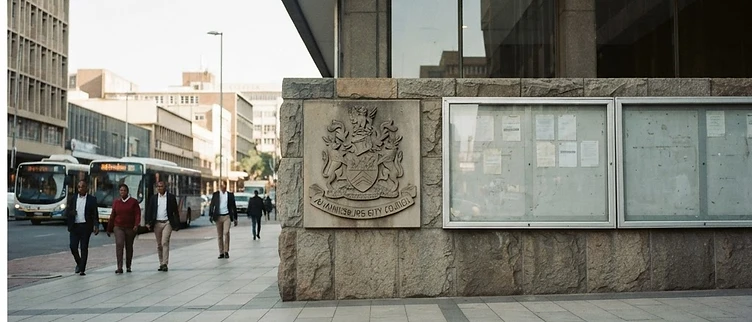
Illustration. AI-generated editorial image, not a documentary photograph.
The intense electoral contest in Mangaung between the ANC and the DA obscures the reality that the municipality is suffering from deep-seated institutional rot. While parties focus on winning the November 4 polls, the underlying governance failures—ranging from procurement scandals to service delivery collapse—remain unaddressed. This article argues that the obsession with coalition arithmetic is a strategic distraction from the urgent need for structural administrative reform.
Key judgement
The electoral contest in Mangaung is a superficial struggle for power that ignores the underlying administrative collapse, meaning that regardless of the election outcome, service delivery will continue to decline until structural procurement reforms are implemented.
The assessment is based on consistent reporting from multiple sources regarding the SIU investigation into municipal contracts and the persistent service delivery failures documented in the region.
What to watch
- 2026-11-04: Voter turnout levels in Mangaung as a signal of public trust in the electoral process.
- 2026-11-15: Post-election council formation and the specific terms of any coalition agreements regarding municipal procurement oversight.
- 2027-01-30: The status of the nine contracts under SIU investigation and whether any administrative staff are suspended or replaced.
Implications for decision-makers
- Political parties must pivot from coalition-building to administrative reform to avoid long-term loss of voter legitimacy.
- Institutional investors and development partners should condition support on the implementation of transparent procurement and oversight mechanisms.
- Local community organizations should prioritize monitoring municipal budget execution over electoral campaigning to drive tangible service delivery improvements.
The Mangaung Illusion: Beyond the Ballot Box
The current political narrative surrounding the Mangaung Metropolitan Municipality is dominated by a binary obsession: the race between the African National Congress (ANC) and the Democratic Alliance (DA). As the November 4, 2026, local government elections approach, the discourse is fixated on polling margins and the potential for coalition configurations. This focus is not merely incomplete; it is a dangerous strategic distraction that ignores the structural decay of the municipality’s administrative core. While party leaders conduct door-to-door campaigns in areas like Batho Section, the reality of Mangaung is defined by a decade of institutional paralysis that no single electoral victory can reverse.
Conventional political analysis treats the upcoming election as a referendum on governance, yet this assumes that the municipal machinery is capable of responding to a new mandate. The evidence from the ground suggests otherwise. The municipality has become a site of persistent administrative instability, where the focus of political actors has shifted from service delivery to the management of patronage networks. By framing the crisis as a contest of political ideologies, parties successfully divert public attention from the systemic failure of the municipal bureaucracy to execute basic developmental mandates.
At Apex Africa, our Political Intelligence service identifies this as a classic 'electoral displacement' tactic. By keeping the public focused on the 'who' of governance, incumbents and challengers alike avoid the 'how' of administration. The electorate is encouraged to believe that a change in leadership will automatically translate into a change in outcomes, ignoring the fact that the municipal structures themselves are hollowed out. This is not a failure of democracy; it is a failure of the state’s local architecture, which has been repurposed to serve political survival rather than public service.
The Procurement Trap: Investigating the Institutional Rot
The governance layer of Mangaung’s crisis is best illustrated by the recent intervention of the Special Investigating Unit (SIU). Proclamation 329 of 2026, issued in August, authorized an investigation into nine separate contracts within the municipality, specifically targeting the operationalization of the Mangaung Metropolitan Municipal Police. This is not a minor administrative oversight; it is a window into how public funds are diverted through procurement processes that prioritize political optics over public safety. The investigation covers a decade of conduct, revealing a pattern of maladministration that predates the current electoral cycle.
When a municipality spends its limited resources on the 'upgrading, relocation and configuration of office space' and the purchase of luxury vehicles like Toyota Corollas for a police force that remains mired in controversy, the priorities of the local government are laid bare. These are not isolated incidents of corruption; they are symptoms of a governance model that treats the municipal budget as a slush fund for political projects. The SIU’s focus on these contracts confirms that the rot is embedded in the very institutions that are supposed to provide oversight and accountability.
For the residents of Mangaung, this means that the 'service delivery' promised on the campaign trail is structurally impossible. When procurement is used as a tool for patronage, the actual delivery of water, sanitation, and road maintenance becomes a secondary concern. The political class understands this, yet they continue to campaign on the promise of 'better management' without addressing the underlying procurement mechanisms that facilitate this decay. This is where our Political Research & Analytics service provides the necessary clarity: by mapping the flow of municipal funds against service delivery outcomes, we expose the gap between political rhetoric and fiscal reality.
The Myth of the Coalition Firewall
There is a prevailing belief that the introduction of a formal coalition framework, as proposed in recent legislative amendments, will stabilize municipalities like Mangaung. This is a fallacy. The assumption is that if parties are forced into 'written and negotiated binding agreements,' they will be compelled to govern effectively. However, in a context where the administrative bureaucracy is already compromised, a coalition agreement is merely a pact to share the spoils of a failing system. It does not address the lack of technical capacity or the culture of impunity that defines the municipal administration.
In the Free State, the failure of service delivery is not a result of 'bad coalitions' but of a lack of institutional integrity. Whether the ANC or the DA leads the council, the underlying administrative staff remains the same, and the procurement processes remain vulnerable to capture. The focus on coalition management is a way for political parties to avoid the difficult work of civil service reform. They prefer to negotiate power-sharing deals rather than confront the entrenched interests that benefit from the current state of dysfunction.
Our Election Readiness service emphasizes that without a fundamental restructuring of the municipal civil service, any coalition—no matter how 'mature' its leadership—is destined to fail. The IFP’s recent claims about the success of their coalitions in other regions are often cited as a model, but they ignore the specific, deep-rooted pathologies of the Free State. Mangaung requires more than just a 'mature' coalition; it requires a complete overhaul of its administrative and procurement systems, a task that no political party is currently willing to undertake because it would threaten their own patronage networks.
Grassroots Reality: The Cost of Political Neglect
The community impact of this political theater is profound. In areas like Rammulotsi, residents face chronic water shortages, failing sanitation, and incomplete infrastructure projects. These are not abstract policy failures; they are daily realities that degrade the quality of life and erode trust in the democratic process. When political parties descend on these communities for door-to-door campaigns, they are often met with frustration, yet the political response is to double down on the same empty promises of 'transformation' and 'service delivery.'
Local organizations, such as the African Liberation Movement (ALM), have begun to highlight these failures, noting that municipal plans are often 'taking left and walking right.' This is a damning indictment of the disconnect between the planning phase and the implementation phase of local government. The residents of Mangaung are not just suffering from a lack of resources; they are suffering from a lack of accountability. The mechanisms that should hold the municipality to account—the council, the provincial government, and the national oversight bodies—have all failed to stem the tide of decay.
Apex Africa’s Constituency & Public Research service shows that this disillusionment is a major driver of voter apathy. When residents see that their local government is more interested in police car tenders than in fixing water pipes, they lose faith in the electoral process itself. The danger is not just that the 'wrong' party wins, but that the entire system loses its legitimacy. This is the real crisis of Mangaung: a total collapse of the social contract between the local government and the people it is supposed to serve.
Rebutting the 'Stability' Argument
Critics of this analysis will argue that stability is the prerequisite for any reform, and that a clear electoral mandate—or a stable coalition—is the only way to achieve it. They contend that by focusing on the election, we are participating in the necessary process of democratic renewal. This argument fails because it ignores the historical evidence of the last decade. We have had multiple elections and various coalition configurations in South African metros, and yet the trend of service delivery decline has remained constant. Stability, in the current context, is often just a euphemism for the status quo.
Furthermore, the argument that 'the voters will decide' assumes that the voters have a genuine choice between different governance models. In reality, the political parties are offering the same model of patronage-based governance, just with different faces at the helm. The 'stability' that parties promise is not stability for the residents; it is stability for the political elite. By prioritizing the survival of the coalition over the reform of the institution, parties are effectively choosing to maintain the very system that is failing the people.
We maintain that true stability can only come from institutional reform, not from electoral outcomes. A government that is 'stable' but corrupt is worse for the community than a government that is in flux but forced to be transparent. The obsession with electoral stability is a way to avoid the hard work of accountability. Until the procurement processes are cleaned up and the administrative staff is held to professional standards, the 'stability' of any coalition will be nothing more than a mask for continued decay.
Future Scenarios: What to Watch
As we look toward the November 4 elections and beyond, there are three scenarios that could unfold in Mangaung. The first is a continuation of the current trajectory: a fragmented council, a weak coalition, and a further decline in service delivery as the SIU investigation continues to uncover deeper layers of corruption. This is the most likely outcome, as it requires the least amount of political effort from the parties involved. The indicator to watch here is the frequency of service delivery protests in the weeks following the election.
The second scenario is a 'technocratic pivot,' where a new coalition attempts to bring in external management to bypass the failing municipal bureaucracy. This would be a significant departure from the current model and would likely face intense resistance from the entrenched interests within the municipality. The indicator to watch is the appointment of new, independent heads of departments and the cancellation of the contracts currently under SIU investigation. If these steps are taken, it would signal a genuine attempt at reform.
The third scenario is a total collapse of the municipal administration, leading to a direct intervention by the provincial or national government. This would be a last-resort measure, but it is becoming increasingly plausible as the municipality’s financial and operational capacity continues to erode. The indicator to watch is the municipality’s ability to pass a credible budget in the next fiscal cycle. If they fail to do so, the case for direct intervention will become overwhelming, regardless of the election results.
Strategic Implications for Stakeholders
For policymakers and public officials, the implication is clear: the current model of local government is unsustainable. They must move beyond the rhetoric of 'coalition management' and focus on the structural reform of municipal administration. This means prioritizing transparency in procurement, strengthening the role of the Auditor-General, and ensuring that municipal police and other services are accountable to the public, not to political factions. The next action for these actors is to support the SIU’s work and ensure that its findings are translated into concrete administrative changes.
For political strategists and campaign leadership, the lesson is that the electorate is becoming increasingly sophisticated and disillusioned. Relying on the same old promises of 'service delivery' will no longer suffice. Parties that want to win and govern effectively must offer a clear, evidence-based plan for institutional reform. They must be willing to challenge the patronage networks within their own ranks. The next action for these actors is to develop a 'governance-first' platform that prioritizes administrative integrity over political optics.
For NGOs and development organizations, the implication is that they must shift their focus from advocacy to direct monitoring of municipal performance. They should use the data from the SIU and other oversight bodies to hold the municipality accountable in real-time. The next action for these actors is to establish a 'Mangaung Watch' initiative that tracks the implementation of municipal plans and the status of key contracts. By providing this information to the public, they can help to break the cycle of political misinformation and demand real accountability.
Conclusion: The Path Forward
The battle for Mangaung is not a battle for the future of South Africa; it is a battle for the soul of local government. If we continue to treat these elections as a simple contest of political power, we will continue to see the same results: failing infrastructure, broken services, and a growing divide between the government and the governed. The time for political theater is over. It is time to confront the structural reality of our municipal decay and to demand the reforms that are necessary to build a functional, accountable, and responsive local government.
At Apex Africa, we believe that the only way to navigate these complex dynamics is through rigorous, evidence-based analysis and a commitment to institutional integrity. We help our clients to understand the structural forces at play and to develop strategies that are not just politically viable, but also governance-sound. The path forward is difficult, but it is the only one that leads to a sustainable future for our municipalities. We invite you to contact us for a confidential consultation to discuss how we can help you navigate the challenges of the current political landscape.
To request a confidential consultation, please visit our website at https://apexafricastrategy.com.