Article · Côte d'Ivoire
Ouangolodougou: The Northern Border Mirage and the Fallacy of Ivorian Stability
Why the obsession with border demarcation ignores the structural collapse of the state's northern periphery.
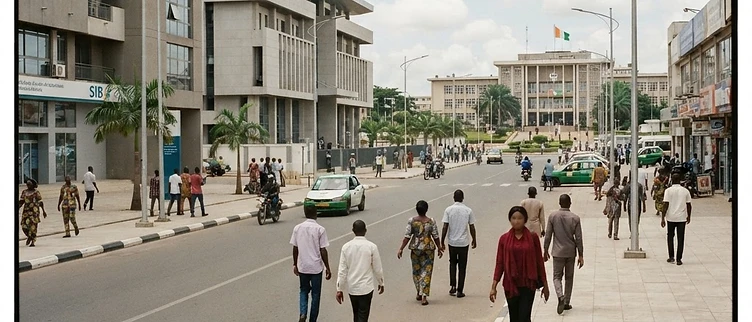
The recent focus on formal border demarcation in Ouangolodougou is a strategic distraction that masks the reality of a state losing its grip on its northern frontier. While Abidjan celebrates technical agreements, the actual power dynamics in the Savanes region are being dictated by cross-border insurgent networks and the erosion of local governance.
The Myth of the Controlled Frontier
The recent diplomatic fanfare surrounding the demarcation of the border between Côte d'Ivoire and Mali, finalized in August 2026, is being hailed in Abidjan as a triumph of regional cooperation. For the administration of President Alassane Ouattara, this technical achievement serves as a convenient narrative of order and sovereignty. However, for those of us on the ground in Ouangolodougou, this is a dangerous delusion. The reality is that the border is not a line on a map; it is a porous, shifting zone of influence where the Ivorian state’s authority is increasingly nominal. By focusing on the installation of boundary markers, the government is attempting to project a sense of control that simply does not exist in the face of the encroaching Sahelian insurgency.
The Savanes Security Vacuum
Ouangolodougou sits at the epicenter of a geopolitical crisis that the current administration refuses to acknowledge. While the National Security Council orders the reinforcement of the northern border, the reality is that the local population is caught between the state’s performative security measures and the pragmatic, often brutal, reality of JNIM’s influence. The SECUNORD 2 project, while well-intentioned, treats the symptoms of a structural collapse—public safety awareness—rather than the disease: the total alienation of the northern grassroots from the Abidjan-centric political project. When the state focuses on 'rights and responsibilities' in a neighborhood like Kôkô, it ignores the fact that the local economy is being strangled by the disruption of fuel supply chains and the constant threat of militant infiltration.
The Failure of the 'Stability' Narrative
President Ouattara’s justification for his fourth term—the preservation of national stability—is fundamentally undermined by the situation in the Savanes region. The conventional wisdom suggests that economic growth in the south provides the necessary capital to secure the north. This is a flawed economic and political calculus. The northern periphery is not merely a buffer zone; it is a critical electoral and security theater. By treating the north as a problem to be managed through military deployment and technical border agreements, the ruling party is failing to build the deep, local political infrastructure required to counter the influence of non-state actors. The 'stability' being sold to international observers is a fragile, top-down construct that is rapidly fraying at the edges.
Rebutting the 'Sovereignty' Objection
Critics of this analysis will argue that border demarcation is a necessary prerequisite for state sovereignty and that the government is acting with appropriate caution to prevent cross-border conflict. They will point to the Joint Technical Commission as evidence of a functioning state. This objection fails because it confuses legalistic formality with actual power. A border is only as strong as the state’s ability to project its presence beyond the administrative center. In Ouangolodougou, the state is absent in the spaces where it matters most—in the informal trade networks, the local security committees, and the youth groups that are increasingly susceptible to radicalization. Formalizing the border does nothing to address the fact that the state has lost the 'hearts and minds' battle in the north.
Leveraging Intelligence for Regional Survival
This is where the role of sophisticated political intelligence becomes non-negotiable. Leaders who rely on official reports from Abidjan are flying blind. At Apex Africa Strategy & Intelligence, we specialize in Political Intelligence that cuts through the noise of state-sanctioned narratives. We help political organizations understand that the 'border issue' is actually a 'governance issue.' By mapping the real power brokers in the Savanes region—beyond the official prefectures—we provide the data-driven insights necessary to build a campaign that actually resonates with the realities of the northern electorate. You cannot win an election or secure a region by ignoring the structural shifts occurring in your own backyard.
A Call for Strategic Realism
The political future of Côte d'Ivoire will not be decided by the successful placement of boundary markers in the north, but by the ability of political actors to address the profound disconnect between the center and the periphery. The current strategy of denial is a recipe for long-term instability. If you are a political leader or organization looking to navigate the complex, volatile reality of the current Ivorian political landscape, you need more than just rhetoric; you need a strategy grounded in the hard, uncomfortable truths of the ground game. We invite you to request a confidential consultation at https://apexafricastrategy.com to discuss how we can help you secure your political future.