Article · Zimbabwe
Midlands Province: The Mineral Export Ban Is a Geopolitical Shackling of Regional Autonomy
The state's raw mineral export ban is not a nationalist triumph but a strategic consolidation of central control.
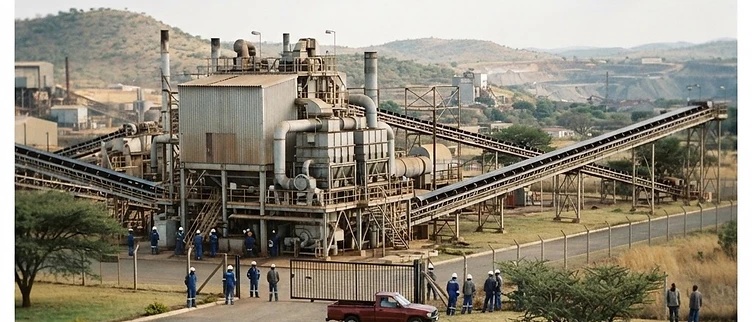
Illustration. AI-generated editorial image, not a documentary photograph.
The Zimbabwean government's recent enforcement of a raw mineral export ban, centered on the mining-rich Midlands Province, is being misread as a move toward economic sovereignty. In reality, this policy is a calculated instrument of political centralization that strips regional actors of their fiscal independence. By forcing mining operators into a state-managed beneficiation pipeline, the administration is effectively shackling the Midlands' economic potential to the survival of the ruling party's patronage networks.
The Midlands Mineral Mirage
The Midlands Province, the industrial and mining heartland of Zimbabwe, currently finds itself at the center of a profound geopolitical shift. While the national government frames the recent enforcement of the raw mineral export ban as a bold step toward economic sovereignty, the reality on the ground in districts like Kwekwe and Gweru tells a different story. This is not a grassroots-led industrial revolution; it is a top-down administrative capture of the province's most vital economic assets. By mandating that all mineral concentrates be processed domestically, the state has effectively seized control of the entire value chain, leaving local mining operations and regional stakeholders with little room to maneuver.
The conventional narrative suggests that this policy will foster local beneficiation and create jobs for the youth of the Midlands. However, this ignores the structural reality of the current political economy. The Ministry of Mines, under the direction of Minister Polite Kambamura, has utilized this regulatory pivot to consolidate power, ensuring that any potential economic windfall is funneled through state-sanctioned channels. For the residents of the Midlands, this means that the promised prosperity remains a distant prospect, while the immediate impact is a tightening of the central government's grip on their local resources.
Apex Africa’s Political Intelligence service identifies this as a classic case of 'regulatory centralism.' By imposing stringent export conditions, the state is not merely regulating an industry; it is creating a dependency trap. Mining firms operating in the Midlands are now forced to navigate a complex web of state-mandated beneficiation requirements that favor politically connected entities. This is not about building a robust industrial base; it is about ensuring that the economic lifeblood of the province remains tethered to the political survival of the ruling party in Harare.
The Fiscal Shackling of Regional Autonomy
The economic consequences for the Midlands are severe and immediate. With the export of raw minerals now effectively prohibited, local mining companies are facing a liquidity crisis. The cost of establishing domestic processing facilities is prohibitive, and the lack of reliable power and infrastructure in the province makes such investments even more precarious. As these companies struggle to comply with the new regulations, their ability to contribute to the local tax base is significantly diminished, further eroding the autonomy of local government structures.
This fiscal strangulation is a deliberate feature of the current administration's strategy. By starving regional governments of independent revenue streams, the central state ensures that local authorities remain subservient to the national budget. In the Midlands, this has led to a decline in public service delivery, as municipal councils are unable to fund basic infrastructure projects. The promise of 'economic transformation' is being used to mask a systematic dismantling of local governance, leaving the province increasingly reliant on handouts from the center.
Furthermore, the policy creates a fertile ground for corruption. When the state holds the power to grant or deny export permits, it inevitably creates a market for patronage. Those with the right political connections are able to bypass the regulations or secure favorable terms, while smaller, independent operators are squeezed out of the market. This is not a level playing field; it is a rigged system designed to reward loyalty and punish dissent. The Midlands, once a hub of independent industrial activity, is being transformed into a client state of the central government.
The Geopolitical Calculus of Resource Control
Beyond the provincial level, this policy must be understood as a broader geopolitical maneuver. Zimbabwe’s leadership is acutely aware of the regional power dynamics within the Southern African Development Community (SADC). By asserting total control over its mineral wealth, the government is attempting to insulate itself from external pressure, particularly from international financial institutions like the IMF. The message is clear: Zimbabwe will dictate the terms of its own economic engagement, regardless of the cost to its regional partners or its own citizens.
However, this strategy is fraught with risk. By alienating international investors and disrupting established supply chains, the government is isolating the country from the global economy. The reliance on 'regional integration' as a rhetorical shield against sanctions, as articulated by President Cyril Ramaphosa on October 25, 2026, rings hollow when the domestic policy environment is so hostile to foreign investment. The Midlands, as the primary site of this resource-nationalist experiment, is bearing the brunt of this isolationist turn.
This is where Apex Africa’s Election Readiness service becomes critical. We advise our clients to look beyond the nationalist rhetoric and analyze the underlying power dynamics. The current administration is not building a sustainable economic future; it is building a fortress. For political actors in the Midlands, the challenge is to develop a strategy that can navigate this hostile environment while maintaining a connection to the broader regional and global markets. This requires a sophisticated understanding of the state's regulatory mechanisms and a willingness to challenge the central government's narrative.
Rebutting the 'Sovereignty' Argument
Critics of this analysis will argue that the raw mineral export ban is a necessary step toward ending the colonial-era extraction model. They will point to the need for value addition and the potential for long-term economic growth. While the goal of beneficiation is laudable, the current implementation is fundamentally flawed. True economic sovereignty requires a transparent, rules-based system that encourages investment and innovation, not a closed, state-managed system that prioritizes political control over economic efficiency.
Furthermore, the argument that this policy will benefit the local community is contradicted by the evidence. There is no evidence that the current beneficiation requirements have led to an increase in local employment or infrastructure development in the Midlands. Instead, we see a concentration of wealth and power in the hands of a few, while the majority of the population continues to struggle with poverty and unemployment. The 'sovereignty' being touted is not for the people of Zimbabwe; it is for the political elite who control the state apparatus.
To suggest that this policy is a triumph of nationalism is to ignore the reality of the situation. It is a strategic consolidation of power that serves the interests of the few at the expense of the many. The government's focus on 'economic transformation' is a distraction from the fact that the country's economic fundamentals are deteriorating. By focusing on the control of mineral exports, the state is ignoring the structural reforms that are actually needed to drive sustainable growth and development.
Scenarios for the Future
Looking ahead, there are three likely scenarios for how this situation will develop. First, the government may continue to double down on its current policy, leading to a further decline in mining output and a deepening of the economic crisis. This would likely result in increased social unrest and a further erosion of the ruling party's legitimacy. The indicator to watch here is the level of investment in the mining sector; a continued decline will signal that the policy is failing.
Second, the government may be forced to backtrack due to pressure from international partners or a collapse in tax revenue. This would be a significant blow to the administration's credibility and could lead to a realignment of political forces within the ruling party. The indicator to watch is the issuance of special export permits or the relaxation of beneficiation requirements for key mining firms. This would signal that the state is willing to compromise in order to maintain its fiscal position.
Third, the government may attempt to formalize the current system of patronage, creating a more permanent structure for the control of mineral wealth. This would involve the creation of state-owned enterprises or joint ventures that are directly controlled by the political elite. The indicator to watch is the appointment of political loyalists to key positions in the mining sector and the regulatory bodies. This would signal that the state is moving toward a more authoritarian model of resource management.
Strategic Implications for Stakeholders
For policymakers and political strategists, the implications are clear: the current environment in the Midlands is one of high risk and high volatility. The key stakeholders—mining companies, local government officials, and civil society organizations—must adapt to this reality. For mining companies, this means diversifying their supply chains and engaging in proactive government relations to mitigate the impact of the export ban. For local government officials, it means finding creative ways to fund public services despite the central government's fiscal squeeze.
For NGOs and development organizations, the focus should be on monitoring the impact of these policies on the ground and advocating for transparency and accountability. The lack of reliable data on the mining sector is a major obstacle to informed decision-making. By providing independent research and analysis, these organizations can help to hold the government accountable and ensure that the voices of the local community are heard. The goal should be to create a more inclusive and transparent system that benefits all Zimbabweans, not just the political elite.
Finally, for political strategists, the lesson is that the control of resources is the ultimate prize in Zimbabwean politics. Any campaign or political movement that fails to address this reality will be at a significant disadvantage. The ability to navigate the state's regulatory mechanisms and build a coalition that can challenge the central government's control is essential for success. This is where Apex Africa’s expertise in Election Strategy and Political Intelligence can provide a decisive advantage, helping our clients to navigate the complex and often dangerous landscape of Zimbabwean politics.
Conclusion: The Path Forward
The situation in the Midlands is a microcosm of the broader political and economic challenges facing Zimbabwe. The government's attempt to consolidate power through the control of mineral resources is a short-sighted strategy that will ultimately fail to deliver the prosperity it promises. The path forward requires a fundamental shift in the way the country manages its resources, moving away from state-managed patronage toward a transparent, rules-based system that encourages investment and innovation.
This will not be an easy transition. It will require a sustained effort from all stakeholders to challenge the status quo and build a more inclusive and democratic future. The role of organizations like Apex Africa is to provide the intelligence and strategy needed to navigate this transition and to help our clients achieve their goals in an increasingly complex and challenging environment. We invite you to join us in this effort and to learn more about how we can help you succeed.
For those who are ready to take the next step, we offer confidential consultations to discuss your specific needs and how our services can help you navigate the political and economic landscape of Zimbabwe. Visit our website at https://apexafricastrategy.com to learn more and to request a consultation. The future of Zimbabwe is being written today, and it is up to us to ensure that it is a future that reflects the aspirations of all its people.